Iran warns of ‘massive response’ if Israel retaliates as UK says Israelis will do so

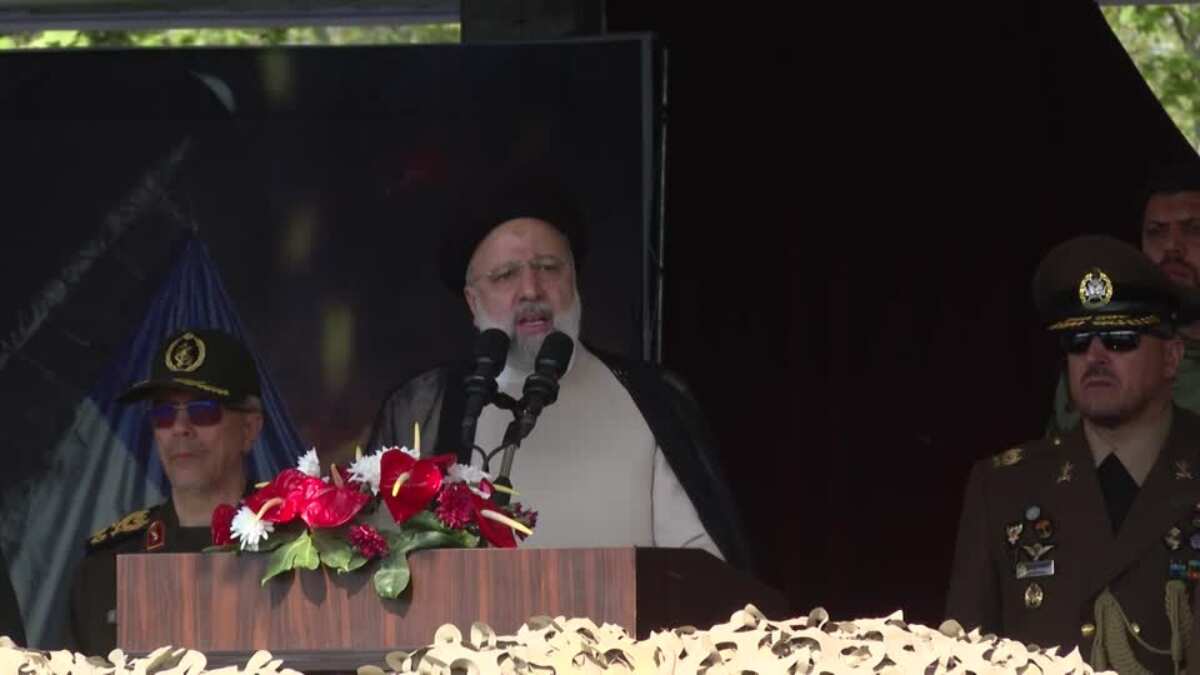
Iranian President Ebrahim Raisi
The Iranian president, on Wednesday (Apr 17) warned that a “tiniest invasion” by Israel in response to Tehran’s attack over the weekend, when it launched a barrage of drones and missiles towards Israel, would trigger a “massive response”. Meanwhile, Britain’s foreign secretary David Cameron who is in the midst of a visit to Israel says that the Jewish state has clearly decided to retaliate against Iran.
Iran warns of ‘massive response’
On Wednesday, Iranian President Ebrahim Raisi while addressing the annual army parade said that Saturday’s attack on Israel was a limited one and if Tehran wanted to carry out a bigger attack, “nothing would remain from the Zionist regime,” as quoted by the country’s official IRNA news agency.

WATCH |Iran attacks Israel: Jordan calls for de-escalation of conflict
Iran and Israel have waged a shadow war for decades, but the strike over the weekend was the first direct Iranian military attack on Israel.
&im=FitAndFill=(700,400)&imwidth=180&imheight=135&format=webp&quality=medium)
Navratri 2026: 9 days, 9 forms of Goddess Durga and 9 colours- Check the complete list
&imwidth=180&imheight=135&format=webp&quality=medium)
Russian woman and Bihar boy's love story goes viral after she reaches India to marry him
&imwidth=180&imheight=135&format=webp&quality=medium)
Arijit Singh 9-city India stadium tour to start from January: Check venue and ticket prices
&imwidth=180&imheight=135&format=webp&quality=medium)
F1 set to return to Africa for first time since 1993
&imwidth=180&imheight=135&format=webp&quality=medium)
'Don't ever mess with nature!': Trump’s tiger attack post triggers social media backlash as victim's family issues heartbreaking tribute
&imwidth=180&imheight=135&format=webp&quality=medium)
US judge blocks Trump administration sanctions on human rights groups supporting Gaza war crimes investigation
&imwidth=180&imheight=135&format=webp&quality=medium)
Washington calls for 'de-escalation' as Ethiopia-Eritrea tensions fuel war fears
&imwidth=180&imheight=135&format=webp&quality=medium)
US midterms: Trump rallies behind Husted as Brown mounts challenge in crucial Ohio race
&imwidth=180&imheight=135&format=webp&quality=medium)
US police foil alleged mass shooting plot targeting Illinois Hindu temple during Navratri; 19-year-old’s manifesto called Indians ‘subhumans’
&imwidth=180&imheight=135&format=webp&quality=medium)
Group of men cheered and asked 'when’s it my turn?' as woman was assaulted inside bathroom at University of Chicago frat party
&imwidth=180&imheight=135&format=webp&quality=medium)
‘Rise up, young patriots!’: American singer Mary Millben says US donors funding CJP, backs Modi govt
&imwidth=180&imheight=135&format=webp&quality=medium)
Nobel Peace Prize winner Navi Pillay calls on US to 'get back to' being defender of human rights
&imwidth=180&imheight=135&format=webp&quality=medium)
Iran war: Will Trump, Netanyahu escalate conflict ahead of crucial elections? | Race to Power
&imwidth=180&imheight=135&format=webp&quality=medium)
Who is Abu Dhabi royal Mahrah Al Nahyan, found unconscious on London street with toddler after cocaine use
&imwidth=180&imheight=135&format=webp&quality=medium)
Iranian woman, 23, handed death sentence for ‘blasphemy’ in social media post; appeals for help
&imwidth=180&imheight=135&format=webp&quality=medium)
'Turn approver, resign, we'll forgive you': Rahul Gandhi claims receiving messages from CEC Gyanesh Kumar
&imwidth=180&imheight=135&format=webp&quality=medium)
'Leakers should be shot': Trump rages over leak of US military plans to attack Iran, slams media
&imwidth=180&imheight=135&format=webp&quality=medium)
Somaliland celebrates after Trump calls it 'a totally different country', raise hopes of US recognition
&imwidth=180&imheight=135&format=webp&quality=medium)
Bangladesh man killed after mob storms hospital, drags him away over blasphemy allegations
&imwidth=180&imheight=135&format=webp&quality=medium)
‘My president, I mean my husband’: Trump's new press secretary Katie Zacharia's first briefing goes off the rails in 14 minutes
&imwidth=180&imheight=135&format=webp&quality=medium)
Mars is not for man: Human heart is too weak to survive the trip, study shows
&imwidth=180&imheight=135&format=webp&quality=medium)
'Ouch!!! That must hurt': Kangana Ranaut hails Kamal Haasan's sharp reply to Elon Musk over Starlink row
&imwidth=180&imheight=135&format=webp&quality=medium)
Girl 'dead' for 8 hours wakes up at her own funeral, dad insists she wasn't breathing
&im=FitAndFill=(700,400)&imwidth=180&imheight=135&format=webp&quality=medium)
New OTT releases this week (October 12-18, 2026): Sacrifice, Koffee with Karan S9, Roadies Rebirth- 6 titles coming on Netflix, JioHotstar and more
&imwidth=180&imheight=135&format=webp&quality=medium)
Actor Imran Khan asked to leave India by the Mumbai Police days after participating in CJP-led protest
&imwidth=180&imheight=135&format=webp&quality=medium)
Did the US withhold missile warnings? Ukraine questions Washington's 'bad weather' explanation after Russian strikes kill six, cut power to 600,000
&imwidth=180&imheight=135&format=webp&quality=medium)
'Troubling pattern of threats': Hindu groups issue advisory after man arrested for alleged plot to target Illinois temple
&imwidth=180&imheight=135&format=webp&quality=medium)
Global energy crisis hits Indian economy
&imwidth=180&imheight=135&format=webp&quality=medium)
Hidden video recording device found on Australian Navy ship amid claims of secret filming
&imwidth=180&imheight=135&format=webp&quality=medium)
'White supremacist' terror plot against Illinois Hindu temple foiled by jammed gun: Who is Alexandros Paporakis?
&imwidth=180&imheight=135&format=webp&quality=medium)
Zelensky feels betrayed by Trump, urges Musk to restore Starlink in Ukraine; Musk responds
&imwidth=180&imheight=135&format=webp&quality=medium)
'Girls are uncomfortable': Salman Khan calls out paparazzi for bad angles, speaks on PR on Koffee With Karan
&imwidth=180&imheight=135&format=webp&quality=medium)
After flydubai co-pilot attack, Air France bans Pakistani, Muslim-majority crew on Israel flights
&imwidth=180&imheight=135&format=webp&quality=medium)
US midterms 2026: Trump under election watch? Democrats deploy 100 observers across nine states
Tehran launched more than 300 drones and missiles targeting Israel after what it called an Israeli strike on its consulate in Syria’s Damascus, on April 1 which killed seven Islamic Revolutionary Guard Corps (IRGC) officers.
However, the Israel Defence Forces (IDF) said that 99 per cent of the projectiles were intercepted by its air defence systems.
Since the attack, Iran has reiterated that it does not want to escalate tensions but warned that if Israel chooses to retaliate it will launch a “strong and fierce response”.
UK’s Cameron says Israel has decided to retaliate
Israel has repeatedly said that it will retaliate against Iran’s attack over the weekend, which was seemingly confirmed yet again by the British foreign minister, on Wednesday.
Cameron, who is in the midst of a visit to Jerusalem said that he urged the Israeli leaders to do “as little as possible to escalate” tensions in the Middle East.
During his visit, Cameron also met with Israeli Prime Minister Benjamin Netanyahu and said that he was there to “show solidarity after that appalling attack by Iran.”
Also Read |US plans new sanctions against Iran, hopes allies will follow in its footsteps
“It’s right to have made our views clear about what should happen next, but it’s clear the Israelis are making a decision to act,” the UK foreign secretary told reporters.
Cameron also called on the Israeli government to be “smart as well as tough,” adding that the “real need” is to focus back on the Iran-backed Palestinian militant group Hamas and the situation in Gaza.
“But the real need is to refocus back on Hamas, back on the hostages, back on getting the aid in, back on getting a pause in the conflict in Gaza,” said the UK foreign secretary.
German Foreign Minister Annalena Baerbock said that she has made itclear during talks with Netanyahu in Jerusalem that theMiddle East must not be allowed to slide into a situation whose outcome is completely unpredictable.
Also Read |Israel targeting refugee camps? 11, including children, dead in airstrike on Al-Maghazi refugee camp
"Everyone must now act prudently and responsibly," saidBaerbock before departing Israel on Wednesday.
However, Netanyahu, on Wednesday said that while he appreciates the international support in defending Israel from Iran’s attack, his country would make its “own decisions”.
“We will make our decisions on our own, and the state of Israel will do what it needs to defend itself,” the Israeli PM said after meeting with German and British foreign ministers in Jerusalem.
Iran’s recent attack on Israel came more than six months into the ongoing war between Hamas and Israel in Gaza which has caused tensions and flare-ups of violence across the Middle East sparking concerns that this attack could lead to a wider regional war.
(With inputs from agencies)