Iran, Oman push for Strait of Hormuz fee despite US opposition

&imwidth=600&imheight=450&format=webp&quality=medium "Iran, Oman push for Strait of Hormuz fee despite US opposition")
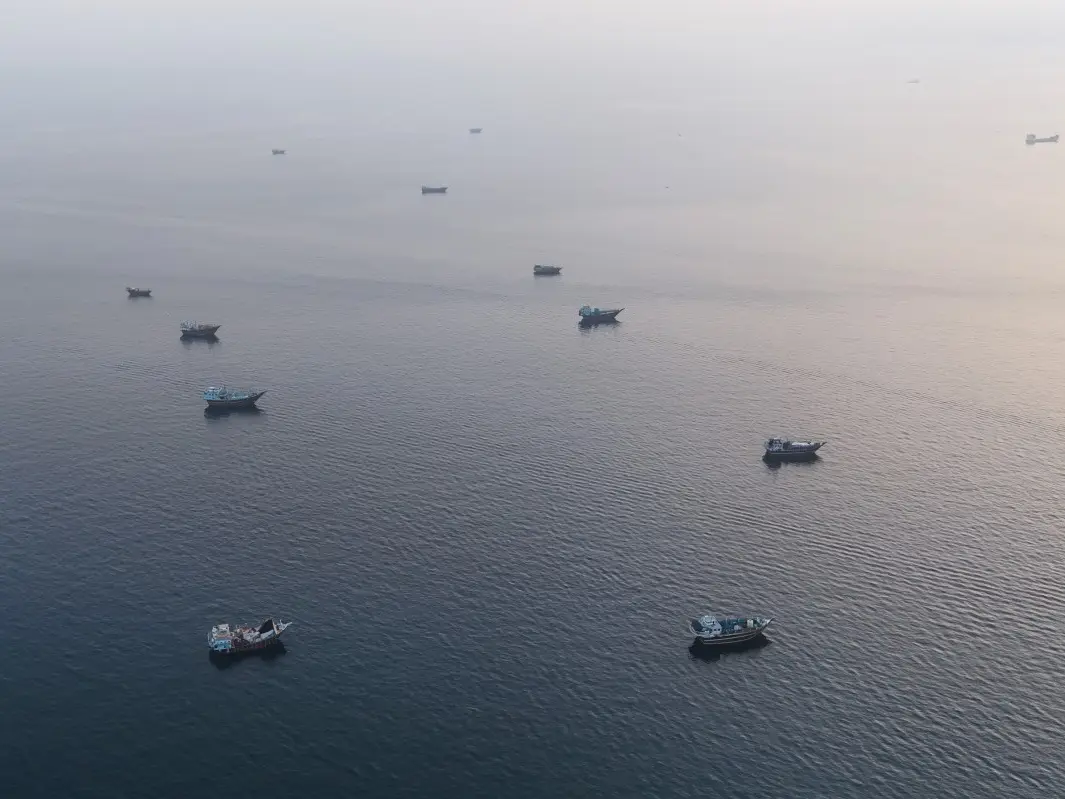
This aerial photograph shows boats anchored off Oman’s northern Musandam Peninsula near the Strait of Hormuz on June 27, 2026. Photograph: (AFP)
Iran and Oman are advancing a proposal to charge a service fee for using the Strait of Hormuz despite US opposition, raising fresh concerns over global shipping.
Amid the fragile ceasefire, Iran and Oman are moving forward with a plan to implement a fee on the Strait of Hormuz, despite repeated opposition from the US. Oman has submitted a formal proposal to the US and other Western allies, according to Iranian officials and four other diplomats, as reported by the New York Times. The plan mandates a service fee for Iranian officials to use the Strait of Hormuz. The Times also reported that US officials have confirmed the reception of the proposal, and they have some concerns which they are discussing with the Omani side.
The proposal is said to be inspired by the Strait of Malacca and Singapore, where industry contributions fund the maritime safety, navigational assistance and mitigate environmental concerns. The fees are primarily “voluntary” in nature. The cooperative mechanism has been in place on the Strait of Malacca since 2007 and acts as a voluntary framework.
However, Iran's Deputy Foreign Minister, Kazem Gharibabadi, on Monday had said that it wants to come into a joint framework for the strait, but if Oman is unwilling to consider, then it would move ahead on its own, as reported by Iranian state media. The Omani side, which has found it increasingly tough in its balancing act between the US and Iran, argues that, if the Sultanate does not engage in establishing a structured, legal mechanism to manage navigation on the strait, then Iran would unilaterally enforce a mechanism against International maritime law.
While Oman has maintained a neutral position publicly, recently, Oman's foreign minister, Badr al-Busaidi, said in an interview on Sunday with Monte Carlo Doualiya, an Arabic-language radio station, said that keeping the Strait waters safe and pollution-free costs money. “All we are saying is that perhaps we can benefit from some existing experiences, on a voluntary basis, between the countries concerned with this matter.”
US President Donald Trump has repeatedly denied the concept of toll for transit in the strait, he has on one occasion, threatened to bomb Oman if it seeks to implement a toll on the Strait. US Secretary of State Marco Rubio has said that the US would oppose any scenario to monetise the Strait wether “a fee or a toll or a donation.” “We need to get back to what the straits looked like before this conflict,” said Rubio.
Trending Stories
)
)
)
)
)
)
)
)
)
)
)
)
)
)
)
)
)
)
)
)
)
)
)
)
)
)
)
)
)
)
)
)
)
)
&im=FitAndFill=(700,400))
)
)
)
)
But analysts suggest Iran is unlikely to give up its newfound leverage on the Strait. “There is no free service anywhere in the world,” said Mehdi Mohammadi, a senior adviser to Gen. Mohammad Bagher Ghalibaf, Iran's lead negotiator with the US. The European countries are reportedly ready to compromise by paying a fee; however, they are concerned about its legal implications. European analysts argue that this is not Oman's doing; the strait was open ahead of the war, and it is all "Washington’s bill for starting an ill-advised war.”