
&imwidth=800&imheight=600&format=webp&quality=medium "Inside the insane 35-hour secret B-52 mission that kicked off the Gulf War")
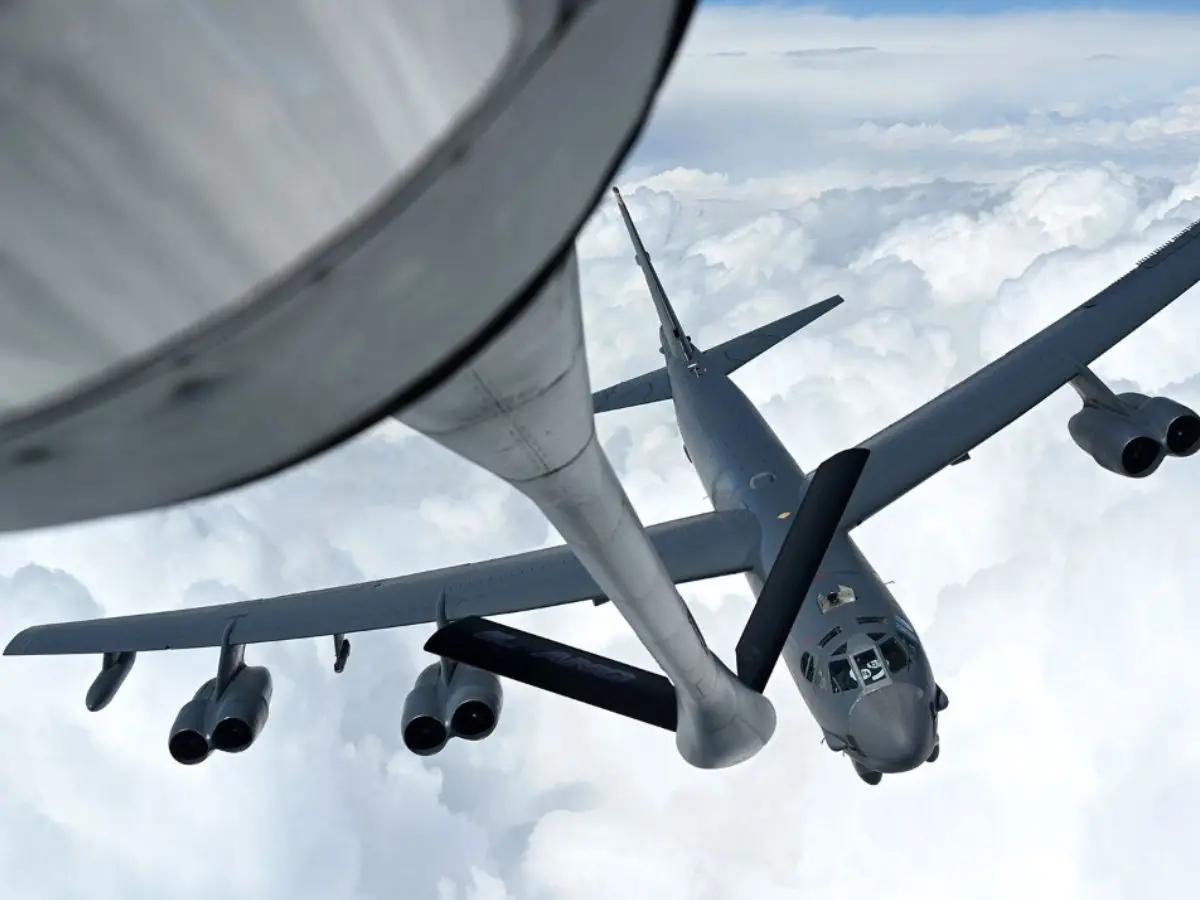
In the early hours of January 16, 1991, seven B-52G Stratofortress bombers from the 2nd Bomb Wing taxied onto the runway at Barksdale Air Force Base in Louisiana. Their mission was classified. Their destination was Iraq. They would not land until they were back at Barksdale, over 35 hours later, having flown more than 14,000 miles nonstop and fired the opening shots of Operation Desert Storm. The mission was codenamed Operation Senior Surprise — but the crews who flew it knew it by another name: Secret Squirrel.
The Longest Combat Mission In History
At 35 hours and 24 minutes, Secret Squirrel was the longest combat sortie ever flown at the time. The seven bombers launched from Louisiana, flew across the Atlantic Ocean, refuelled in the air multiple times, entered Iraqi airspace, launched their weapons, and then flew the entire route back without ever touching a runway. More than 57 airmen took part. The round trip covered roughly 14,000 nautical miles — the equivalent of flying from New York to Sydney and partway back.

The First GPS-Guided Missiles Used In Combat
The B-52s carried AGM-86C Conventional Air-Launched Cruise Missiles — known as CALCMs. When the bombers reached their launch positions, they released 35 cruise missiles at key Iraqi power and communications infrastructure. These were the first missiles in the history of warfare to use the Global Positioning System for guidance. Until that night, GPS had been a military navigation tool. Secret Squirrel turned it into a weapon-guidance system — a shift that would go on to reshape how every modern military in the world fights.
Designed To Blind Saddam
Trending Stories
&im=FitAndFill=(700,400))
National Handloom Day 2026: From Alia Bhatt to Samantha Ruth Prabhu; Actresses who celebrated India's textile heritage as brides
)
The Royals enter the Doctor Who universe: King Charles and Queen Camilla beam into Commonwealth Games in TARDIS
)
Unitree Robotics targets $9 billion valuation in landmark IPO backed by DeepSeek and Tencent
)
India names 27 sites in Arunachal Pradesh
)
Bharat Bhhagya Viddhaata OTT: When will Kangana Ranaut's film stream online?
&im=FitAndFill=(700,400))
How many soldiers operate one S-400 battery?
)
Shakib Al Hasan ready to return to Bangladesh—under one condition
)
‘Fake news’: MEA rejects report claiming India sought defence pact with Israel after Pakistan, Saudi Arabia, Turkey deal
)
Rockstar to unveil GTA 6 extended look ahead of November launch
)
Russia forms Ukrainian Volunteer Spetsnaz Brigade to fight Ukraine
)
Drug-resistant fungus that hides in hair and enters bloodstream reported in 23 US states
)
Technology transfer deal boosts India's defence manufacturing ambitions
)
Border row erupts in Europe after Ceuta crossings, Spain imposes border controls on Italy
)
Morale plummets on USS Abraham Lincoln: Are US sailors reaching a breaking point? | GRAVITAS
)
'Security can't be bought with Pakistan, Turkey deal': Iran tells Saudi Arabia
)
Baba Vanga's 2026 prophecy: 2 predictions 'already came true', 3 terrifying ones remain. Details inside
)
Colombia’s new president Abelardo de la Espriella vows to ‘defeat narco-terrorists’, signals hardline shift
&im=FitAndFill=(700,400))
New Friday OTT releases (August 7, 2026): Operation Safed Sagar, Vadhandhi, Main Vaapis Aaunga- 6 movies and TV shows on Netflix, Prime Video and more
)
Squadron Leader Bhawana Kanth scripts history as Indian Air Force gets its first woman ‘Top Gun’ pilot
)
RSS says Gen Z protests reflect genuine distress
)
Trump says Iranian school bombing photos could be AI-generated - 'I don’t think...'
)
IAF officer held for sharing sensitive information in 'honey trap' case, booked under Official Secrets Act
)
Stray Kids under scrutiny? Fans react to Grammy submission silence after BTS boycott
&im=FitAndFill=(700,400))
Why the Su-30MKI doesn't need external fuel tanks to fly vast distances
)
Jugal Hansraj reunites with Shekhar Kapur after 40 years for Masoom: The Next Generation
)
New speed limits, automatic challans: Big traffic change coming to Delhi-Meerut Expressway. All you need to know
)
India officially names 27 places in Arunachal to counter China's renaming claims
)
Trump calls White House ballroom ruling a 'national disgrace' as court says Congress approval needed
)
US sanctions Iran’s crypto network after Strait of Hormuz attacks, offers $15m bounty for intel on IRGC finance
&im=FitAndFill=(700,400))
Why the Su-30MKI is one of the heaviest fighters ever built
)
Uttarakhand young innovator builds India's own flying vehicle, conducts first test flight: WATCH
)
Chilling video shows students take cover as teen opens fire at Thai school
)
Reese Witherspoon's father hospitalised after poolside incident in Nashville: Report
The mission's objective was not to level cities or destroy military formations. It was surgical: to knock out specific communication nodes, power stations, and command-and-control facilities that Saddam Hussein's military relied on to coordinate its forces. By eliminating these targets in the opening minutes of the war, the US aimed to render Iraq's command structure deaf and blind before the broader air campaign even began. The 35 CALCM strikes achieved this with a level of precision that had never been demonstrated in a bomber mission before.
Nobody Knew Until It Was Over
The secrecy around the mission was extreme. The operation was planned and executed with minimal knowledge outside the immediate chain of command. The crews flew from a base in the continental United States, struck targets thousands of miles away, and returned home — all without any public announcement. Details of Secret Squirrel only emerged after the war, when the mission was declassified and the crews received recognition for what remains one of the most extraordinary bomber sorties in military history.
