
&imwidth=800&imheight=600&format=webp&quality=medium "Initial military inquiry finds US forces responsible for strike on Iran school; cites outdated intelligence")
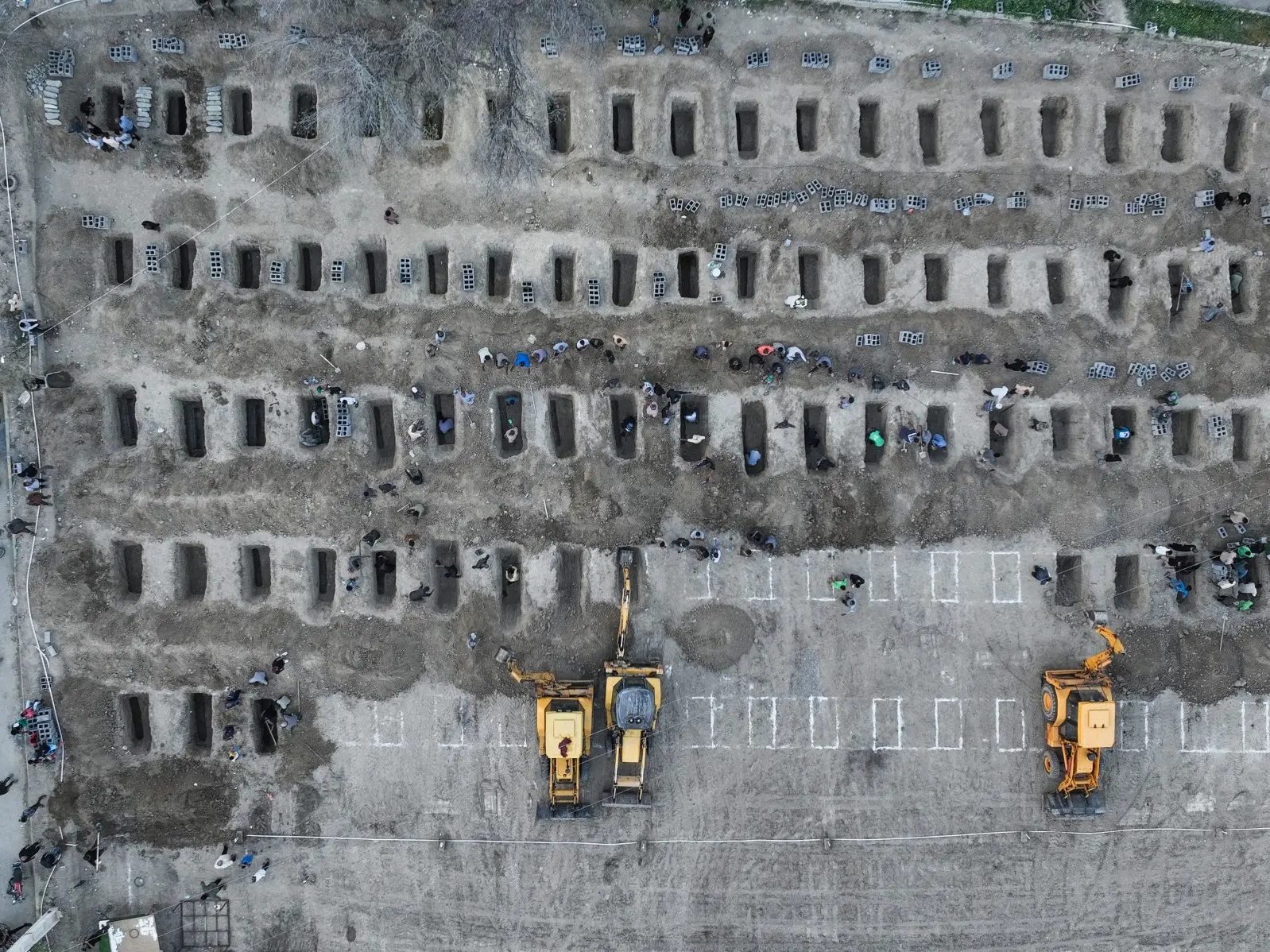
An ongoing US military investigation has determined that the United States was responsible for a deadly Tomahawk missile strike on an Iranian elementary school, according to the US officials and others familiar with the preliminary findings. The strike, which occurred on February 28, hit the Shajarah Tayyebeh elementary school building in the town of Minab. Investigators say the attack was the result of a targeting error by the US military. At the time, the military was conducting strikes on an adjacent Iranian base that had previously included the school building as part of its complex.
According to officials briefed on the investigation, officers at US Central Command conducted the strike coordinates using outdated targeting data supplied by the Defense Intelligence Agency (DIA). The preliminary findings suggest that the building was mistakenly labeled as a military target based on old intelligence. Officials emphasized that the investigation is still ongoing and that several critical questions remain unanswered, including why the outdated data was not verified before the strike.
The attack on a school filled with children is expected to be remembered as one of the most devastating military errors in recent decades. Iranian authorities have reported that at least 175 people were killed, most of them children. Although the conclusion that the United States carried out the strike was largely anticipated, because the US is the only country involved in the conflict that uses Tomahawk missiles, the incident has already cast a shadow over the broader US military operation in Iran.

President Donald Trump’s attempts to deflect blame for the strike have further complicated the inquiry. Officials familiar with the findings have expressed concern about his public statements suggesting that Iran might have been responsible. “As The New York Times acknowledges in its own reporting, the investigation is still ongoing,” White House press secretary Karoline Leavitt said in a statement. Sources briefed on the investigation say many questions remain about how the outdated information was used and who failed to verify the targeting data.
However, some current and former officials say the error is not entirely surprising. The school in Minab is located on the same block as facilities used by Iran’s Islamic Revolutionary Guards Navy, which was a primary target of the US military strikes. The building that housed the school was originally part of the military base, though it is unclear exactly when it was converted into a school. A visual investigation conducted by The New York Times found that the building had been separated from the military base between 2013 and 2016.
Trending Stories
)
Why asking questions could be more important than memorising answers
)
BRICS Summit 2026: Iran's Pezeshkian praises PM Modi at BRICS
)
Osama Bin Laden ‘planned’ to target India, CIA reveals dozens of declassified documents
)
BRICS rejects EU carbon tax as ‘punitive’, ‘discriminatory’; warns of burden on Global South
)
BRICS Summit 2026: Global leaders of BRICS nations attend main open session
)
Why dehydration is the hidden cause of travel fatigue on long flights
)
Top 5 places to visit in Goa beyond its famous beaches
)
'He is popular...': Malaysian PM Anwar Ibrahim's praise for PM Modi during bilateral meeting | WATCH
)
BRICS Summit 2026: 30+ countries seek BRICS membership
)
Frustrated man demolishes his kitchen after thousands flock to see Mother Mary his wife spotted on the wall
)
BRICS Summit 2026: PM Modi, Xi reach key consensus on ties, China to assume BRICS chairmanship in 2027
)
Trump says Canada eager to reach a deal, it could come ‘fairly soon’ if Ottawa treats US farmers better
)
From drones to KAAN fighters: Turkey outlines 229% surge in defence spending amid regional shifts
)
‘Partners, not rivals’: Xi outlines four point plan for stronger India-China ties
&im=FitAndFill=(700,400))
Why Chinese PL-15 air-to-air missiles use dual-pulse motors compared to European interceptors
)
Could staying indoors all day affect your health?
)
Who is the smiling man beside Modi, Putin and Xi at BRICS Summit 2026?
)
Why going digital does not always mean becoming more efficient
)
800 million years old - Scientists discover 'fingerprints' of supercontinent Gondwana in ancient rocks
&im=FitAndFill=(700,400))
Why do air defence missiles explode near their target instead of hitting it?
)
Israel spent nearly $470,000 on PM's hair, makeup since 2019, data shows
)
From severe mobility problems to recovery: Madhuri the elephant’s journey of wildlife care
)
BRICS Summit day 1: New Delhi declaration adopted with full consensus, big diplomatic win for India
)
From India, Putin warns Europe against sending troops to Ukraine, Zelensky expresses willingness to meet him at G20 Summit
)
Did Iran President Pezeshkian touch feet of Hindu spiritual leader at Delhi event as shown in viral video?
)
9-year-old Chennai prodigy clears Cambridge IGCSE grade 10 exams
)
Why does your body need time to adjust after a long journey?
)
Baba Vanga's first prophecy for 2027 is out, and straight out of science fiction
)
BRICS Summit 2026: PM Modi to hold bilateral with leaders of seven countries
)
Ramanathaswamy temple takes centre stage as PM Modi welcomes world leaders at BRICS
)
Why does your skin need protection from UV rays?
)
How does the loss of forests affect the way wildlife lives and moves?
)
IND vs AFG, 1st T20I: When and where to watch live streaming in India?
)
Why do wild animals need quiet places to survive?
)
Humans may lose control of AI: Anthropic CEO calls for slowdown, Altman, Musk back him
Satellite imagery reviewed by the newspaper showed that watchtowers previously located near the building had been removed. Three public entrances had been added, the grounds had been cleared, and recreational areas—including a sports field painted on asphalt- had been created. The walls were also repainted in bright colors such as blue and pink, consistent with a school environment. Despite these changes, the targeting data provided by the DIA still classified the building as a military facility when it was passed to US Central Command, according to people familiar with the investigation. Investigators have not yet determined how the outdated information was transmitted or whether the DIA had more recent intelligence available.
Military targeting operations are highly complex and involve several agencies. Numerous officers are responsible for verifying target data. While the DIA provides intelligence assessments, Central Command is responsible for confirming the accuracy of that information before authorizing strikes. In fast-moving wartime situations, however, verification procedures may sometimes be rushed or overlooked. Investigators are also reviewing the role of the National Geospatial-Intelligence Agency (NGA), which analyzes satellite imagery and supports military targeting operations.
Both the DIA and NGA have numerous analysts assigned to combatant commands, where they work alongside operational planners and intelligence officers to develop potential targets. When targeting data from the DIA is older, intelligence officers are expected to update and verify it using imagery and analysis provided by the NGA. Historically, the Defense Intelligence Agency has focused primarily on Iran’s missile capabilities and other strategic priorities such as China and North Korea. Iran’s naval forces have not traditionally been a major intelligence priority.
Investigators are also examining whether artificial intelligence tools or automated intelligence systems played any role in the targeting mistake. One system under scrutiny is the Maven Smart System used by the NGA. While large language models such as Claude—developed by Anthropic—do not directly generate military targets, they can assist in identifying potential points of interest for analysts. However, officials believe that new technology was unlikely to be the cause of the error. Instead, they suspect the strike resulted from a more traditional wartime mistake: human error.
The preliminary findings of the internal investigation align with growing public evidence suggesting US responsibility.
Satellite imagery, social media posts, and verified videos analyzed by The New York Times indicate that the school was severely damaged by a precision strike around the same time that nearby Iranian naval facilities were targeted. The newspaper’s analysis also showed that the base was struck again approximately two hours after the initial attack.
A video released by Iran’s semi-official Mehr News Agency and verified by The New York Times shows a Tomahawk cruise missile striking the naval base next to the school on February 28.
Defense Secretary Pete Hegseth and other administration officials have declined to comment in detail on the incident, stating only that the matter remains under investigation. Nevertheless, President Trump has at times suggested that Iran may have been responsible. “In my opinion, based on what I’ve seen, that was done by Iran,” Mr. Trump told reporters aboard Air Force One on Saturday, while Defense Secretary Hegseth stood beside him. He added that Iranian munitions are often inaccurate.
When asked on Monday why he was the only official in his administration attributing the strike to Iran, Trump responded: “Because I just don’t know enough about it.” He also incorrectly suggested that Iran might possess Tomahawk missiles, though he said he would ultimately accept the results of the investigation. While many presidents might avoid commenting on such incidents while investigations are ongoing, Mr. Trump has repeatedly spoken publicly about the strike and has not fully withdrawn his earlier claims, even as evidence pointing to U.S. responsibility has grown. On Tuesday, Press Secretary Leavitt reiterated that the president would accept the final findings of the investigation. Although the inquiry is not yet complete, the reported use of outdated intelligence has drawn comparisons to a major mistake during the Kosovo War.
Disclaimer: WION takes utmost care to accurately and responsibly report ongoing conflicts in West Asia involving Israel, Iran, the US, Gulf nations, and non-state actors like Hezbollah, Hamas, Houthis, Islamic State, and others. Claims and counterclaims, disinformation and misinformation are being made online and offline. Given this context, WION cannot independently verify the authenticity of all statements, social media posts, photos, and videos.

