India-South Korea relations: How friendship grew over the years

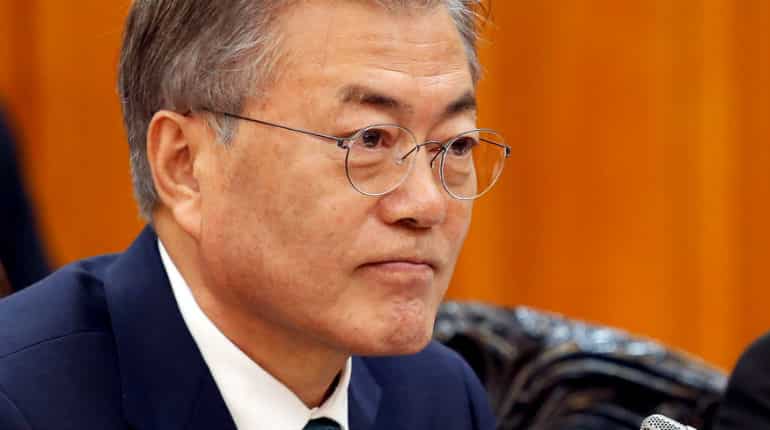
Moon-Jae-In
India-South Korea ties took off at the turn of the new millennium, with president APJ Abdul Kalam's visit to Seoul in the year 2006.
India is expected to host South Korean President Moon Jae-in this year to add more strategic heft to its growing bilateral economic partnership. The two countries will look to build on convergences between Prime Minister Narendra Modi's "Act East Policy" and President moon's new "Southern Policy", which seek better ties with countries in the Indo-pacific region.
Bilateral consular relations were established between the two countries in 1962 which were upgraded to Ambassador-level in 1973. In course of time, Seoul's open market policies found resonance with India's economic liberalisation and "Look East" as well as "Act East" policies. Consistent Indian support for peaceful reunification of the two Koreas has been well received in the South.
A good indication of growing ties between South Korea and India is the fact that Hyundai, Samsung and LG are household names in India. South Korea's traditional food kimchi, made from fermented vegetables such as cabbage, and K-pop star Psy of Gangnam style fame are popular, too.

But the dramatic upturn in ties did not happen overnight.
India-South Korea ties took off at the turn of the new millennium, with president APJ Abdul Kalam's visit to Seoul in the year 2006. It led to the launch of a joint task force to conclude an agreement called bilateral comprehensive economic partnership or CEPA. It was operationalised on January 1, 2010.
Trade and economic relations started to gather momentum following the implementation of CEPA in 2010 and the bilateral trade in 2011 crossed US $20.5 billion, registering a 70 per cent growth over a two-year period.
The same year, South Korea's then President Lee Myung-bak visited New Delhi as the chief guest of India's Republic Day celebrations. He raised the ties to the strategic level.
&imwidth=180&imheight=135&format=webp&quality=medium)
Blasts heard in Sanaa as Saudi-led coalition warns civilians to evacuate; Houthis vow retaliation
&imwidth=180&imheight=135&format=webp&quality=medium)
China's counter-surveillance industry booms amid heightened espionage fears | Gravitas
&imwidth=180&imheight=135&format=webp&quality=medium)
Saudi Arabia strikes Yemen oil sites as Houthi missiles target Riyadh; 'limited fire' breaks out at Aramco
&im=FitAndFill=(700,400)&imwidth=180&imheight=135&format=webp&quality=medium)
Navratri 2026: 9 days, 9 forms of Goddess Durga and 9 colours- Check the complete list
&imwidth=180&imheight=135&format=webp&quality=medium)
Trump accuses Houthis of driving up oil prices before US midterms, warns of consequences
&imwidth=180&imheight=135&format=webp&quality=medium)
New Delhi rejects Beijing’s claims and remarks on Ladakh location naming exercise
&imwidth=180&imheight=135&format=webp&quality=medium)
Russian woman and Bihar boy's love story goes viral after she reaches India to marry him
&imwidth=180&imheight=135&format=webp&quality=medium)
US Midterms 2026: In Alaska, cost-of-living anxiety meets strangest ballot in high-stakes Senate race
&imwidth=180&imheight=135&format=webp&quality=medium)
CMs Vijay-Naidu meet in Vijayawada, discuss water sharing, river-linking
&imwidth=180&imheight=135&format=webp&quality=medium)
'Don't ever mess with nature!': Trump’s tiger attack post triggers social media backlash as victim's family issues heartbreaking tribute
&imwidth=180&imheight=135&format=webp&quality=medium)
Air India Flight from Frankfurt diverted to Jaipur after hijack alert, probe on
&imwidth=180&imheight=135&format=webp&quality=medium)
1,500 drones illuminate Mumbai sky as Cordelia Cruises unveils second ship, Cordelia Sky
&imwidth=180&imheight=135&format=webp&quality=medium)
Delhi Police arrest Cockroach Janta Party's Saurav Das, Ashutosh Ranka, Ajinkya Shinde in Jantar Mantar case, to be produced before court
&imwidth=180&imheight=135&format=webp&quality=medium)
Pakistan to chair UN-backed global Borrowers’ Platform as its own debt burden mounts, triggers sarcastic reactions on social media
&imwidth=180&imheight=135&format=webp&quality=medium)
Robot gropes girl, makes thrusting movements in bizarre crime in Germany
&imwidth=180&imheight=135&format=webp&quality=medium)
US Treasury hits Bank of America with over $1.2 billion in penalties over suspicious transactions and Chinese money-laundering links
&imwidth=180&imheight=135&format=webp&quality=medium)
France accuses Musk of ‘online harassment’ of European leaders, warns of poll interference
&imwidth=180&imheight=135&format=webp&quality=medium)
'Turn approver, resign, we'll forgive you': Rahul Gandhi claims receiving messages from CEC Gyanesh Kumar
&imwidth=180&imheight=135&format=webp&quality=medium)
MI5 chief warns Russia is UK’s ‘aggressor number one’ as Iran and AI threats grow
&imwidth=180&imheight=135&format=webp&quality=medium)
Trump reconsidering calling off Nidal Hasan's execution livestream. Here's why
&imwidth=180&imheight=135&format=webp&quality=medium)
‘My president, I mean my husband’: Trump's new press secretary Katie Zacharia's first briefing goes off the rails in 14 minutes
&imwidth=180&imheight=135&format=webp&quality=medium)
‘How many people did she illegally bring from Somalia?’ Trump targets Ilhan Omar, questions her net worth
&imwidth=180&imheight=135&format=webp&quality=medium)
Marco Rubio to visit India next week, focus on energy cooperation and strategic ties
&imwidth=180&imheight=135&format=webp&quality=medium)
'Ouch!!! That must hurt': Kangana Ranaut hails Kamal Haasan's sharp reply to Elon Musk over Starlink row
&imwidth=180&imheight=135&format=webp&quality=medium)
Girl 'dead' for 8 hours wakes up at her own funeral, dad insists she wasn't breathing
&imwidth=180&imheight=135&format=webp&quality=medium)
Sidhu Moose Wala’s younger brother wins hearts by recreating late singer’s signature move at Toronto Hologram Show
&imwidth=180&imheight=135&format=webp&quality=medium)
UK school ditches technology, shifts from screen to pen and paper for learning
&im=FitAndFill=(700,400)&imwidth=180&imheight=135&format=webp&quality=medium)
New OTT releases this week (October 12-18, 2026): Sacrifice, Koffee with Karan S9, Roadies Rebirth- 6 titles coming on Netflix, JioHotstar and more
&imwidth=180&imheight=135&format=webp&quality=medium)
New Cold War: Why is China buying more gold? Explained
&imwidth=180&imheight=135&format=webp&quality=medium)
Netanyahu wants to join Saudi's war on Houthis, but Crown Prince denies: Report
&imwidth=180&imheight=135&format=webp&quality=medium)
Anupam Kher joins Ranbir Kapoor's Ramayana as Jatayu, new poster unveiled
&imwidth=180&imheight=135&format=webp&quality=medium)
Measles kills again: 6 dead in Pennsylvania as America faces its worst outbreak in decades | Gravitas
&imwidth=180&imheight=135&format=webp&quality=medium)
Ken Paxton's Dubai night out with two US fugitives sparks political storm as Texas Senate race tightens
&imwidth=180&imheight=135&format=webp&quality=medium)
Cornell University suspends fraternity parties over 2024 gang rape allegations
One year later, in July 2011, President Pratibha Devisingh Patil paid a reciprocal visit to South Korea and a civil nuclear energy cooperation was signed during her visit.
In the following year, 2012, Prime Minister Manmohan singh travelled to Seoul for bilateral talks and to attend the nuclear security summit. Both sides signed a visa simplification agreement.
Former South Korean President Park Geun-hye travelled to New Delhi in January 2014. The joint statement for expansion of strategic partnership issued during the visit unveiled a blue print for further expanding the political, security, defence and economic relations.
India's foreign minister Sushma Swaraj was in Seoul in December 2014, and the defence minister in April, 2015.
Prime Minister Narendra Modi visited South Korea in May, 2015. During the visit, the bilateral relationship was upgraded to special strategic partnership.
The relationship witnessed new momentum following the inauguration of President Moon Jae-in's administration. PM Modi was the fourth international leader to congratulate President Moon on his election victory. PM Modi's congratulatory tweet in Korean language was well appreciated by President Moon, Korean media and common people.
President Moon reciprocated by sending Chung Dongchea, former culture minister, as his special envoy to India, first such instance in the bilateral relationship, and through subsequent announcement to upgrade the relationship with India equivalent to four traditional partners under the "New Asia Community Plus" framework.