How B-52 accidentally dropped two nukes on North Carolina and one switch saved millions

&imwidth=600&imheight=450&format=webp&quality=medium "How B-52 accidentally dropped two nukes on North Carolina and one switch saved millions")
How B-52 accidentally dropped two nukes on North Carolina and one switch saved millions
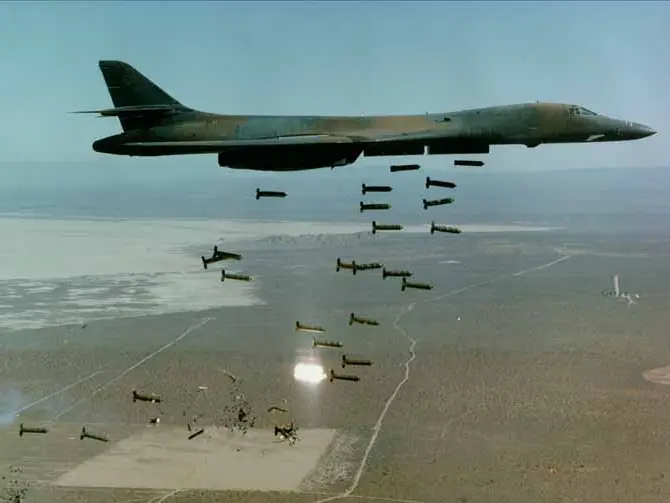
On January 24, 1961, a B-52 broke apart mid-air over Goldsboro, North Carolina, dropping two live thermonuclear bombs on American soil. One bomb went through five of its six arming steps.
On the night of January 24, 1961, a B-52 Stratofortress on a routine airborne alert patrol, part of Operation Chrome Dome, the Cold War programme that kept nuclear-armed bombers in the air around the clock, developed a severe fuel leak in its right wing. The leak was catastrophic: the aircraft lost more than 5,400 gallons of jet fuel in approximately two minutes. The crew lost control and the bomber broke apart in mid-air over the rural farmland near Goldsboro, North Carolina. Aboard the aircraft were two Mark 39 thermonuclear bombs.
Two Bombs, Two Very Different Outcomes
As the B-52 disintegrated, both bombs separated from the wreckage and fell toward the ground. One bomb's parachute deployed successfully, slowing its descent. It drifted down and became tangled in a tree, where it was recovered largely intact. The second bomb had no such controlled descent, it plummeted straight into a waterlogged field and buried itself so deep in the soft earth that the US military was never able to fully recover it. The uranium core of that second bomb remains buried in the North Carolina soil to this day, with the land around the impact site purchased by the government and placed under permanent easement.
One Switch Away From Detonation
What made the Goldsboro incident one of the most alarming nuclear accidents in Cold War history was not just that the bombs fell, it was how close one of them came to detonating. The impact of the breakup initiated the fuzing sequence on both weapons. On one of the bombs, five of the six interlocking safety mechanisms were triggered or bypassed by the forces of the breakup and descent. A single low-voltage switch, described by nuclear weapons engineers as a relatively simple arming device, was the only thing that prevented a full thermonuclear detonation.
What A Detonation Would Have Meant
Trending Stories
&imwidth=280&imheight=210&format=webp&quality=medium)
&imwidth=280&imheight=210&format=webp&quality=medium)
&im=FitAndFill=(700,400)&imwidth=280&imheight=210&format=webp&quality=medium)
&imwidth=280&imheight=210&format=webp&quality=medium)
&imwidth=280&imheight=210&format=webp&quality=medium)
&imwidth=280&imheight=210&format=webp&quality=medium)
&imwidth=280&imheight=210&format=webp&quality=medium)
&imwidth=280&imheight=210&format=webp&quality=medium)
&imwidth=280&imheight=210&format=webp&quality=medium)
&imwidth=280&imheight=210&format=webp&quality=medium)
&imwidth=280&imheight=210&format=webp&quality=medium)
&imwidth=280&imheight=210&format=webp&quality=medium)
&imwidth=280&imheight=210&format=webp&quality=medium)
&im=FitAndFill=(700,400)&imwidth=280&imheight=210&format=webp&quality=medium)
&imwidth=280&imheight=210&format=webp&quality=medium)
&imwidth=280&imheight=210&format=webp&quality=medium)
&im=FitAndFill=(700,400)&imwidth=280&imheight=210&format=webp&quality=medium)
&imwidth=280&imheight=210&format=webp&quality=medium)
&imwidth=280&imheight=210&format=webp&quality=medium)
&imwidth=280&imheight=210&format=webp&quality=medium)
&imwidth=280&imheight=210&format=webp&quality=medium)
&imwidth=280&imheight=210&format=webp&quality=medium)
&imwidth=280&imheight=210&format=webp&quality=medium)
&imwidth=280&imheight=210&format=webp&quality=medium)
&imwidth=280&imheight=210&format=webp&quality=medium)
&imwidth=280&imheight=210&format=webp&quality=medium)
&imwidth=280&imheight=210&format=webp&quality=medium)
&imwidth=280&imheight=210&format=webp&quality=medium)
&imwidth=280&imheight=210&format=webp&quality=medium)
&imwidth=280&imheight=210&format=webp&quality=medium)
&imwidth=280&imheight=210&format=webp&quality=medium)
&imwidth=280&imheight=210&format=webp&quality=medium)
Each Mark 39 bomb had a maximum yield of 3.8 megatons of TNT equivalent, more than 250 times the destructive power of the bomb dropped on Hiroshima. Engineers estimated a 100% kill zone extending 17 miles from the point of detonation. Goldsboro, a town with a population of roughly 30,000 at the time, would have been completely destroyed. Depending on wind patterns and fallout distribution, major population centres including Raleigh, Durham, and potentially areas as far north as Richmond, Virginia could have been affected by radioactive fallout.
Classified For Decades
The full details of how close the Goldsboro bomb came to detonating were not publicly confirmed for decades. It was only through declassified documents and the work of investigative journalists and nuclear safety researchers that the true severity of the incident became widely understood. The US government's initial public statements significantly downplayed the risk. The Goldsboro incident, along with the Palomares accident in Spain five years later and the Thule crash in Greenland in 1968, eventually contributed to the termination of Operation Chrome Dome, the programme that put nuclear-armed B-52s on continuous airborne patrol, in 1968.
