Hong Kong to expand ban on Japanese sea products over Fukushima nuke plant water release

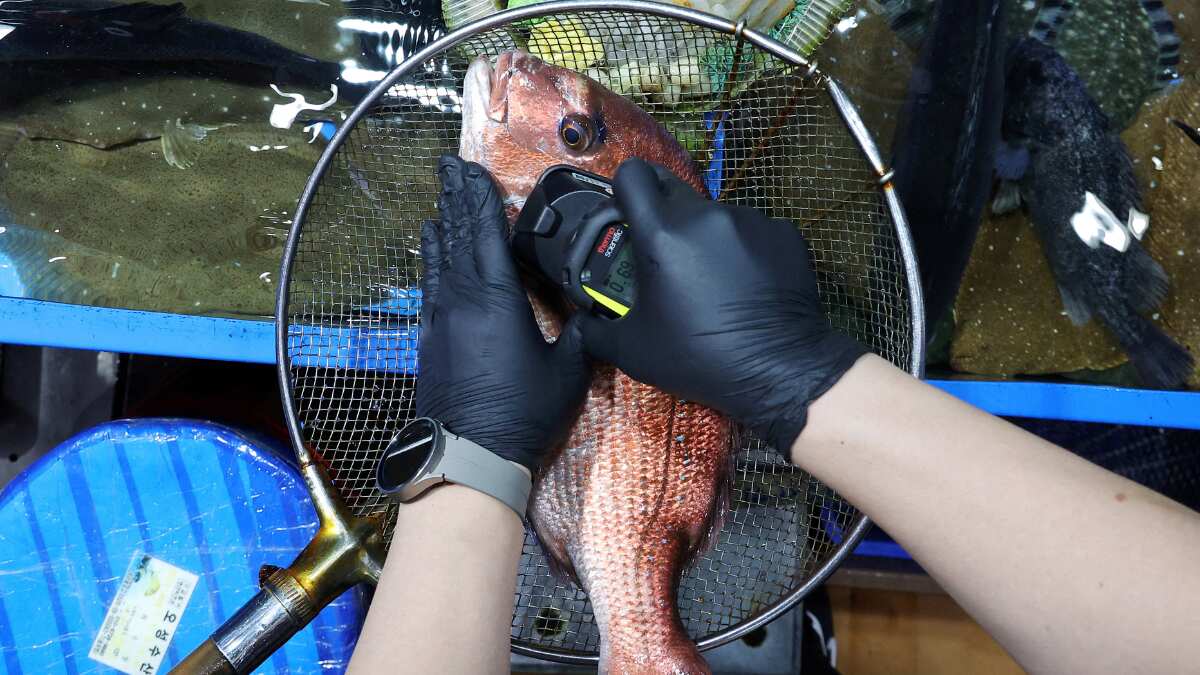
Hong Kong and China against Fukushima water
Hong Kong leader John Lee, on Tuesday (July 11), said that the city would “definitely” expand the ban on seafood products from a large number of Japanese prefectures if Tokyo moves forward with the plan to discharge treated water from the Fukushima nuclear plant.
What did Hong Kong leader say?
Lee, chief executive of the Hong Kong Special Administrative Region, said that the city’s current ban on shipments from one Japanese prefecture would “definitely” be expanded if Japan moves forward with its plan.

Japan has been facing backlash and opposition, both domestically and internationally from some countries, despite repeated reassurances, for its plan to release treated water from the destroyed Fukushima nuclear power plant, with China being its fiercest critic.
The International Atomic Energy Agency (IAEA) report, released last week after a two-year review, showed that the water release would have a negligible impact on the environment.
ALSO READ |South Koreans protest IAEA chief's visit over Fukushima water release
)
Nigeria: Protesters take to the streets, police fire shots
)
US-Iran war: Tehran draws red lines — seven demands before any peace talks
)
Russia-Europe tensions: Polish PM warns Russian attacks could test NATO's unity
&im=FitAndFill=(700,400))
‘Not the US or China’: These are the countries leading the world in arable land
)
EXCLUSIVE | Singer Hanita Bhambri on her Toxic debut, working with Vishal Mishra and more
)
Mark Carney mimics Trump in hilarious moment over C$70 billion clean-energy investment; room erupts in laughter
)
Delhi voter roll shake-up: 3.31 million electors flagged in SIR review
)
Aravana prasadam shortage at Sabarimala temple in Kerala triggers protests, TDB questioned
)
‘End of my career...’: NSA Doval recalls tense Sikkim mission when China captured Indian intelligence team
)
Report: Iran rebuilding Taleghan 2, nuclear site tied to past weapons research, hit twice by Israel
)
Trump defends AI amid growing alarm, announces new 'AI force' and promises an 'AI czar'
)
Iran sets 7 conditions to end war with US: What are Tehran’s demands?
)
Trump announces ‘AI Force’ as debate grows over AI risks and regulation
)
China may have gained access to US's classified F-35 jets; parts meant for repairs diverted to Hong Kong, sparking Pentagon inquiry
)
Gaza under attack: Health chief's son killed in IDF strikes
)
Arvind Kejriwal, family members, Delhi CM Rekha Gupta get SIR notices
)
Cochin shipyard starts building Indian Navy's next-gen missile vessels
)
Saudi vs Houthis: Houthis claim missiles & drones used in attack on key Saudi sites
)
Ed Sheeran addresses Macklemore's removal, Gaza conflict during Philadelphia concert: 'I cannot hide how I feel'
)
‘Will go to any extent’: Pakistan vows to defend Saudi Arabia amid Houthi attacks
66 years of the Indus Waters Treaty: How India and Pakistan settled a bitter river dispute
)
The Verdict | When precision fails: US commits war crime in Minab school strike, UN finds
Russia attacks Ukraine with 174 drones, kills 8; 2 vessels hit in Black Sea
)
9 women found dead near Johannesburg: South Africans rally, demand 'enough' to femicide
)
Kampala-Ankara rift deepens: Uganda suspends military ties, seeks Fred Lumbuye's extradition
)
Trump wants to rename ‘Artificial Intelligence’, gives 3 options: Which one would you pick?
)
US-Iran war: Tehran sets seven conditions to re-engage in talks with US
)
Reacher star Alan Ritchson opens up about alleged blackmail, suicide attempt during difficult period
)
Africa is splitting, and a lot sooner than estimated, giving way to a new ocean
)
Flying cars in UAE: Ras Al Khaimah signs deal with Chinese company to test new transport
)
Trump bans CNN, MS NOW and Politico from White House over ‘FAKE NEWS’
)
Trump 2.0: Dark days ahead for America’s ‘imperial presidency’
&im=FitAndFill=(700,400))
How many F-35s does Britain, Japan and Israel have?
)
Harry Brook targets long reign at top of T20I rankings after Sri Lanka sweep
)
Russia's deadly Ukraine strikes kill 2 in Sumy, hit Dnipro mall
)
Russia holds first parliamentary elections since the beginning of the Ukraine war
&im=FitAndFill=(700,400))
Meet top 5 Indian batters with fastest T20I centuries
)
Raphinha hat-trick powers Barcelona to 3-1 win over Sevilla in La Liga
)
)
The United Nations nuclear watchdog chief Rafael Grossi also assured that there are no issues with the process and that one “can drink [the water] and swim in it, too.” The process will take 30 to 40 years to complete.
But Hong Kong and China are among the countries that are not convinced. “If the exercise really starts, we’ll be banning a large number of prefectures’ sea products,” said the Hong Kong leader.
The city’s secretary for the environment and ecology has been asked to form a multi-department team to design an action plan for the same. The government will take “decisive action” against the issue, said Lee.
He added, “The catering industry will be affected, but I am sure that they will understand that we’re forced to make a decision because of this unprecedented exercise.”
The restrictions could also impact Japan’s economy and fishing communities as Tokyo exported $536 million worth of fishery products to its second-biggest importer, Hong Kong, according to Japanese government statistics.
China reiterates opposition to Japan’s plan
On Tuesday, Chinese Foreign Ministry spokesman Wang Wenbin, in a press briefing, said the IAEA report is not a “free pass” for Japan to release the “problematic water,” reported Reuters.
ALSO READ |New Zealand backs UN nuclear watchdog's approval of Fukushima water release
In a seeming response to Grossi’s remarks about the water being safe enough to drink and swim in, Wang said that if that’s the case, we suggest that Japan uses the “contaminated water for [drinking and swimming], instead of discharging it into the sea and making the international community anxious,” as quoted by Reuters.
Wang also reiterated that the IAEA report had “failed to fully reflect views from experts” who participated in the review.
China, the biggest market for Japan’s fisheries exports, recently announced a ban on the import of food products from 10 Japanese prefectures citing safety concerns and said it would step up testing for radioactive substances.
(With inputs from agencies)
WATCH WION LIVE HERE
You can now write for wionews.com and be a part of the community. Share your stories and opinions with us here.