

&imwidth=800&imheight=600&format=webp&quality=medium "History’s most shocking Nobel Peace Prize nominations: #3 will blow your mind")
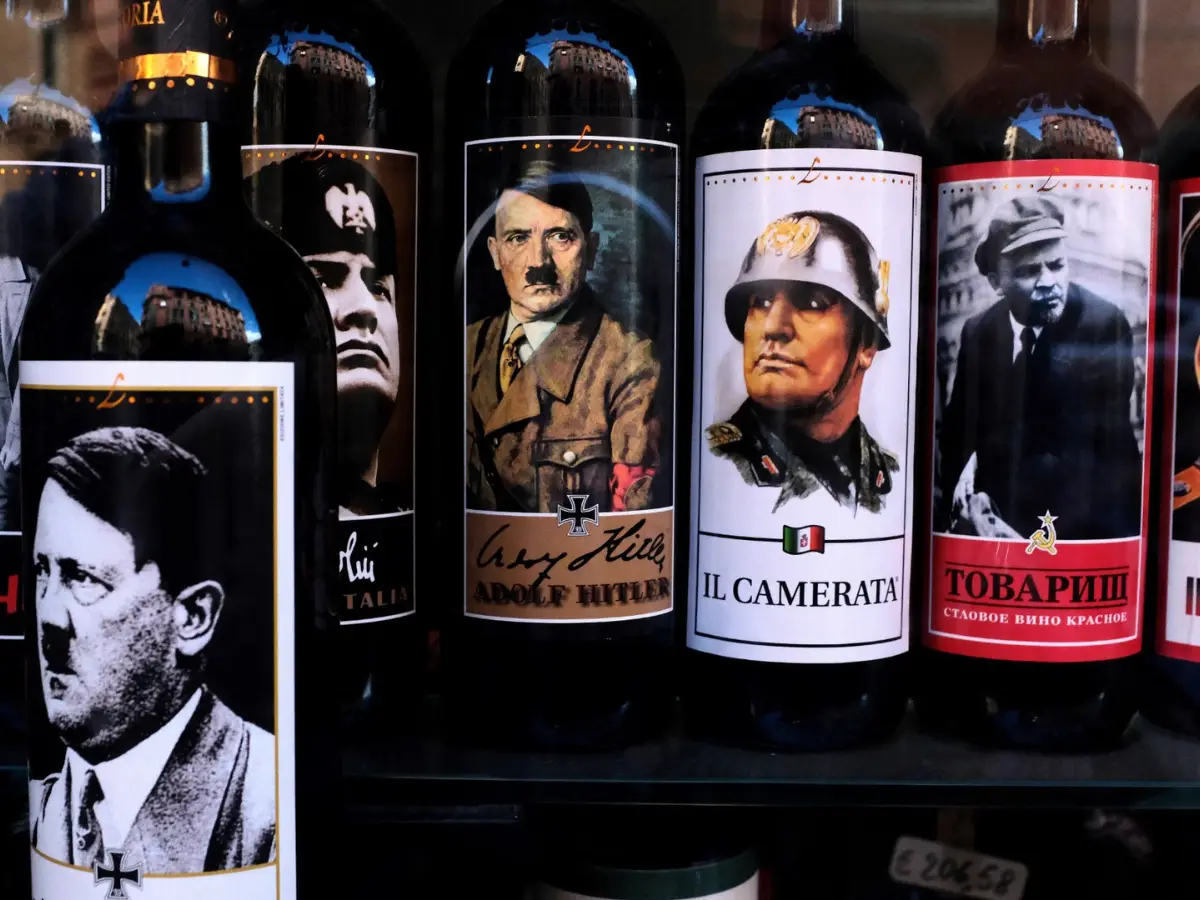
From Epstein's list to sexual misconduct, from the Russia investigation to funding Israel in its mass massacre, US President Donald Trump is one of the most polarising figures in the world as of now. But he is being endorsed for the Nobel Peace Prize by leaders from several countries, such as Armenia, Azerbaijan, Pakistan, Israel, and Cambodia. Ironically, he might not be the most scandalous nomination. Here is the list of three well-known dictators who were also nominated for the Nobel Peace Prize at different points in history.
Benito Mussolini
Mussolini was nominated in 1935 by a German law professor and a French professor. It had been 13 years since Mussolini had been the ruler of the totalitarian regime in Italy. His regime jailed and tortured political opponents. The Italian fascist dictator was then preparing for the invasion of Ethiopia. However, the proper reason behind the nominations is unknown, as the letter of recommendation is missing from the archive. Many suggest that he was praised for signing the Lateran Treaty of 1929, which resolved long-standing tensions between the Italian state and the Vatican. However, the Norwegian Nobel Committee decided not to shortlist him.
Joseph Stalin
The Communist dictator was nominated twice for the Nobel Peace Prize, once in 1945 and next time in 1948. There were different nominators, including a Norwegian Parliamentarian. The reason provided was his role as a leader of the Allied forces to end World War II. Even though the role of the USSR in ending the war was massive, he was overlooked because his domestic purges were well-known. His rule saw mass detention, labour camps, also known as Gulags, and suppression of dissent. Thus, there was a real detachment from the nomination and the actual actions of the candidate.
Adolf Hitler
Trending Stories
&imwidth=180&imheight=135&format=webp&quality=medium)
Other Mommy leads North American box Office as Verity, Resident Evil round out top four
&im=FitAndFill=(700,400)&imwidth=180&imheight=135&format=webp&quality=medium)
Navratri 2026: 9 days, 9 forms of Goddess Durga and 9 colours- Check the complete list
&im=FitAndFill=(700,400)&imwidth=180&imheight=135&format=webp&quality=medium)
Is sending robots to Mars easier than sending humans?
&imwidth=180&imheight=135&format=webp&quality=medium)
A watchdog rated 'ChatGPT for Teens' an unacceptable risk and says keep under-18s off it
&imwidth=180&imheight=135&format=webp&quality=medium)
1,500 drones illuminate Mumbai sky as Cordelia Cruises unveils second ship, Cordelia Sky
&imwidth=180&imheight=135&format=webp&quality=medium)
'Just coincidence': Police mistakes protester as AISA chief Neha Bora, arrests her from site
&imwidth=180&imheight=135&format=webp&quality=medium)
Anthropic's AI invented a murder witness and sent the fake tip to Philadelphia police
&imwidth=180&imheight=135&format=webp&quality=medium)
CJI Surya Kant declines INDIA bloc leaders’ request for meeting ahead of march to SC, asks them to file petition
&imwidth=180&imheight=135&format=webp&quality=medium)
'Turn approver, resign, we'll forgive you': Rahul Gandhi claims receiving messages from CEC Gyanesh Kumar
&imwidth=180&imheight=135&format=webp&quality=medium)
Aamir Khan's niece, actress Zayn Marie shares injury pictures after being detained with Imran Khan at Mumbai protest
&imwidth=180&imheight=135&format=webp&quality=medium)
One Indian killed in Riyadh airport attack; 11 others injured : MEA
&imwidth=180&imheight=135&format=webp&quality=medium)
Nathan Lyon completes 1,000 Test runs at No. 10 to script rare cricket feat
&imwidth=180&imheight=135&format=webp&quality=medium)
Top AI models flunked a test of inventing new AI research, so much for self-improving AI
&imwidth=180&imheight=135&format=webp&quality=medium)
Wasim Jaffer blames Ajit Agarkar-led selection panel for Virat Kohli’s Test retirement
&imwidth=180&imheight=135&format=webp&quality=medium)
'Ouch!!! That must hurt': Kangana Ranaut hails Kamal Haasan's sharp reply to Elon Musk over Starlink row
&imwidth=180&imheight=135&format=webp&quality=medium)
Sidhu Moose Wala’s younger brother wins hearts by recreating late singer’s signature move at Toronto Hologram Show
&imwidth=180&imheight=135&format=webp&quality=medium)
Meta's Muse AI could be a security nightmare for India's billion-plus users
&imwidth=180&imheight=135&format=webp&quality=medium)
UK school ditches technology, shifts from screen to pen and paper for learning
&imwidth=180&imheight=135&format=webp&quality=medium)
IND vs WI, 3rd T20I: Abhishek Sharma smashes 18-ball fifty, sets record for fastest to 2,000 T20I runs
&imwidth=180&imheight=135&format=webp&quality=medium)
Prince Harry and Meghan Markle to spend Christmas away from royal family
&imwidth=180&imheight=135&format=webp&quality=medium)
Houthis claim Riyadh airport attacks, Aramco strikes; issue fresh warning to airlines, travellers and workers
&imwidth=180&imheight=135&format=webp&quality=medium)
Portugal Federation confirms Cristiano Ronaldo’s return to national team despite suspension
&imwidth=180&imheight=135&format=webp&quality=medium)
Delhi protests: 'Court should not be dragged into political activity', says CJI Surya Kant
&im=FitAndFill=(700,400)&imwidth=180&imheight=135&format=webp&quality=medium)
New OTT releases this week (October 12-18, 2026): Sacrifice, Koffee with Karan S9, Roadies Rebirth- 6 titles coming on Netflix, JioHotstar and more
&imwidth=180&imheight=135&format=webp&quality=medium)
Microsoft's Nadella says treat every AI model as already hacked, and build an 'emergency brake'
&imwidth=180&imheight=135&format=webp&quality=medium)
Delhi protest: CJI Surya Kant declines to meet India Bloc leaders
&imwidth=180&imheight=135&format=webp&quality=medium)
China imposes first-ever sanctions on ministers from Taiwan allies: What this means
&imwidth=180&imheight=135&format=webp&quality=medium)
McSweeney reveals how studying Virat Kohli’s YouTube clips helped Australia A conquer India
&imwidth=180&imheight=135&format=webp&quality=medium)
Maharashtra appoints FDA commissioner Tukaram Mundhe as secretary of committee for MPSC overhaul amid stir
&imwidth=180&imheight=135&format=webp&quality=medium)
Iran: US accepted some conditions, Clarity needed on others
&imwidth=180&imheight=135&format=webp&quality=medium)
Nana Patekar's cause of death confirmed; here's what his postmortem report says
&imwidth=180&imheight=135&format=webp&quality=medium)
iPhone Duo price index: Tracking Apple’s latest pricing trends
&imwidth=180&imheight=135&format=webp&quality=medium)
'Say no to Muse': Meta has no control over its own moderation AI while it forces a security nightmare on everyone
&imwidth=180&imheight=135&format=webp&quality=medium)
Delhi wakes up to heavy rain, thunderstorms; yellow alert in place; temperature drops
This is perhaps the most absurd of all. In 1939, Adolf Hitler was sarcastically nominated by Erik Brandt, a Swedish Parliamentarian. He meant it as a protest against the appeasement policies. Brandt was mocking the British Prime Minister Neville Chamberlain's agreement with Hitler. He was also mocking his fellow parliamentarians who were seriously considering Neville for the prize. He called Hitler a "hope for peace' as a joke. But this caused a huge public and media uproar; the joke fell flat in the tense pre-war period, and Brandt quickly withdrew his nominations.
These nominations, however, do not represent the spirit of the prize, nor do they diminish the efforts of others who made serious contributions. For example, in 1935, when Benito Mussolini was nominated for the prize, it was won by Carl von Ossietzky, a German pacifist who was imprisoned by Nazi Germany, because of his warning about the German rearmament, which had been severely restricted by the Treaty of Versailles, following World War I. It is also to be noted that nomination for the Nobel Prize does not account for endorsement from the Nobel Committee. These lists can be longer than 300 people, which are then narrowed down to 20-30 people, from which, after deliberation by the Nobel Committee, a laureate is chosen and awarded the prize on December 10, on the death anniversary of Alfred Nobel.

