Hacking the hackers: Russian group hijacked Iranian spying operation, officials say

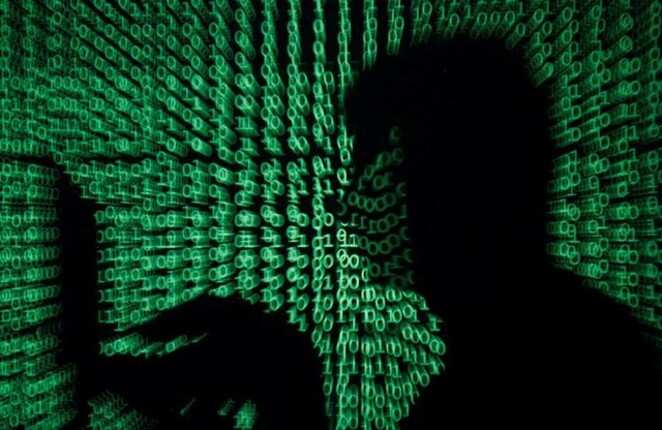
A man holds a laptop computer as cyber code is projected on him in this illustration.
Russianhackerspiggy-backed on anIraniancyber-espionageoperationto attack government and industry organizations in dozens of countries while masquerading as attackers from the Islamic Republic, British and USofficialssaid on Monday.
TheRussiangroup, known as "Turla" and accused by Estonian and Czech authorities of operating on behalf of Russia's FSB security service, has usedIraniantools and computer infrastructure to successfully hack into organizations in at least 20 different countries over the last 18 months, British securityofficialssaid.
Thehackingcampaign, the extent of which has not been previously revealed, was most active in the Middle East but also targeted organizations in Britain, they said.

Paul Chichester, a senior official at Britain's GCHQ intelligence agency, said theoperationshows state-backedhackersare working in a "very crowded space" and developing new attacks and methods to better cover their tracks.
In a statement accompanying a joint advisory with the USNational Security Agency (NSA), GCHQ's National Cyber Security Centre said it wanted to raise industry awareness about the activity and make attacks more difficult for its adversaries.
"We want to send a clear message that even when cyber actors seek to mask their identity, our capabilities will ultimately identify them," said Chichester, who serves as the NCSC's director ofoperations.
&imwidth=180&imheight=135&format=webp&quality=medium)
'Baseless and misconceived': India issues statement after Elon Musk's 'oligarchs' claim over Starlink delay
&imwidth=180&imheight=135&format=webp&quality=medium)
‘You earned that love’: Messi’s wife shares heartfelt message as football icon bids farewell to international stage
&imwidth=180&imheight=135&format=webp&quality=medium)
BJP chief Nitin Nabin calls Rahul Gandhi ‘anarchist’, says Oppn ‘spreading poison’ in society
&imwidth=180&imheight=135&format=webp&quality=medium)
‘Team first and team ahead’: India coach Gambhir pens heartfelt wish for chief selector Ajit Agarkar
&imwidth=180&imheight=135&format=webp&quality=medium)
Trump's naked 23-karat gold statue unveiled near European Parliament
&imwidth=180&imheight=135&format=webp&quality=medium)
Nana Patekar: Remembering a legend of the Indian cinema
&imwidth=180&imheight=135&format=webp&quality=medium)
Thai Actors Fourth Nattawat, Gemini Norawit face racism accusations from Indian fans over viral Bollywood act
&imwidth=180&imheight=135&format=webp&quality=medium)
Captain Smit Machchhar on feet again, walks 10 steps as recovery continues after Flydubai flight attack
&imwidth=180&imheight=135&format=webp&quality=medium)
Ronaldo sends 'a hug' after Messi says he misses 'wearing the blue and white'
&imwidth=180&imheight=135&format=webp&quality=medium)
Trump distances himself from senior political advisers over work for pro-Russian government
&imwidth=180&imheight=135&format=webp&quality=medium)
A Love Other Than Yours: The temptation to cheat and what pushes people over the edge
&imwidth=180&imheight=135&format=webp&quality=medium)
Narendra Modi Stadium bomb threat declared hoax; India & Australia U19 squads safe
&imwidth=180&imheight=135&format=webp&quality=medium)
US midterms 2026: Why the Latino vote could shape control of Congress
&imwidth=180&imheight=135&format=webp&quality=medium)
BTS agency HYBE announces first-ever Weverse Con Festival in India
&imwidth=180&imheight=135&format=webp&quality=medium)
US Midterms 2026: Barack Obama hits campaign trail to boost Democratic candidates
&imwidth=180&imheight=135&format=webp&quality=medium)
Shia LaBeouf and Mia Goth head for divorce after nearly 10 years
&imwidth=180&imheight=135&format=webp&quality=medium)
Who is DogeDesigner? All we know about the X account that sparked India-Musk-Starlink ‘oligarchs’ controversy
&imwidth=180&imheight=135&format=webp&quality=medium)
Christa Pike wakes after failed execution, asks 'Where am I and who are you?'
&imwidth=180&imheight=135&format=webp&quality=medium)
Christa Pike 'angry' and 'confused' after failed execution; judge orders to preserve evidence
&imwidth=180&imheight=135&format=webp&quality=medium)
Nigerian President Bola Ahmed Tinubu hails Modi’s 25-year leadership milestone, calls for deeper Nigeria-India strategic ties
&im=FitAndFill=(700,400)&imwidth=180&imheight=135&format=webp&quality=medium)
US midterms 2026: 10 leaders and candidates to watch in the battle for Congress
&imwidth=180&imheight=135&format=webp&quality=medium)
Nana Patekar's #MeToo controversy: From Tanushree Dutta’s allegations to court ruling
&imwidth=180&imheight=135&format=webp&quality=medium)
Atlantic hurricane Isaias could make landfall as a strong Category 2 storm, tornado warnings issued
&imwidth=180&imheight=135&format=webp&quality=medium)
Veteran actor Nana Patekar dies at 75 after suffering cardiac arrest
&imwidth=180&imheight=135&format=webp&quality=medium)
Musk alleges ‘oligarchs’ blocking Starlink in India, here is what we know so far
&imwidth=180&imheight=135&format=webp&quality=medium)
Lightning strikes IndiGo Patna-Lucknow flight at 17,000 feet, damages nose; all 110 safe
&imwidth=180&imheight=135&format=webp&quality=medium)
Who is Nana Patekar's wife Neelakanti? The bank officer who earned Rs 2,500 when he earned Rs 50
&imwidth=180&imheight=135&format=webp&quality=medium)
Mall of America attack: FBI arrests man over alleged ISIS-inspired mass shooting plot with AK-47 and 200 rounds
&imwidth=180&imheight=135&format=webp&quality=medium)
France holds talks with Taliban government amid diplomatic outreach
&imwidth=180&imheight=135&format=webp&quality=medium)
IndiGo flight struck by lightning at 17,000 feet, nose of Patna-Lucknow flight damaged
&imwidth=180&imheight=135&format=webp&quality=medium)
US readying to strike Iran? Report suggests Trump preparing to put on show of strength ahead of US midterms
&imwidth=180&imheight=135&format=webp&quality=medium)
Zendaya gives The Odyssey white lace jacket a stylish twist at Paris Fashion Week 2026
&im=FitAndFill=(700,400)&imwidth=180&imheight=135&format=webp&quality=medium)
World’s top vehicle producers: Top 10 countries making the most cars. Check where India stands
&imwidth=180&imheight=135&format=webp&quality=medium)
Trump to honour Elon Musk, Sergey Brin and Jensen Huang with top science honour at White House. Check the full list here
&imwidth=180&imheight=135&format=webp&quality=medium)
'We don't think so': Trump says Russian plague lab worker's death not linked to bio-weapon
&imwidth=180&imheight=135&format=webp&quality=medium)
Sri Lankan Tamil worker gets death sentence in Saudi Arabia over blasphemy, calls for pardon intensify
&imwidth=180&imheight=135&format=webp&quality=medium)
France protests: How a Gen Z school movement turned into a political war | The Verdict
Officialsin Russia and Iran did not immediately respond to requests for comment sent on Sunday. Moscow and Tehran have both repeatedly denied Western allegations overhacking.
Westernofficialsrank Russia and Iran as two of the most dangerous threats in cyberspace, alongside China and North Korea, with both governments accused of conductinghackingoperations against countries around the world.
Intelligenceofficialssaid there was no evidence of collusion between Turla and itsIranianvictim, ahackinggroupknown as "APT34" which cybersecurity researchers at firms including FireEye FEYE.Osayworks for theIraniangovernment.
Rather, theRussianhackersinfiltrated theIraniangroup's infrastructure in order to "masquerade as an adversary which victims would expect to target them," said GCHQ's Chichester.
Turla's actions show the dangers of wrongly attributing cyberattacks, Britishofficialssaid but added that they were not aware of any public incidents that had been incorrectly blamed on Iran as a result of theRussianoperation.
The United States and its Western allies have also used foreign cyberattacks to facilitate their ownspyingoperations, a practice referred to as "fourth party collection," according to documents released by former U.S. intelligence contractor Edward Snowden and reporting by German magazine Der Spiegel.
GCHQ declined to comment on Westernoperations.
By gaining access to theIranianinfrastructure, Turla was able to use APT34's "command and control" systems to deploy its own malicious code, GCHQ and the NSA said in a public advisory.
TheRussiangroupwas also able to access the networks of existing APT34 victims and even access the code needed to build its own "Iranian"hackingtools.