Diesel crisis deepens as global supplies shrink, crack spreads hit record highs

&imwidth=600&imheight=450&format=webp&quality=medium "Diesel crisis deepens as global supplies shrink, crack spreads hit record highs")
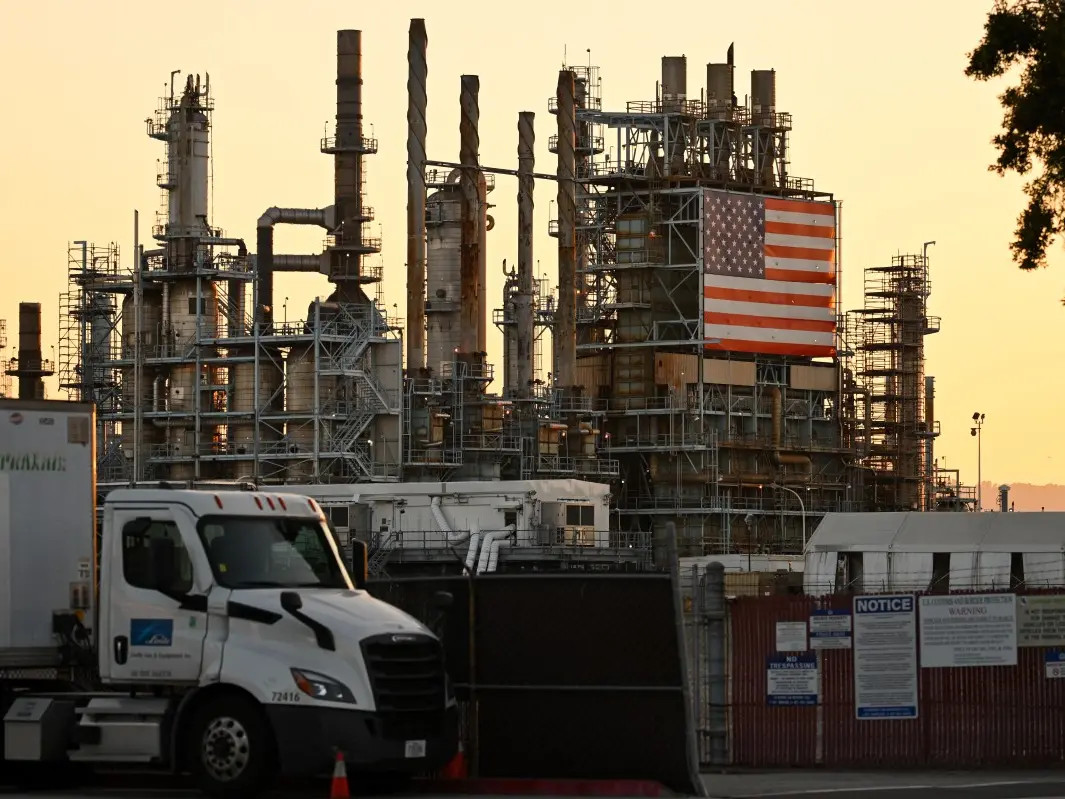
A US flag is displayed outside of the Marathon Petroleum Corp. According to the company’s website, the refinery is the largest on the West Coast with a crude oil capacity of 365,000 barrels per calendar day, producing California Air Resources Board (CARB) gasoline and CARB diesel fuel among other products. Photograph: (AFP)
Global diesel supplies are tightening as refinery disruptions and export curbs push crack spreads to record levels, raising fears of higher fuel and food costs.
US President Donald Trump over the weekend announced that the US was not considering a Diesel export ban, after floating the idea last week. Importers reacted to a possible US diesel export ban because the global diesel market has almost no spare supply. The threat alone was enough to shake the world's fuel buyers.
The Iran war and attacks on Gulf refineries cut Middle East output; China reduced its diesel exports. Then came the Houthis, who captured the Red Sea coast, skyrocketing prices. Refineries in Asia and India are actually taking the long way around the Cape of Good Hope to deliver refined products to Europe, or to bring West African crudes back to Asia. Similarly, Ukrainian drones have hit most of Russia's major refineries, and Russia has restricted fuel exports. So it's not just crude oil that is being taken out of the market; it's also these huge refineries that are being rendered useless.
Europe's reliance on US diesel increased in 2026 as Gulf exports from Saudi Arabia and the UAE declined. US diesel exports reached a weekly record near 2 million barrels per day this summer. Top buyers include Brazil, Chile, Mexico, Peru, Morocco, France and the United Kingdom. Many of these countries have little refining capacity of their own.
How does it affect diesel prices?
Crude oil isn't the only thing that's driving the world's fuel crisis. The gap between what crude costs and what diesel sells for is, and it has hit levels never seen before. The crack spread rose from about $20 a barrel to over $100 in late September. The overall Trading Economics Crack Spread Index hit its absolute record high of $75 per barrel on September 24, 2026. Additionally, the specific ultra-low sulfur diesel futures crack hit its absolute peak of $118 a barrel right in the middle of the month on September 16, 2026
Trending Stories
)
)
)
)
)
)
)
)
)
)
)
)
)
)
)
)
)
)
)
)
)
)
)
)
)
)
)
)
)
)
)
)
)
)
&im=FitAndFill=(700,400))
)
)
)
)
In 2025, the price of oil was about $65 a barrel, and the crack spread was about $20 a barrel, when added diesel was at $85 per barrel. In late September, Brent Crude was more than $100 a barrel, and the crack spread- the price of refining that barrel of oil was $118. It means diesel prices, which were $85 a barrel, rose to $218 a barrel, roughly three times. On October 2, it was somewhere around $187.53 a barrel for WTI Crude.
If diesel is three times as expensive, then transportation is three times as expensive. About 10% of the cost of food comes from the transportation to get it to the store. Similarly, agricultural equipment, big and heavy, runs on diesel. Jet fuel is another refined product which is also facing the same situation.
China is on a buying spree
China magically cut back its imports by five and a half million barrels a day in mid-2026. But since September, China has started paying $135 a barrel for oil, and it's on a buying spree. As of October 4, 2026, Shanghai Crude is sitting at 892.00 Yuan per barrel. It's now cutting just two and a half million barrels a day from its normal imports. It has effectively suspended and heavily restricted refined oil product exports, including diesel, gasoline, and jet fuel, for the month of October. China implemented a similar ban on refined fuel exports earlier this year in March, then it allowed refiners to resume normal export quotas in July and August. China and the US are the two largest oil-refining nations on Earth, each processing roughly 17 to 18.5 million barrels of crude oil per day.
Global diesel supply fell by about 3 million barrels out of 30 million barrels a day; roughly 10% is absent since September. Now, if the US bans its exports, then the world will not only face a fuel crisis, but will also be on the threshold of a food crisis.
The G7 will deploy 100 million barrels of reserves over the next four months. G7 leaders also agreed to “refrain from export restrictions on energy and energy products between G7 countries” and called on producers to avoid measures that could exacerbate market tensions, according to their joint statement. According to the US Treasury, crude oil exports from the Persian Gulf are at or near prewar levels, although volumes remain volatile. Meanwhile, the US has sent a third aircraft carrier to the Persian Gulf, raising the potential for escalation in the months-long conflict.