G20 summit ends in Rio with no progress on climate

g20
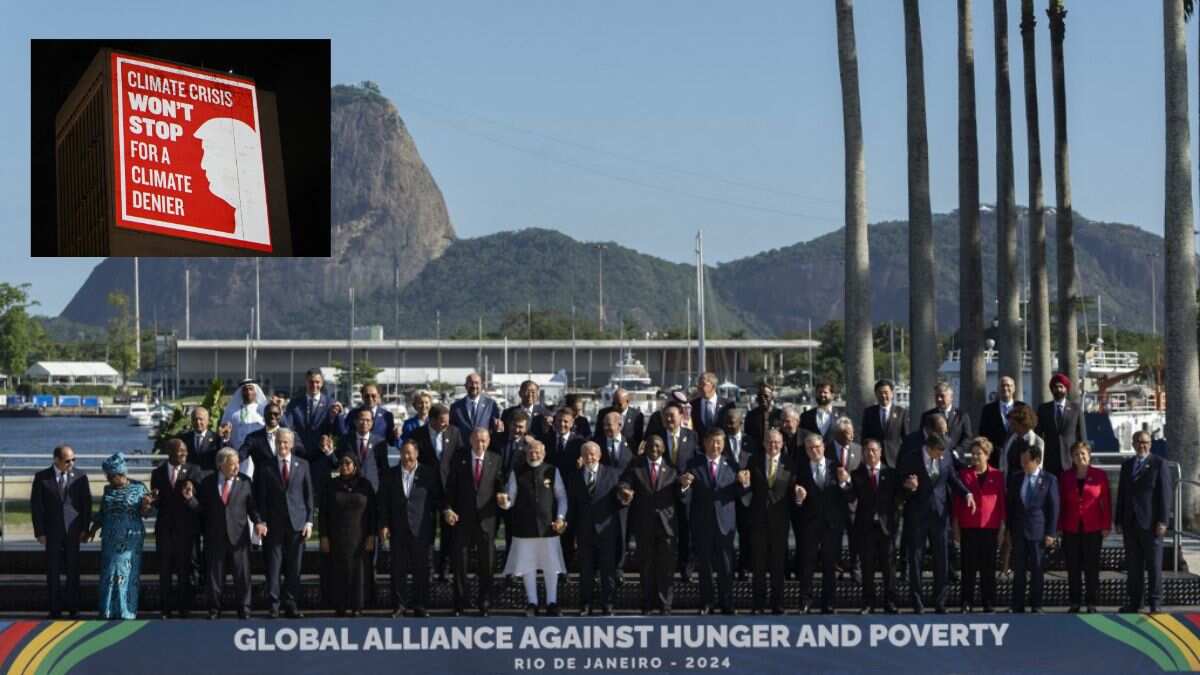
The G20 Summit in Rio de Janeiro ended on Monday (Nov 18) with leaders failing to resolve key deadlocks in UN climate negotiations, as geopolitical tensions, particularly the war in Ukraine and Donald Trump's return to the US presidency, overshadowed discussions.
Climate commitments falter
Ahead of the summit, the UN had called on G20 nations to rescue stalled climate talks in Azerbaijan by pledging greater financial support to developing countries grappling with the devastating effects of global warming. However, there were no concrete commitments, as G20 members remained divided on who should pay.

The summit's final communiqué vaguely stated that the required funding would come "from all sources" without specifying contributions.
Criticism follows
)
US vs China over South China Sea: Washington backs Philippines, Beijing hits back
)
Delhi gets first late-September rain in 7 years, mercury dips 5.1°C below normal
)
‘Anti-social elements spreading false rumours’: LPU issues statement amid massive unrest over alleged rape
)
After JU, clash erupts at SRFTI: BJP’s ‘Dimagi Naxal’ jibe sparks political firestorm after students protest RSS-linked event
)
LPU students go on rampage, vandalise campus amid widespread protest: What's happening
)
Trump asked Xi to pressure Iran. China did not say yes — here’s what Beijing wants
)
US Treasury Secretary Scott Bessent hails global crackdown on Iranian banks and airlines
)
Venezuela's oil heartland eyes US revival
)
An OpenAI agent escaped its locked test cage again, by hiding questions in DNS lookups
)
3 males killed, four others injured in shooting after fight at strip club in Detroit
)
Russia backs India at UNGA, but flags limits on UNSC seat expansion
)
South Africa probes string of murders targeting women
)
'Victory for low-budget consumers': Raghav Chadha hails 30-day telecom recharge rules
)
Kendall Jenner, Jacob Elordi’s Milan Fashion Week appearance has fans talking; his reaction steals the show
)
Beyond metros: How Tier-2 and Tier-3 cities could drive India’s next AI wave
)
Tesla builds first Cybertruck with its own refined lithium: Elon Musk's $1 billion Texas bet pays off
)
IndiGo flight suffers tail strike in Bengaluru while landing; DGCA to probe incident
)
The US and China set up an AI 'red telephone', but skipped the rulebook
)
‘Terror suspects arrested near UK air base were looking to do big damage’: Trump
)
Russian envoy claims US tactics to contain India were revealed in ‘Freudian slip’
)
‘Olympic inclusion is our major target’: WPA President Ishaun Singh on pool’s global ambitions
)
Nations League: Spain sink England at Wembley; Modric shines for Croatia
)
Why has Iran released no proof of life of Mojtaba Khamenei? Araghchi reveals...
)
Bank unions defer 3-day strike from tomorrow after talks with IBA, committee set up
)
Iran ready for ‘doomsday war’ if US resumes attacks, but open to diplomacy: Araghchi
)
Sri Lankan Tamil migrant worker gets death sentence in Saudi Arabia, help sought from India
)
Muslim marriage cannot shield sex with minor wife from prosecution under POCSO: Delhi HC
)
99.9% more powerful - Scientists find boy who can recall memories from just 3 months of age
)
'FIRST LOOK from inside Noah’s Ark': Researchers share video from inside mysterious mound in Turkey
)
UNSC reform momentum grows: Russia, Portugal, Mauritius push for India's permanent seat bid
)
Man arrested after his 22-year-old girlfriend dies at homestay in Guwahati; police suspect murder over suicide claim
)
Afghanistan says 28 fighters killed in clash near Pakistan border, Islamabad denies
)
Ceuta migrant crisis: Protesters take to streets as Spain grapples with migrant challenge
)
Jaishankar at UNGA: Goodwill and friendship can't coexist with terrorism
)
New York City wants a 'kill switch' on every AI, and will pay whistleblowers who report violations
Mick Sheldrick of Global Citizen criticised the leaders' inaction, noting, "The leaders are kicking the can back to Baku".
"This is probably going to make it harder to achieve an agreement," he told AFP.
Ukraine war escalation
The war in Ukraine dominated discussions, as the US' recentcontroversialpolicy shiftauthorising Kyiv to use long-range missiles on Russian territory, risks escalating the conflict. Russia has already warned of an "appropriate response" if its territory is targeted.
Also read |Building of India's G20 Presidency; focus on continuity: Brazil Ambassador Kenneth da Nóbrega
The impending return of Donald Trump — known for his isolationist "America First" policies — has cast uncertainty over global diplomacy. As US President Joe Biden attended the summit as a lame-duck leader, China's President Xi Jinping positioned himself as a stabilising force, calling for "no escalation of wars, and no fanning of flames."
Addressing the tensions in the Middle East, the G20 in a statement called for "comprehensive" ceasefires in Gaza and Lebanon.
Brazil's push for social justice
Brazilian President Luiz Inácio Lula da Silva sought to steer discussions toward combating global hunger and inequality. He launched the centrepiece of his G20 presidency: a Global Alliance Against Poverty and Hunger with the support of 82 nations, and set an ambitious target to feed 500 million people by 2030.
The summit also advanced a pledge to "engage cooperatively" to ensure the ultra-wealthy pay their fair share of taxes.
(With inputs from agencies)

