From lab to leadership: How five politicians with science backgrounds led their nations

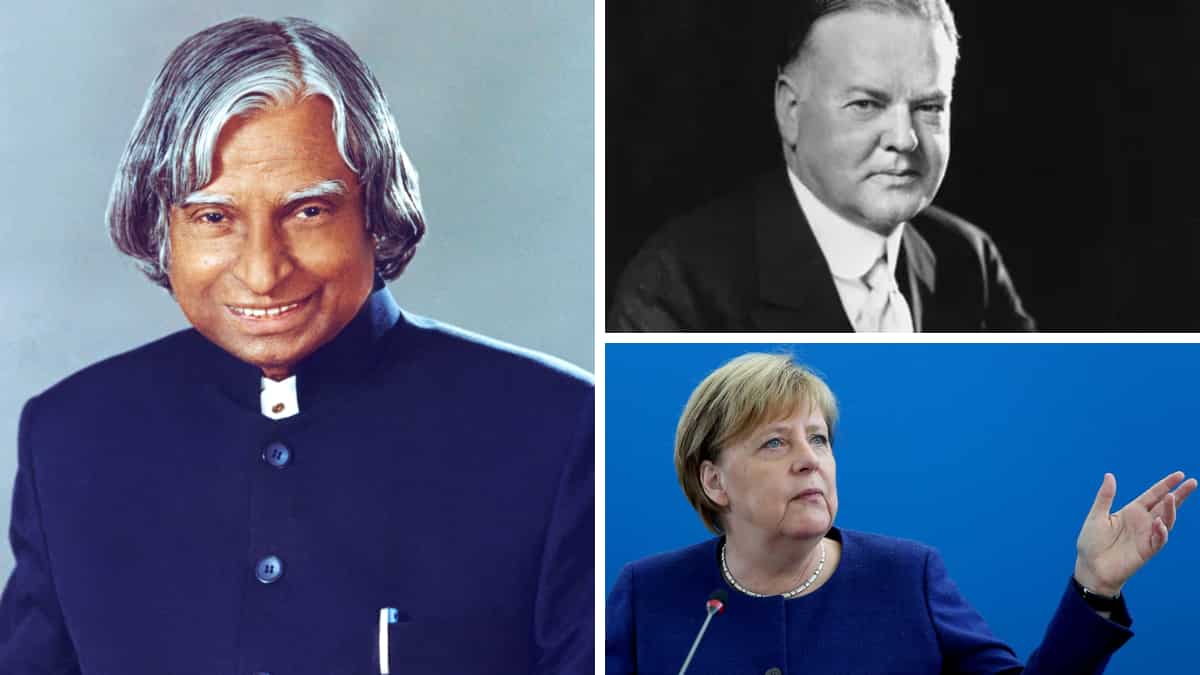
Five other scientists-turned-world leaders
Claudia Sheinbaum Pardo, who holds degrees in both environmental engineering and physics, was chosen as Mexico's first female president. There is now much conjecture on Sheinbaum Pardo's potential preference for evidence-based decision-making.
An article published in the scientific journal Nature looks into how five other scientists-turned-world leaders fared in office, and whether their scientific backgrounds were beneficial or detrimental.

Herbert Hoover, US President (1929–33)
In the 1890s, Herbert Hoover pursued his studies in geology at the newly established Stanford University in California. After taking office as US Secretary of Commerce in 1921, Hoover established himself as a capable technocrat.
However, David Cole, head of the Science History Institute in Philadelphia, Pennsylvania, told scientific journal Nature that he may have been as ignorant to the greater social, cultural, and political problems that emerged as the nation fell into the Great Depression due to his technocratic bent.
)
Trump gifts Xi a bald eagle sculpture at White House dinner: Here’s what it symbolises
)
A seven-day roadmap? Iran proposes plan to end war, reopen Strait of Hormuz and resume nuclear talks
)
WATCH: Pak PM Shehbaz Sharif refuses to answer on Hafeez Sayeed, walks away
)
Farhan, who went viral for AK47 celebration vs India in Asia Cup, hopes to lead Pakistan beyond Asian Games
)
China to test supersonic jet that moves at Mach 2, double the speed of sound
)
Susan Sarandon and Hannah Einbinder detained by NYPD outside UN Headquarters
&im=FitAndFill=(700,400))
Netanyahu at UN: Mass walkout, attack on Mamdani and Iran threats | In Pics
)
Park Ji Hyun makes history as first Korean actress nominated for International Emmy
)
‘Not just a local tragedy’: Nepal PM Shah warns UN of growing climate threat, says Nepal floods were 'a warning to the world'
)
Scientists detect first radio signals directly from faraway planet
)
'Blockbuster' nor'easter develops an eye similar to hurricanes as warnings are issued
Don't Be Shy movie review: A frothy coming-of-age tale that is too shy to experiment
)
West Indies coach Sammy looking at India series as opportunity to finetune ahead of ODI World Cup 2027 qualifiers
)
Bollywood mourns Mushtaq Khan: Sunny Deol, Rajpal Yadav and others pay tribute
)
WION Iconic Tourism Summit 2026: Union Minister Shekhawat on 'experiential travel', peace diplomacy
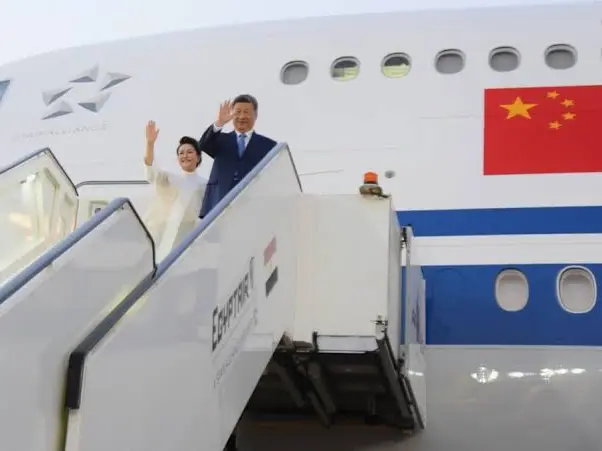)
Xi Jinping's 'special plane' vs Trump's Air Force One: What's the difference?
)
US faces fresh cost crunch as mortgage rates hit 7%, oil tops $107 and gas prices surge
)
Myanmar training camp case: US national, 6 Ukrainians allowed to meet their families abroad
)
Air India pilot suspended after failing pre-flight alcohol test on Zurich-Delhi route
)
'FIRST LOOK from inside Noah’s Ark': Researchers share video from inside mysterious mound in Turkey
)
Nations League: Germany draw on Klopp debut; Portugal, Norway win
)
India-New Zealand FTA is ‘an expression of trust’, NZ High Commissioner Patrick John Rata says
)
Outrage erupts after 3-year-old is married to 60-year-old man in Pakistan, link to her sister's murder being probed
)
Yemen called Trump for US military support in fight against Houthis: Official
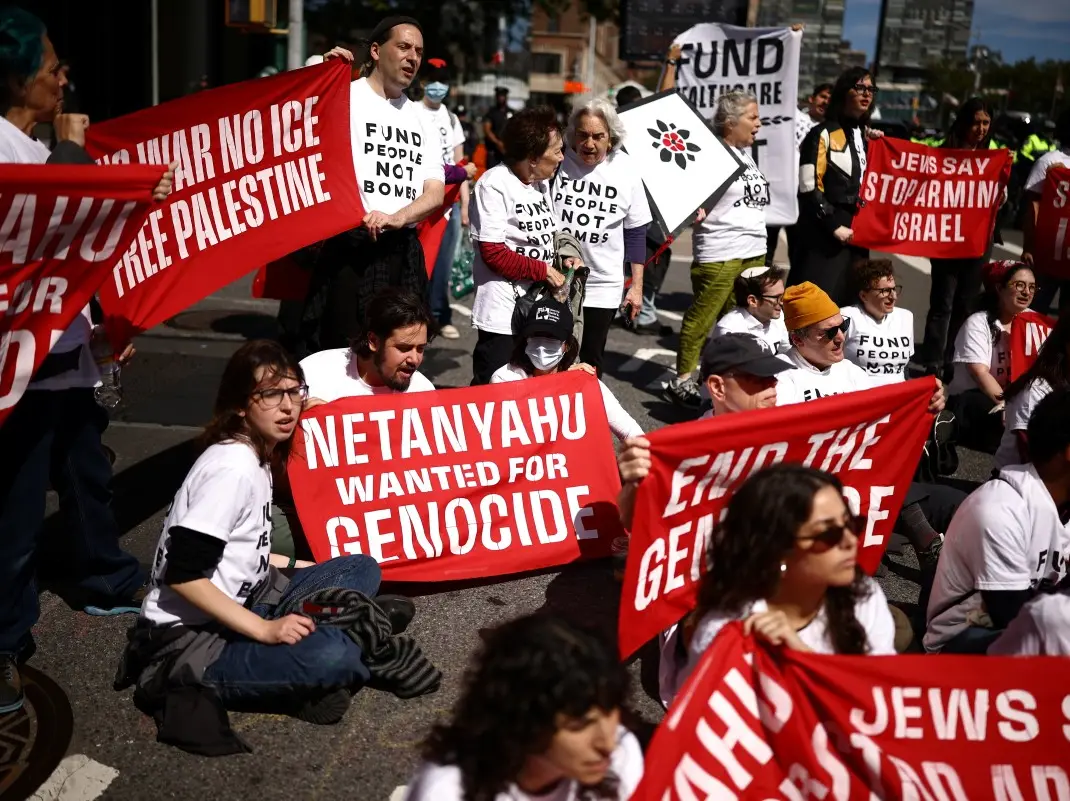)
'Fund people, not bombs': Hundreds take to New York streets as Netanyahu delivers speech at UN; dozens arrested
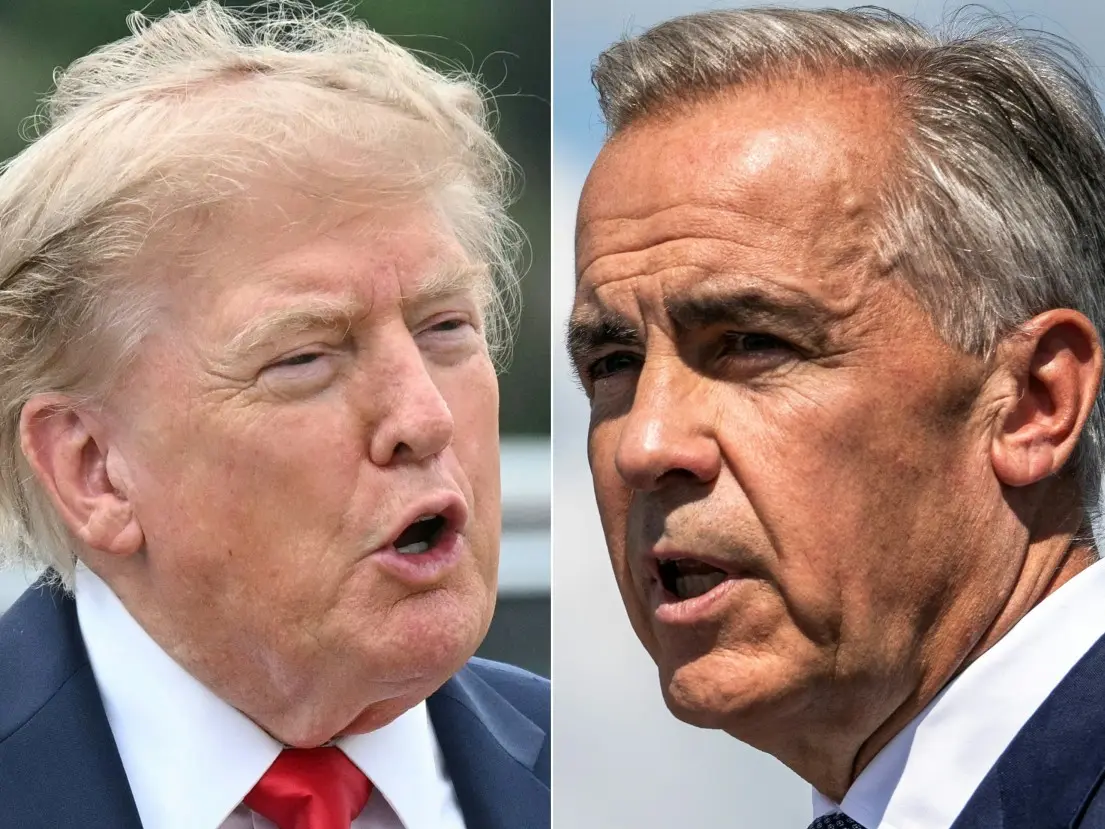)
What’s in a name? Trump’s 'Lake America' move gets a tit-for-tat response from Canada
)
The Vvaan Review: This Ekta Kapoor's Tulsi Virani-coded world can't be saved by Sidharth Malhotra and Tamannaah Bhatia
)
CNN, Politico and MS NOW back in White House after judge blocks Trump’s media ban
)
Ruckus in J&K Assembly over statehood resolution; BJP leaders enter well of house
)
Trump's welcome to Xi demonstrates 'attraction' to dictators: Chuck Schumer
)
Meet Adrian Abraham: 9-year-old Indian-origin guitar prodigy aiming for a Guinness World Record
)
Bias or safety concerns? Bengaluru CEO says firm will not hire men from UP, Bihar, Rajasthan, MP. Here's why
)
'We do not wish to continue. It's America that must choose': Iran president Pezeshkian calls on US to end war
)
'Making history': Xi Jinping praises Trump as US-China leaders dine at White House
)
OpenAI is building AI to fight cyber threats: What GPT-6 Cyber means for security
)
Tesla is preparing something big for Optimus: new Gen 3 models surface in app
)
‘We’ve never gotten along better’: Trump praises Xi, jokes about White House ballroom at high-stakes state dinner
)
'What kind of confession is this?': Pakistan PM Shehbaz Sharif’s 'terrorists would be roaming New York' remark goes viral, raises alarm online. Watch
)
UNGA 2026: Israeli PM attacks Britain, France for past colonialism
)
According to Cole, many of the government initiatives aimed at boosting employment and pulling the nation out of the Great Depression were initiated under Hoover. Cole continues, "Hoover was politically tone deaf; he worked himself nearly to death trying to engineer the country out of the depression."
Margaret Thatcher, UK prime minister (1979–90)
As a chemist by training, Margaret Thatcher is arguably Britain's most well-known and controversial prime leader.
In 1979, she spearheaded the electoral triumph of the right-wing Conservative party in the United Kingdom, which came about as a result of a series of strikes by over 4 million workers demanding greater wages than they were receiving.
Throughout her 11-year tenure as prime minister, Thatcher reduced expenditure on housing, health care, and education while privatising state-owned businesses and public utilities like gas, electricity, and water. Her popularity suffered from the funding reductions and the rising jobless rate.
APJAbdul Kalam, president of India (2002–07)
Avul Pakir Jainulabdeen (A. P. J.) Abdul Kalam was well-known across the country even before he was elected president.
Kalam was chosen as India's eleventh president in 2002 thanks to the backing of both the opposition and the ruling parties. Although the prime minister serves as head of state and administration, the president of India has the authority to veto laws that parliament has enacted.
Also read:New York enacts landmark laws to combat social media addiction and protect children's privacy
For young scientists in particular, like Rohini Godbole, a particle physicist at the Indian Institute of Science in Bangalore,Kalam being made the president of the country was"hugely inspiring."
Angela Merkel, chancellor of Germany, 2005–21
After being elected as chancellor of Germany in 2005, Angela Merkel, who has training in quantum chemistry became the country's first female chancellor. For 16 years in power as the leader of the center-right Christian Democrats, she was Germany's second-longest-serving head of state.
Political scientist Matt Qvortrup of Coventry University in the UK claims that she was well-known as a political leader for her pragmatic approach to handling a variety of challenges, including the COVID-19 pandemic, the European financial crisis, and Germany's phaseout of nuclear energy.
Yukio Hatoyama, Prime Minister of Japan (2009–10)
The tenure of Yukio Hatoyama as Japan's prime minister was short. According to Oki at the University of Tokyo, Hatoyama was a leftist whose thinking was too "pure" and speculative.
Hatoyama graduated from Stanford University with a PhD in industrial engineering. Hatoyama took office as Japan's 93rd prime minister in September 2009 after his Democratic Party of Japan won an election. The party got to work right away and startedslashing government expenditure, including money for science-related initiatives.
Hatoyama resigned within eight months of assuming office due to his inability to carry out his campaign promise to relocate a contentious US military station from the island of Okinawa.
(With inputs from agencies)
