From 31% to 45% cases: Why is Congo's Ebola outbreak getting deadlier?

&imwidth=600&imheight=450&format=webp&quality=medium "From 31% to 45% cases: Why is Congo's Ebola outbreak getting deadlier?")
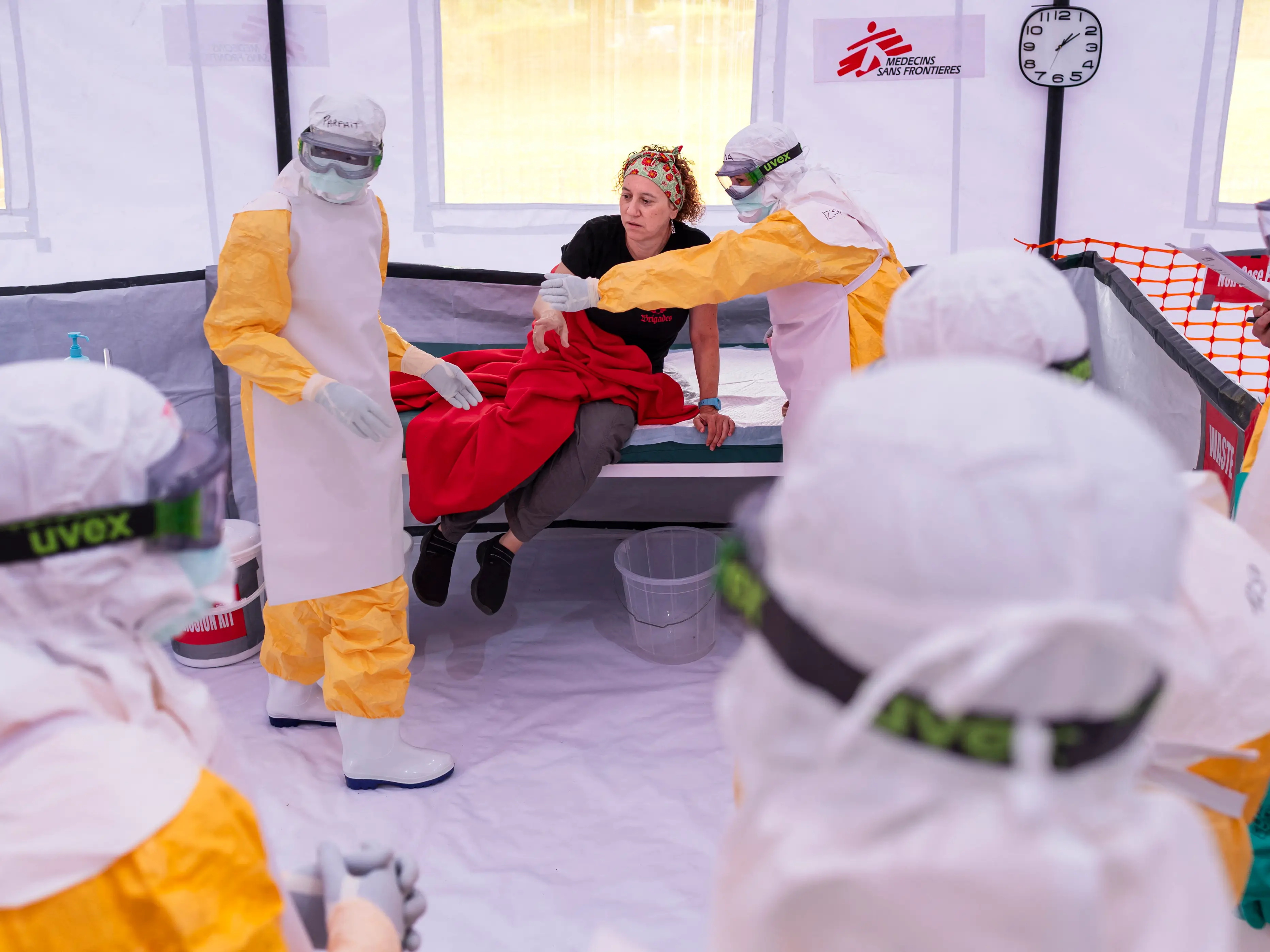
File photo of Health workers in Personal Protective Equipment (PPE) at Ongata Rongai, Kajiado County in Kenya. Photograph: (AFP)
MSF reported Wednesday that roughly 90 per cent of patients at its treatment centre in Bunia, the epidemic's biggest hotspot, arrived without having been flagged through contact tracing, highlighting how much transmission is still slipping past containment efforts.
Ebola death cases in eastern Democratic Republic of Congo have risen to more than 45 per cent from 31 per cent at the end of June, worsening the toll of an epidemic with over 3,800 confirmed cases, claiming more than 1,800 lives ever since the outbreak of the epidemic was declared in May. Media reports also confirmed that the Ebola epidemic in the Democratic Republic of Congo is likely to surpass 4,000 cases this week.
Amid the growing cases, the World Health Organisation indicated that early treatment improves the chances of survival three- to four-fold; however, many patients are found coming for treatment at the medical centres only in the final stages of illness, or die before reaching care altogether.
The climbing death toll increasingly reflects what aid workers now see as the outbreak's central problem: conflict, a health system in collapse, and deep-rooted poverty are fueling the fear, false information, and distrust that stop infected people from getting treatment in time, leaving them in their communities long enough to spread the virus further.
"The mistrust is coming from so many questions the population have," Jean Kaseya, director-general of the Africa Centres for Disease Control and Prevention, told reporters last week. "Why are you coming just now because of this Ebola outbreak? Why didn't you come when we were dying from measles, from cholera, from bullets?"
What is driving the outbreak?
Trending Stories
)
)
)
)
)
)
)
)
)
)
)
)
)
)
)
)
)
)
)
)
)
)
)
)
)
)
)
)
)
)
)
)
)
)
&im=FitAndFill=(700,400))
)
)
)
)
Congo's Tuesday update showed that more than 70 per cent of confirmed Ebola deaths happened outside treatment facilities, within communities. Meanwhile, MSF reported Wednesday that roughly 90 per cent of patients at its treatment centre in Bunia, the epidemic's biggest hotspot, arrived without having been flagged through contact tracing, highlighting how much transmission is still slipping past containment efforts.
"The response is expanding, but is still not reaching communities quickly enough to break transmission chains," Philippa Boule, MSF's deputy medical director, stated in a statement. "Every day lost allows the virus to stay one step ahead and more lives to be needlessly lost," he added.
However, no approved treatment exists specifically for Bundibugyo, the rare Ebola strain driving this outbreak. Still, early supportive care, including as much as 5 litres of daily IV fluids to counter losses from vomiting and diarrhoea and correct dangerously low potassium and blood sugar levels, boosts a patient's odds of survival.
Many people nevertheless conclude they have a better chance fighting the infection at home, said Alex Lock, communications coordinator for the International Federation of Red Cross and Red Crescent Societies in Bunia. He recalled speaking to a 27-year-old man who told him he knew nobody who went to the Ebola treatment centre and came back home alive.
Even so, many people decide they'd fare better fighting the illness at home, according to Alex Lock, communications coordinator for the International Federation of Red Cross and Red Crescent Societies in Bunia. He described a conversation with a 27-year-old man who said he didn't know a single person who'd gone to an Ebola treatment centre and returned home alive.

