Four years, 3 licenses, zero launch: Why is Elon Musk’s Starlink still struggling to crack Indian market? EXPLAINED

&imwidth=600&imheight=450&format=webp&quality=medium "Four years, 3 licenses, zero launch: Why is Elon Musk’s Starlink still struggling to crack Indian market? EXPLAINED")
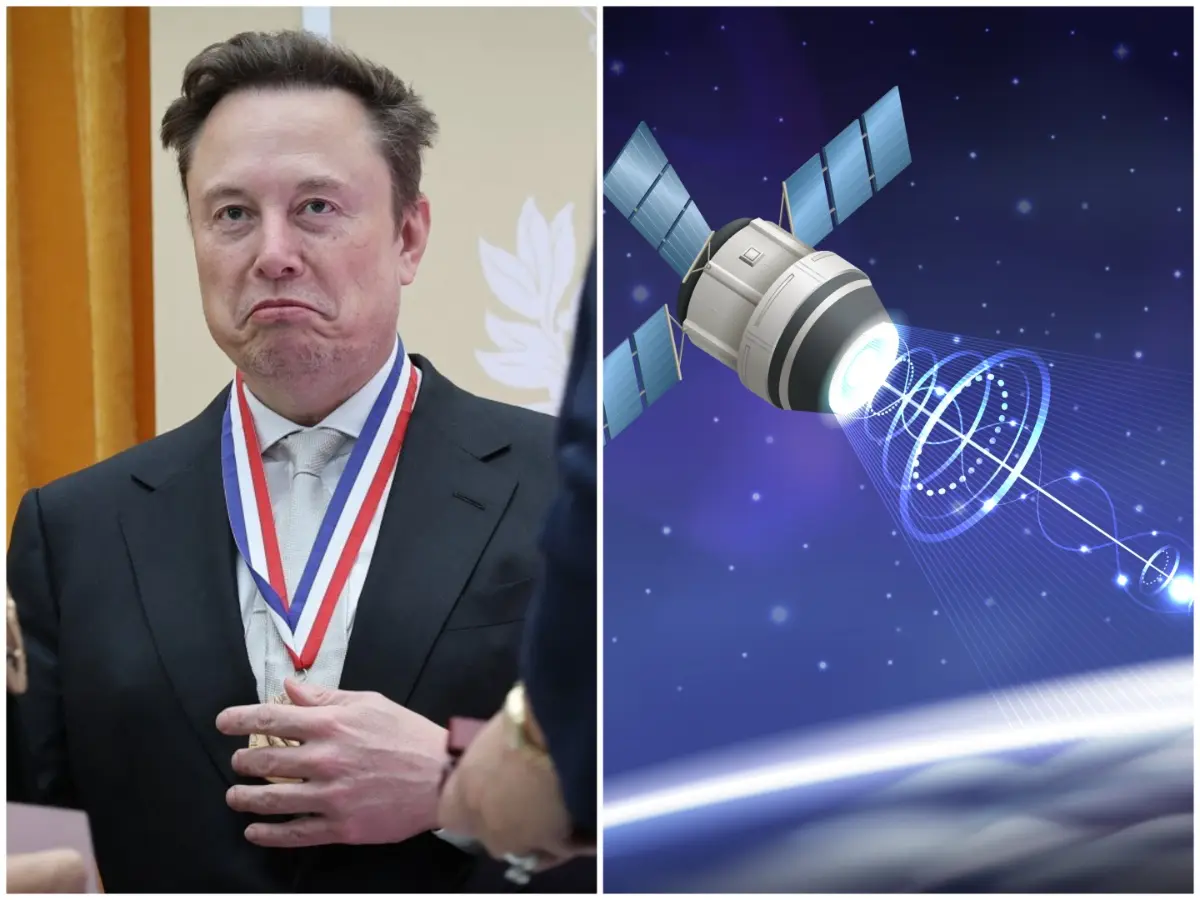
File photo of Elon Musk. Photograph: (AFP & Magnific)
The Ministry of Communications stated that three GMPCS licences have been granted under NGSO-based satellite communications, with each licensee required to meet security compliance conditions before proceeding further.
Days ago, tech billionaire Elon Musk accused certain business owners, without naming them, of stopping Starlink's entry into India. In a series of posts, he alleged that 'certain oligarchs' were attempting to block the entry of the satellite internet provider into India despite the company's efforts to secure regulatory approvals.
A day later, Musk posted again, directly targeting Reliance Industries Chairman Mukesh Ambani and accusing him of maintaining a monopoly in the country’s internet market. He sarcastically addressed him as 'Prime Minister Ambani' and called 'real boss of India', and questioned whether Ambani would let Starlink compete in the Indian market. The only question is: why is Starlink facing problems getting approval from the government to enter the Indian market?
Why is Elon Musk’s Starlink struggling?
To secure the key licenses for Starlink in India, Musk has been striving hard since 2021. But for final security clearances and spectrum allocation, the company still needs the government's approval to start commercial services, which has moved in staggered stages. To secure the GMPCS licence, the company applied in 2024, but the approval came after two years, in 2026. Others who have received GMPCS licences include Bharti-backed Eutelsat OneWeb and Jio Satellite Communications Ltd. Jeff Bezos-owned Amazon Leo is also in contention for a licence.
However, after clearing the hurdle, the company still needs the approval of law enforcement, satellite spectrum allocation, and ground infrastructure along with earth stations, ahead of becoming fully operational commercially. India's space regulator has also rejected the company's Gen 2 constellation application over features and radio frequencies, as it did not fulfil India's requirements, forcing the company to reapply.
In terms of ongoing friction, India has refuted Musk's allegations, underscoring that its satellite communications rules are fair and non-discriminatory. Even the Ministry of Communications stated that three GMPCS licences have been granted under NGSO-based satellite communications, with each licensee required to meet security compliance conditions before proceeding further. Security assessments for all three entities are currently underway, and none has yet moved to the spectrum assignment stage. The ministry clarified that all three licensees remain at broadly the same regulatory stage, dismissing claims of unfairness or discrimination in the framework's application as baseless and misconceived.
Trending Stories
&imwidth=280&imheight=210&format=webp&quality=medium)
&imwidth=280&imheight=210&format=webp&quality=medium)
&im=FitAndFill=(700,400)&imwidth=280&imheight=210&format=webp&quality=medium)
&imwidth=280&imheight=210&format=webp&quality=medium)
&imwidth=280&imheight=210&format=webp&quality=medium)
&imwidth=280&imheight=210&format=webp&quality=medium)
&imwidth=280&imheight=210&format=webp&quality=medium)
&imwidth=280&imheight=210&format=webp&quality=medium)
&imwidth=280&imheight=210&format=webp&quality=medium)
&imwidth=280&imheight=210&format=webp&quality=medium)
&imwidth=280&imheight=210&format=webp&quality=medium)
&imwidth=280&imheight=210&format=webp&quality=medium)
&imwidth=280&imheight=210&format=webp&quality=medium)
&imwidth=280&imheight=210&format=webp&quality=medium)
&imwidth=280&imheight=210&format=webp&quality=medium)
&imwidth=280&imheight=210&format=webp&quality=medium)
&imwidth=280&imheight=210&format=webp&quality=medium)
&imwidth=280&imheight=210&format=webp&quality=medium)
&imwidth=280&imheight=210&format=webp&quality=medium)
&im=FitAndFill=(700,400)&imwidth=280&imheight=210&format=webp&quality=medium)
&imwidth=280&imheight=210&format=webp&quality=medium)
&imwidth=280&imheight=210&format=webp&quality=medium)
&imwidth=280&imheight=210&format=webp&quality=medium)
&imwidth=280&imheight=210&format=webp&quality=medium)
&imwidth=280&imheight=210&format=webp&quality=medium)
&imwidth=280&imheight=210&format=webp&quality=medium)
&imwidth=280&imheight=210&format=webp&quality=medium)
&imwidth=280&imheight=210&format=webp&quality=medium)
&imwidth=280&imheight=210&format=webp&quality=medium)
&im=FitAndFill=(700,400)&imwidth=280&imheight=210&format=webp&quality=medium)

&im=FitAndFill=(700,400)&imwidth=280&imheight=210&format=webp&quality=medium)
&imwidth=280&imheight=210&format=webp&quality=medium)
&imwidth=280&imheight=210&format=webp&quality=medium)
&imwidth=280&imheight=210&format=webp&quality=medium)
&imwidth=280&imheight=210&format=webp&quality=medium)
&imwidth=280&imheight=210&format=webp&quality=medium)
&imwidth=280&imheight=210&format=webp&quality=medium)
&imwidth=280&imheight=210&format=webp&quality=medium)
Meanwhile, SpaceX executive Lauren Dreyer, Starlink's business operations, said that the company spent years working with Indian regulators and had built security controls into its network to meet the country's requirements. She claimed the company developed India-specific security controls and built 20 gateway sites in India after investing in building the infrastructure. Dreyer clarified that Starlink has built its operational facilities specifically for India, keeping the country's security requirements and otherregulations on priority while keeping Indian user data within India.
On this, Pranav Koomar, Founder of PlusCash, also told WION, "Starlink has managed to clear some key regulatory barriers in India in terms of licensing, approval in the space sector, tie-ups with Jio and Airtel, and ground infrastructure creation. Nevertheless, getting approvals does not necessarily mean that there will be success from a commercial perspective. The real problem is the economics of the broadband market in India. Starlink's business model implies huge investment in the satellite network and ground infrastructure, which implies a higher cost per subscriber. The model is quite suitable for markets with high prices for broadband and a lack of alternatives to satellite broadband.
On the contrary, India has one of the cheapest broadband markets and data prices in the world, with companies like Jio and Airtel enjoying huge economies of scale and low pricing for consumers. Matching those prices while sustaining margins is going to be hard for a satellite service provider. Thus, the issue here is not about getting the approvals and licenses for Starlink. What really matters is whether the company can create unit economics in the highly competitive broadband market."
Also read: 'Scam, smuggling and wars': Why Elon Musk's Starlink is a 'help from heaven' for criminals
What's the real problem?
Security has been a major concern related to Starlink's entry into India. In 2024, Indian officials claimed that they had recovered Starlink equipment during a drug-smuggling probe in the remote Andaman and Nicobar Islands. It was also found in an army operation in the northeastern state of Manipur.
Its ability to bypass land-based infrastructure has made it a powerful geopolitical tool in conflicts, anti-regime protests, and civil wars. In 2022, when Russia hit the communication network of Ukraine, its internet was completely cut off. Then Ukraine turned to Starlink for internet connectivity. But when Ukraine attempted to strike a Russian ship near Crimea, Musk cut off the internet, and the attack failed. This shows the power of a businessman who weiled at such an extent that it could control things. So it can become a threat to national security and a vulnerability during war.
During mass anti-government protests, after the Mahsa Amini protests in 2022 and subsequent demonstrations triggered by a currency collapse, the Iranian government deployed a near-total internet blackout to stop protesters from coordinating or uploading footage. Later, thousands of Starlink terminals were smuggled across the border via underground networks.
Then Musk activated the satellite beams over Iran and even pushed a specialised firmware update to help users bypass state signal-jamming equipment. This allowed dissidents to broadcast state crackdowns directly to the outside world, significantly undermining the regime's control over information flow. A similar incident was also witnessed in the Sudanese civil war; Starlink became an accidental lifeline for the Rapid Support Forces (RSF), a powerful paramilitary group fighting against the internationally recognised Sudanese Armed Forces.
In Venezuela, the authoritarian government under Nicolás Maduro has routinely restricted internet access and censored opposition media during periods of high political tension and contested elections. Then activists and opposition leaders have used smuggled Starlink terminals to communicate securely. By bypassing the state-owned telecom provider (CANTV), opposition networks maintained coordination despite government mandates to silence them, altering how political resistance operates in the country. So, with the entry of this tech, states can no longer easily use the "internet kill switch" to suppress domestic unrest. This has caused significant security anxiety globally.
The next major issue is pricing, as the company has yet to reveal final prices for India, and questions have remained about affordability, particularly in rural areas. In the US, Starlink's plans start at $55 a month; however, prices and equipment costs vary by plan and location. Currently, Starlink has been licensed in more than 165 countries.

