Formerly a transit route to Europe, Kenya becomes heroin hub

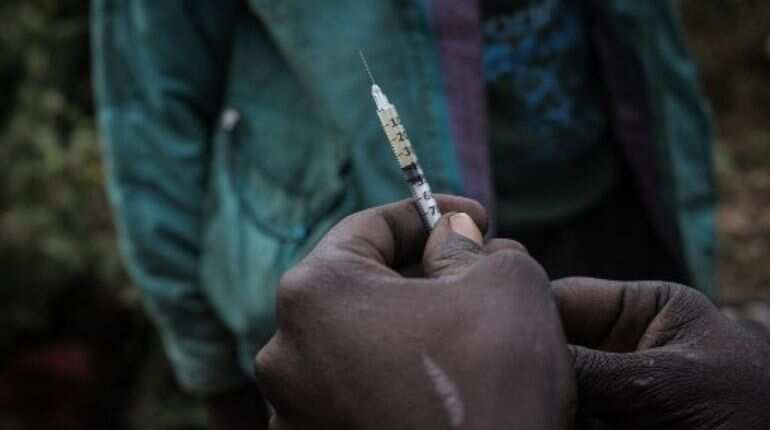
A 30-year-old male drug addict holds a syringe with heroin at Kawangware slum in Nairobi, Kenya, on January 22, 2021.
Esther Wanjiru started usingheroinat 16 to dull the pain after her baby died, first smoking, and now injecting the opioid which has become increasingly cheap and abundant inKenya.
"I am a heavy junkie, I usually need two doses," said Wanjiru, 22, as she puts the needle to a damaged vein, surrounded by about 60 other addicts in a clearing behind a church in a Nairobi slum.
Once just a passing stop on the trafficking route to Europe,Kenyais becoming a major destination in itself forheroin, with addiction rising as tonnes of powder pass through East Africa.

These days a hit costs as little as 120 shillings (USD$1.10/0.90 euros), creating a devastating path to dependence for poor, troubled Kenyans like Wanjiru.
Wanjiru says she will do anything, even crime or prostitution, to get hold of the drug.
Heroinonce reached Europe via the "Balkan Route": smuggled from the poppy fields of Afghanistan overland through the Middle East to capitals in the west.
&imwidth=180&imheight=135&format=webp&quality=medium)
100,000 strikes in 3 years: How October 7 redefined Israel's war
&imwidth=180&imheight=135&format=webp&quality=medium)
Lula campaign accuses Meta of election interference after social media content blocked
&imwidth=180&imheight=135&format=webp&quality=medium)
‘Your people don’t even let us near it’: IAF chief’s blunt response on US F-35; India yet to decide on Russia’s Su-57
&imwidth=180&imheight=135&format=webp&quality=medium)
Real or fake? PIB fact-checks protest videos; Delhi Police clarifies on Gurdwara Bangla Sahib clip
&imwidth=180&imheight=135&format=webp&quality=medium)
UK navy hit by espionage scandal: Sailor accused of spying for Russia | Gravitas
&imwidth=180&imheight=135&format=webp&quality=medium)
Saudi Arabia's King Khalid International Airport attack kills 12, injures 309; India calls it 'unacceptable'
&imwidth=180&imheight=135&format=webp&quality=medium)
‘Never-ending flow of cheap labour’: JD Vance hits back at Indian-origin Congresswoman over US green card curbs for major tech companies
&imwidth=180&imheight=135&format=webp&quality=medium)
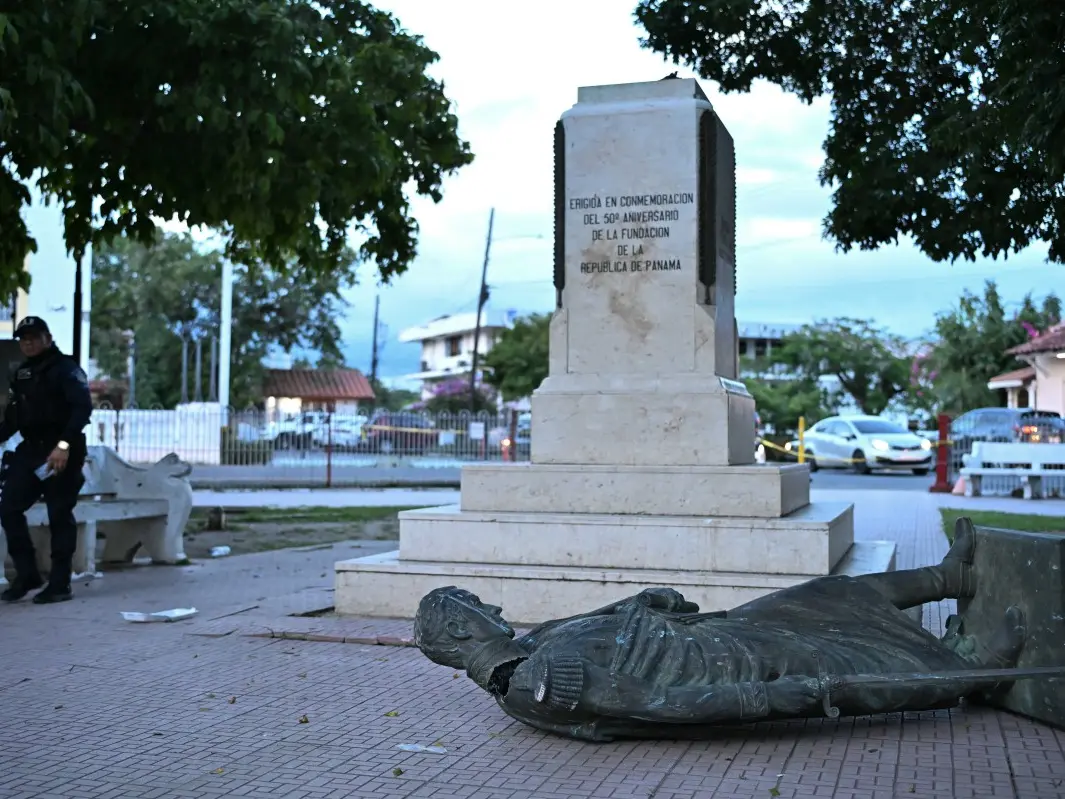
Panama president declares ‘major disaster’ after powerful 7.7-magnitude earthquake; over 80 aftershocks recorded
&imwidth=180&imheight=135&format=webp&quality=medium)
HYBE’s Weverse Con India sets ticket sale date for March 2027 festival
&imwidth=180&imheight=135&format=webp&quality=medium)
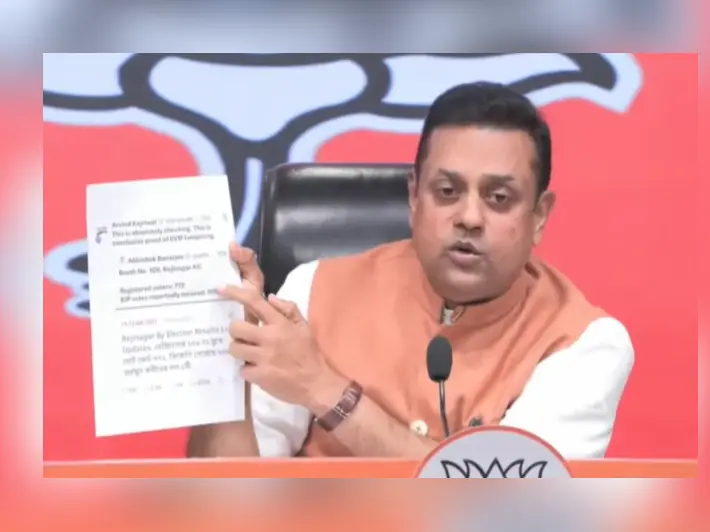
'Jantar Mantar not the story of India': BJP's Sambit Patra claims 'anarchists' tried to hold Delhi captive
&imwidth=180&imheight=135&format=webp&quality=medium)
Riyadh airport hit in missile attack, dozens injured; 5 in intensive care
&imwidth=180&imheight=135&format=webp&quality=medium)
Nicolas Cage refuses AI waiver for Spider-Noir, hints at Amazon exit and True Detective role
&imwidth=180&imheight=135&format=webp&quality=medium)
'Spent Rs 2,000 cr to elect Trump': Elon Musk bought US President's loyalty by writing the biggest political cheque in human history
&imwidth=180&imheight=135&format=webp&quality=medium)
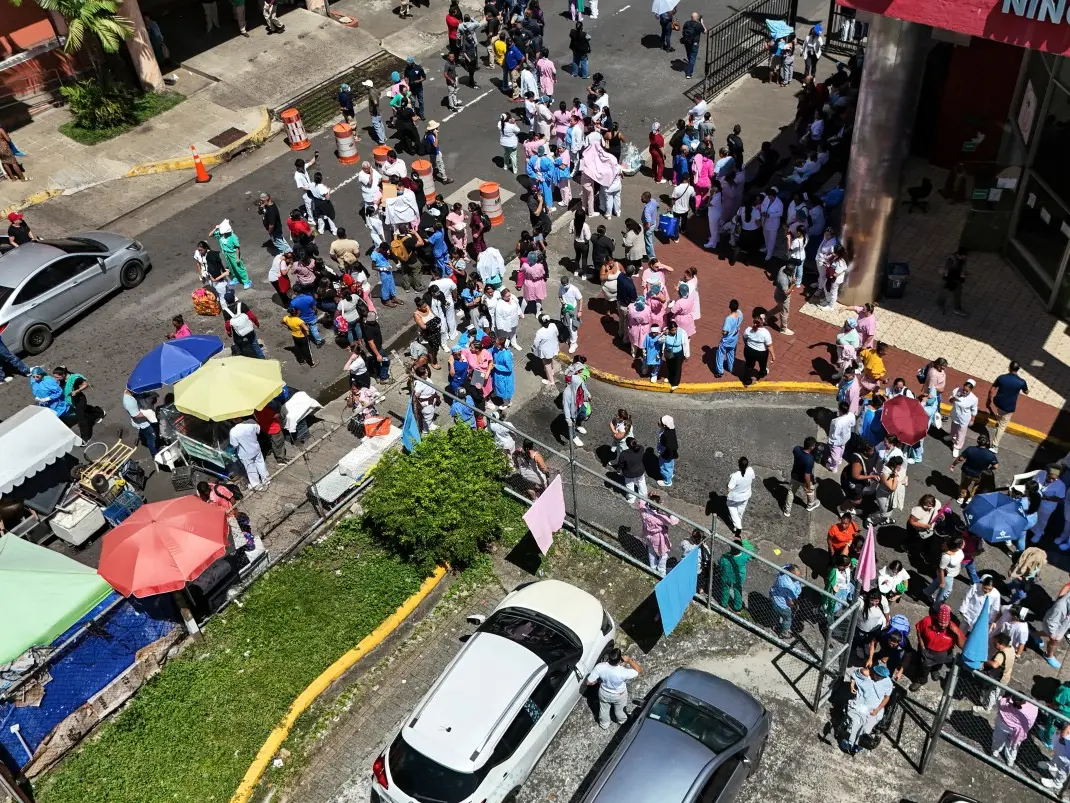
Powerful 7.7 magnitude earthquake strikes Panama, tsunami warning issued
&imwidth=180&imheight=135&format=webp&quality=medium)
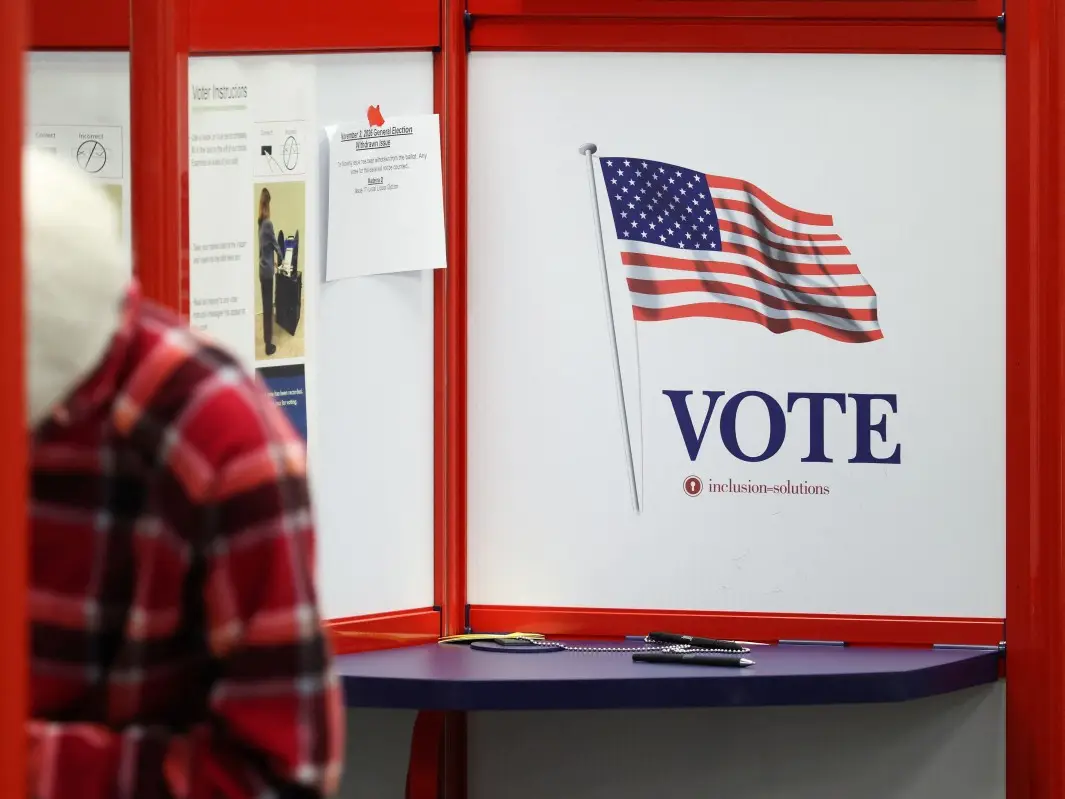
US mid-term elections: What are PACs - Unique American System that lets corporates shape voting
&imwidth=180&imheight=135&format=webp&quality=medium)
Elon musk & India clash over Starlink's market entry terms
&imwidth=180&imheight=135&format=webp&quality=medium)
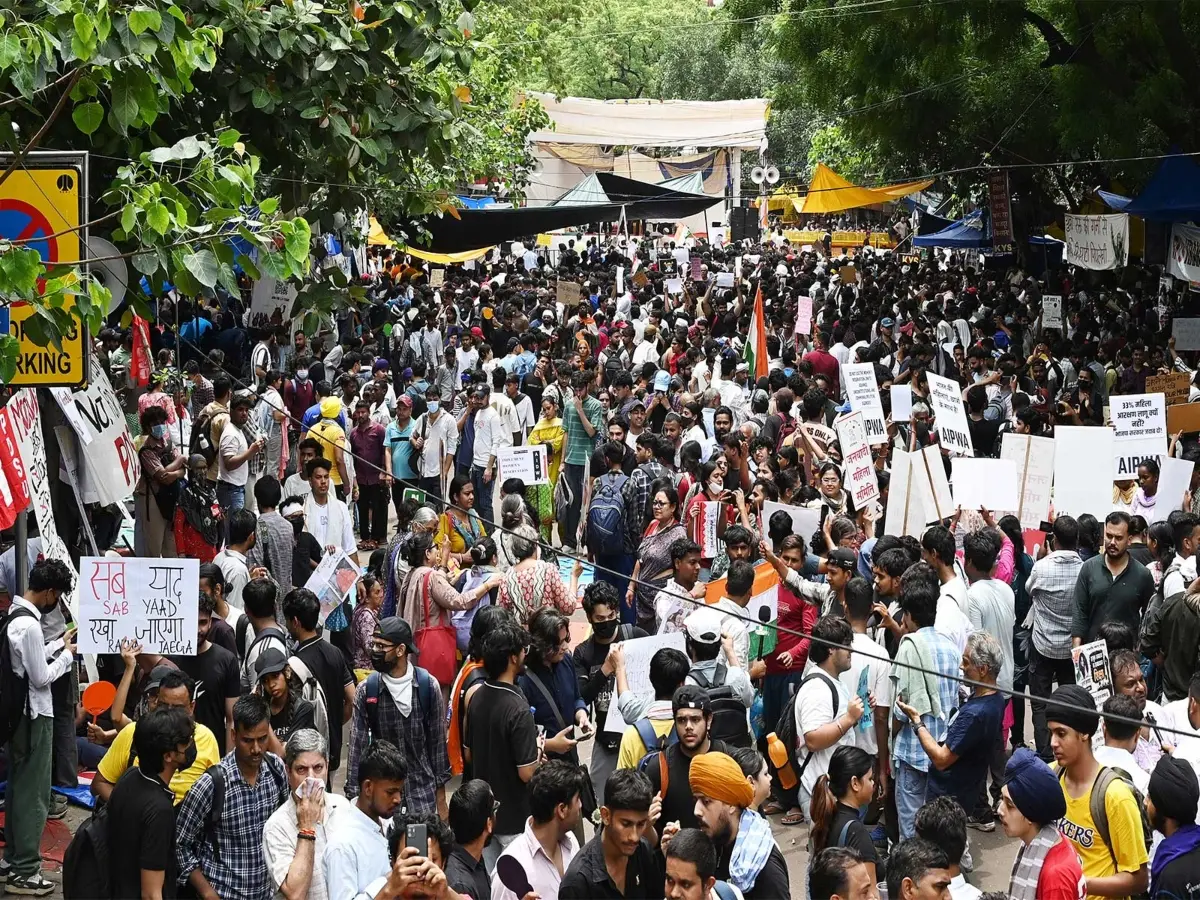
Who is Ajinkya Shinde, announced to lead CJP protest after Dipke, Das and Ranka's detention?
&imwidth=180&imheight=135&format=webp&quality=medium)
'Ouch!!! That must hurt': Kangana Ranaut hails Kamal Haasan's sharp reply to Elon Musk over Starlink row
&imwidth=180&imheight=135&format=webp&quality=medium)
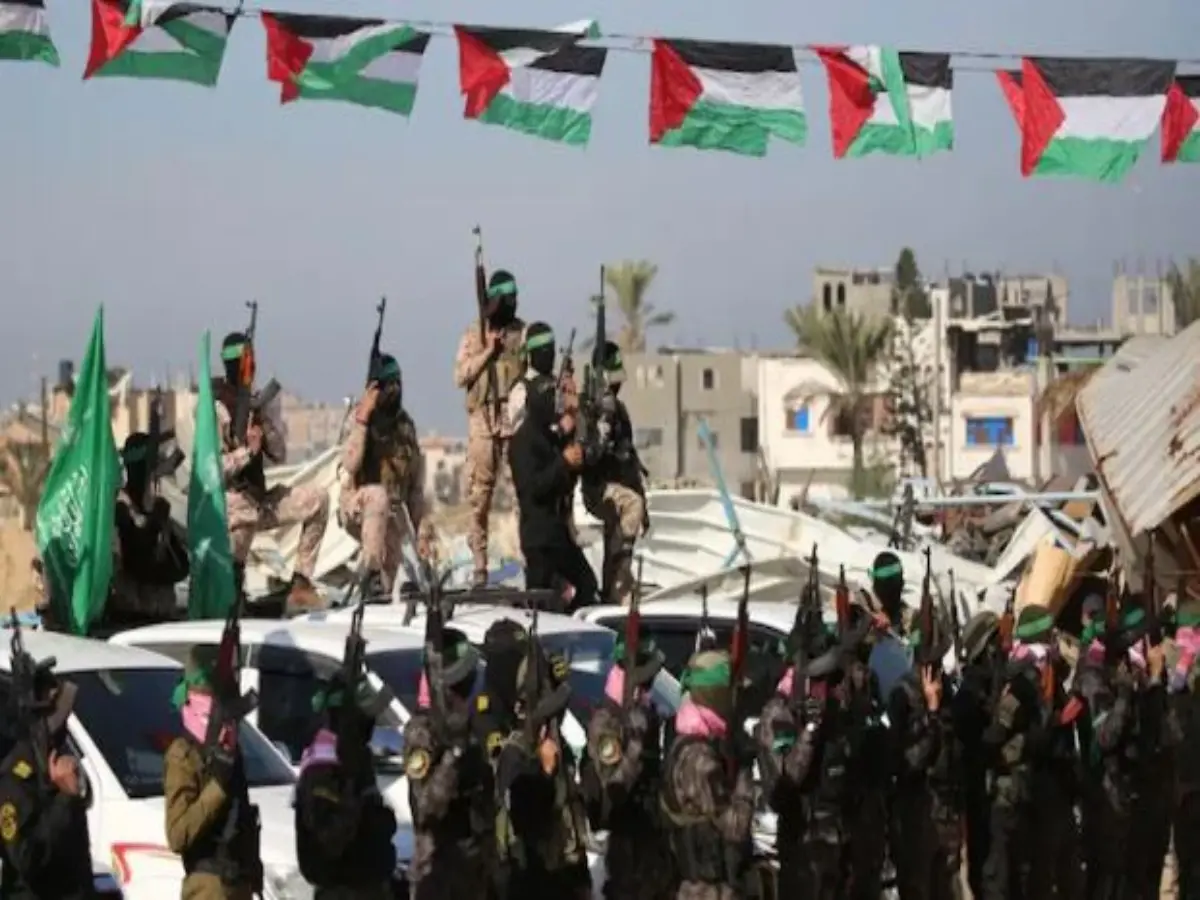
Hamas used double agents, deceived Israel to carry out October 7 massacre
&imwidth=180&imheight=135&format=webp&quality=medium)
Bigg Boss 20: Who is Manish Goel? Meet the new wild card contestant on Salman Khan’s show
&imwidth=180&imheight=135&format=webp&quality=medium)
Portugal Federation confirms Cristiano Ronaldo’s return to national team despite suspension
&imwidth=180&imheight=135&format=webp&quality=medium)
All 22 Indian seafarers safe in attack on Panama-flagged tanker off UAE coast
&imwidth=180&imheight=135&format=webp&quality=medium)
‘Time for Ukraine to get a new president’: Trump lashes out at Zelensky over Russia strikes
&im=FitAndFill=(700,400)&imwidth=180&imheight=135&format=webp&quality=medium)
Food shortages, suicide attempts and more: USS Abraham Lincoln returns to US after 321 day deployment — What happened aboard the US carrier?
&imwidth=180&imheight=135&format=webp&quality=medium)
Thai queen becomes first reigning monarch to fly jet solothailand #queen #wion
&imwidth=180&imheight=135&format=webp&quality=medium)
Four years, 3 licenses, zero launch: Why is Elon Musk’s Starlink still struggling to crack Indian market? EXPLAINED
&imwidth=180&imheight=135&format=webp&quality=medium)
Rahul Gandhi calls Modi, Shah ‘cowards’ amid CJP protest crackdown in Delhi
&imwidth=180&imheight=135&format=webp&quality=medium)
‘Every game against Liverpool is special’: Erling Haaland ahead of Anfield clash
&imwidth=180&imheight=135&format=webp&quality=medium)
Why was CJP founder Abhijeet Dipke detained? What Delhi Police said
&imwidth=180&imheight=135&format=webp&quality=medium)
Where are Abhijeet Dipke, Ashutosh Ranka, Saurav Das? CJP gives big update after flight detention
&imwidth=180&imheight=135&format=webp&quality=medium)
Putin conveys Iran’s proposal to Trump, offers to take Tehran’s enriched uranium
&imwidth=180&imheight=135&format=webp&quality=medium)
'It’s been 12 hours': CJP writes to Delhi Police, demands release of Dipke, Saurav Das and Ranka
But the Syrian conflict and border controls that tightened as waves of migrants sought refuge in Europe forced traffickers to change tack.
They turned to the sea to get around the problem.Heroinwas put on ships and sailed across the Indian Ocean to the porous eastern coast of Africa, and mulled northward to Europe.
TheKenyaconnect
Mombasa became the main port of arrival.Kenya, a beacon of security in a volatile region, but rife with corruption and lacking oversight, offered smugglers a reliable place to offload their product.
"Narcotraffickers are really identifyingKenyaas being one of the most stable countries in the region," said Amado De Andres, a former regional director for East Africa at the United Nations Office on Drugs and Crime (UNODC).
The lion's share of theheroinhauled ashore, estimated by UNODC at 42 tonnes annually, was earmarked for distant markets.
But in time, local interest steadily grew.
Traffickers kept around five tonnes aside for regional sale as demand forheroinflourished into a $150-million (125-million-euro) business, with most buyers inKenya.
"Kenyawas formerly a transit route, and has increasingly become a destination forheroin," said Victor Okioma, the head of the government-run National Authority for the Campaign Against Alcohol and Drug Abuse (NACADA).
In 2018, the Ministry of Health estimated 27,000 people were injecting or smokingheroinin a survey of one-third ofKenya's counties.
The Global Initiative Against Transnational Organized Crime, a Geneva-based NGO, estimated 55,000 injectors alone, pointing to a higher overall figure.
It is now the second-most consumed drug in the country of nearly 50 million behind cannabis, NACADA says.
Around 1 per cent of teenagers aged 14-18 years had admitted using the highly addictive drug, Okioma said.
"Heroinis being consumed even in primary schools," he said.
Covid curse
Kenyacreated a coastguard in 2018, bolstered container checks at Mombasa's ports, and recently began participating in an Interpol-led drug detection program at its international airport in Nairobi.
Seizures ofheroinand morphine have increased tenfold in Africa between 2008 and 2018 and the majority were made in East Africa, according to the UNODC.
Butheroinstill finds its way to users like Wanjiru, and others facing hard times.
"I can assure you, the number of users is growing also because now of the situation of Covid," John Kimani, the executive director of KeNPUD, a Kenyan harm reduction program.
"There's depression....people lost jobs," and turned to drugs.
Kenyahas been expanding access to methadone, aheroinsubstitute, which helps keeps withdrawal symptoms at bay and allows addicts to wean off the drug.
The UNODC says there are around 10 clinics serving an estimated 7,000heroinaddicts inKenya, but they can't reach all in need.
The nearest clinic to James Kwenga is on the other side of Nairobi, and transport costs about 150 shillings ($1.30, 1.16 euros).
"I can't afford that every day, because I don't have a job," said the homeless man. "If they can't come near here, many people can't beat this drug."