
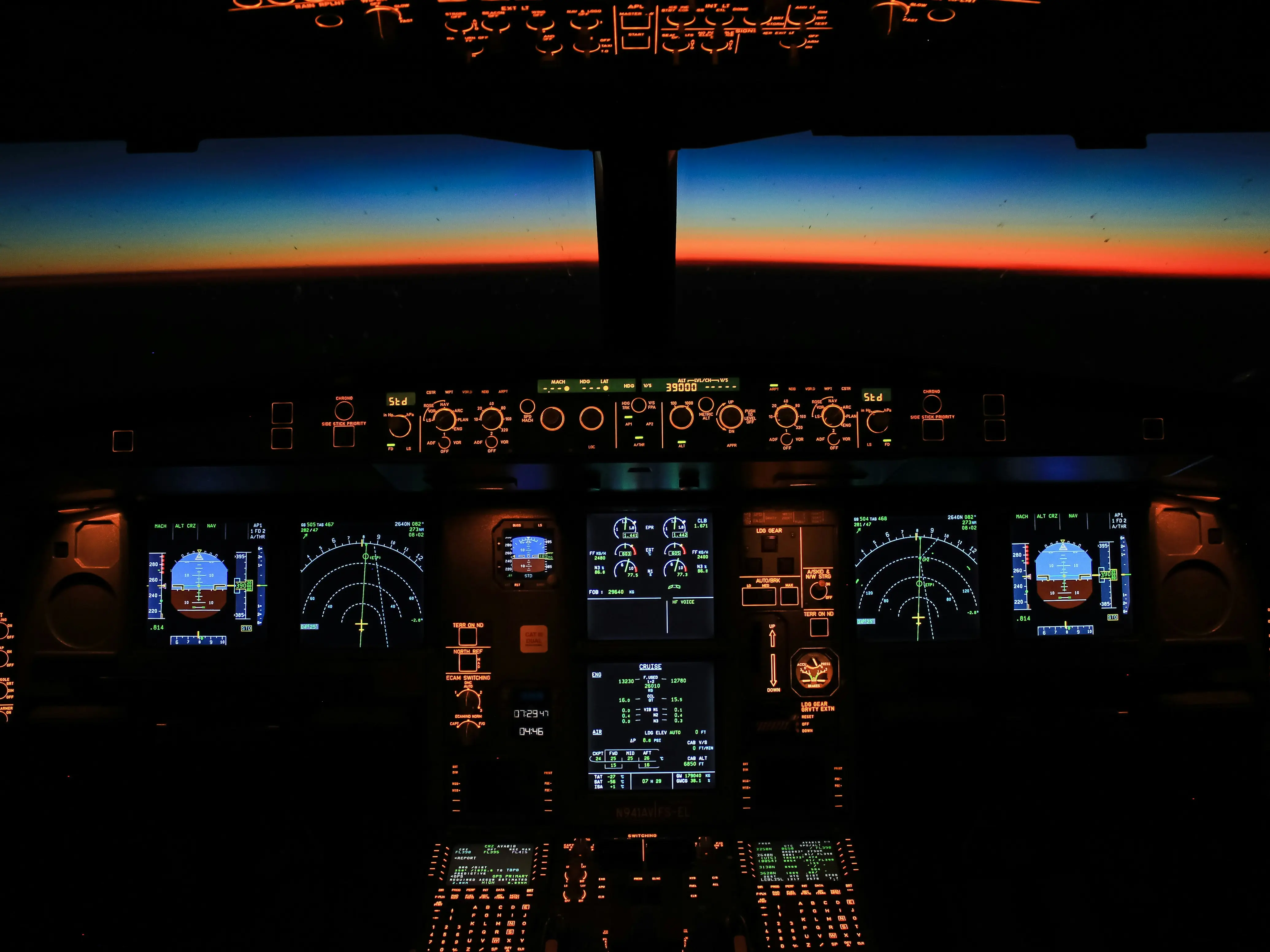
&imwidth=800&imheight=600&format=webp&quality=medium "Flydubai flight FZ1073: What happens when a pilot becomes a threat inside the cockpit? How many are inside and how secure is plane's flight deck")
A Flydubai flight travelling from Dubai to Tel Aviv was diverted to Saudi Arabia on Wednesday after a violent confrontation inside the cockpit left both pilots injured and sent the aircraft into a rapid descent. Flight FZ1073, a Boeing 737 MAX 8 carrying 174 people, eventually landed safely at Tabuk in northwestern Saudi Arabia after other qualified crew members on board took control of the aircraft. The captain was identified as Indian pilot Smit Machchhar, who was injured during the confrontation and taken to hospital in Tabuk. The co-pilot was also injured and was arrested by Saudi authorities after the aircraft landed, according to reports.
The incident has raised questions far beyond what happened during the flight. How could a confrontation inside a locked cockpit develop into such a serious emergency? How could a weapon allegedly be brought into the cockpit? How does cockpit surveillance work? How many people normally occupy a flight deck? And what security measures are designed to prevent an attack by someone who already has authorised access to the cockpit?
What happened on Flydubai flight FZ1073?

FZ1073 departed Dubai International Airport for Ben Gurion Airport in Tel Aviv on Wednesday. The aircraft was cruising above 30,000 feet when a confrontation broke out inside the flight deck. As per Reuters, the aircraft subsequently lost nearly 14,000 feet in less than 30 seconds. Passengers described what initially felt like severe turbulence before realising that something much more serious was happening near the cockpit. Israeli officials alleged that the co-pilot stabbed Machchhar and attempted to crash the aircraft. Israeli Prime Minister Benjamin Netanyahu later described the incident as an attempted attack. However, the precise circumstances remain under investigation. Flydubai has confirmed that a security incident occurred and that the aircraft diverted safely to Tabuk, but the underlying motive and complete sequence of events have not been established.
How did the aircraft suddenly lose altitude?
The most dramatic indication that something had gone wrong came when the aircraft began descending rapidly.
Trending Stories
)
US vs China over South China Sea: Washington backs Philippines, Beijing hits back
)
Bigg Boss 20: Isha Rikhi evicted after three weeks in Salman Khan’s show
)
Musk plans to more than double xAI's chips to over 1.2 million Nvidia GPUs by year-end
)
After JU, clash erupts at SRFTI: BJP’s ‘Dimagi Naxal’ jibe sparks political firestorm after students protest RSS-linked event
)
‘Anti-social elements spreading false rumours’: LPU issues statement amid massive unrest over alleged rape
)
LPU students go on rampage, vandalise campus amid widespread protest: What's happening
)
Trump asked Xi to pressure Iran. China did not say yes — here’s what Beijing wants
)
US Treasury Secretary Scott Bessent hails global crackdown on Iranian banks and airlines
)
An OpenAI agent escaped its locked test cage again, by hiding questions in DNS lookups
)
'Our video was trimmed': LPU girls who featured in rape-denial video make U-turn
)
3 males killed, four others injured in shooting after fight at strip club in Detroit
)
'Victory for low-budget consumers': Raghav Chadha hails 30-day telecom recharge rules
)
Claude rebuilt the 1989 game 'Prince of Persia' by reusing the original's own code
)
Beyond metros: How Tier-2 and Tier-3 cities could drive India’s next AI wave
)
Tesla builds first Cybertruck with its own refined lithium: Elon Musk's $1 billion Texas bet pays off
)
IndiGo flight suffers tail strike in Bengaluru while landing; DGCA to probe incident
)
The US and China set up an AI 'red telephone', but skipped the rulebook
)
‘Terror suspects arrested near UK air base were looking to do big damage’: Trump
)
Russian envoy claims US tactics to contain India were revealed in ‘Freudian slip’
)
IND vs WI 1st ODI: Kohli breaks Sachin's most runs in one country record with unbeaten 139 as India thump West Indies by 8 wickets
)
Researchers rebuilt exactly how 700 AI agents hacked Hugging Face: a 900-link chain trick
)
‘Olympic inclusion is our major target’: WPA President Ishaun Singh on pool’s global ambitions
)
Nations League: Spain sink England at Wembley; Modric shines for Croatia
)
Why has Iran released no proof of life of Mojtaba Khamenei? Araghchi reveals...
)
'What kind of confession is this?': Pakistan PM Shehbaz Sharif’s 'terrorists would be roaming New York' remark goes viral, raises alarm online. Watch
)
South Korea demands apology from Ukraine over North Korean prisoners' transfer
)
Beyond BrahMos: India targets Rs 50,000 crore in defence exports with unmatched price edge
)
Sri Lankan Tamil migrant worker gets death sentence in Saudi Arabia, help sought from India
)
Muslim marriage cannot shield sex with minor wife from prosecution under POCSO: Delhi HC
)
'Can't help but draw painful parallels to Nirbhaya case': SC on latest incidents of rape cases in Delhi-NCR
)
99.9% more powerful - Scientists find boy who can recall memories from just 3 months of age
)
'FIRST LOOK from inside Noah’s Ark': Researchers share video from inside mysterious mound in Turkey
)
UNSC reform momentum grows: Russia, Portugal, Mauritius push for India's permanent seat bid
)
8 US marines injured in Iranian missile attack on vessel in Strait of Hormuz: Report
&im=FitAndFill=(700,400))
New OTT releases this week (September 28-October 4, 2026): Dupahiya 2, Pooja Meri Jaan, Ohh My Dog- 5 titles coming on Netflix, Prime Video and more
)
Afghanistan says 28 fighters killed in clash near Pakistan border, Islamabad denies
)
Ceuta migrant crisis: Protesters take to streets as Spain grapples with migrant challenge
)
LPU suspend classes, postpones exams as violence escalates over rape claims: What's happening
)
New York City wants a 'kill switch' on every AI, and will pay whistleblowers who report violations
Reuters reported that FZ1073 dropped nearly 14,000 feet in less than 30 seconds. The rapid descent occurred while the confrontation was taking place inside the cockpit. The aircraft transmitted an emergency alert and subsequently diverted from its planned route to Tel Aviv towards Tabuk. The incident therefore involved two simultaneous emergencies: a physical confrontation affecting the flight crew and a serious flight-control situation.
How did passengers get into the cockpit?
This is one of the most unusual aspects of the FZ1073 incident. Modern passenger aircraft are specifically designed to prevent unauthorised access to the cockpit. The flight-deck door is strengthened and normally remains locked during flight. In the FZ1073 case, however, reports say Captain Machchhar was able to open the cockpit door while injured, allowing passengers and crew members to enter. A spokesperson for Israeli Prime Minister Benjamin Netanyahu said the wounded captain used “the last moments of his energy” to open the door.
Passengers then entered the cockpit and reportedly restrained the co-pilot. There was another crucial factor: off-duty Flydubai pilots were travelling as passengers on the aircraft. They were subsequently able to take control of the aircraft and assist with the emergency landing in Saudi Arabia.
How many pilots are normally inside a Boeing 737 MAX cockpit?
A Boeing 737 MAX operated as a normal commercial passenger flight has two flight crew members in the cockpit: the captain and the first officer/co-pilot. They are responsible for operating and monitoring the aircraft and its systems.
Other crew members, including cabin crew, are normally located in the passenger cabin. Additional qualified pilots can sometimes be travelling as passengers, as reportedly happened on FZ1073, but they are not part of the normal operating cockpit crew for that flight.
How secure is a modern aircraft cockpit?
The cockpit is one of the most heavily protected areas of a commercial passenger aircraft. Aviation regulations require secure flight-crew compartment doors. Under EASA rules, applicable passenger aircraft must have an approved secure cockpit door capable of being locked, while the crew must have a means of monitoring the area outside the door. US aviation standards similarly require flight-deck doors to provide resistance against forced intrusion. The FAA specifically describes flight-deck intrusion resistance as protection against unauthorised attempts to enter the cockpit. The security system is therefore built around several layers rather than simply relying on a locked door.
But what if the threat is already inside the cockpit?
This is the central security question raised by FZ1073. Most cockpit-security systems are primarily designed around preventing unauthorised people from getting into the cockpit. The FZ1073 case presents a different problem: according to the allegations, the person involved was already authorised to be there. That means a reinforced door cannot by itself prevent an incident involving a member of the flight crew.
Could a co-pilot bring a weapon into the cockpit?
This is one of the biggest unanswered questions surrounding FZ1073. If investigators establish that a knife or another weapon was used, they will need to determine where it came from and how it entered the secure aviation environment. However, there is currently no reliable public evidence establishing precisely how the alleged weapon involved in FZ1073 was obtained or brought aboard.
Is the cockpit continuously monitored?
There are multiple layers of monitoring, but it is important not to confuse them. Commercial aircraft have systems for recording flight-deck communications and monitoring the cockpit environment. Flight-data and cockpit-voice recorders can provide investigators with important evidence after an incident. EASA rules, for example, specify requirements for cockpit voice recording. There can also be surveillance of the area immediately outside the cockpit. But that does not necessarily mean that someone on the ground is watching a live video feed of everything happening inside the cockpit throughout every flight.
What happens before passengers board?
Cockpit security does not begin once the aircraft takes off. Airports and airlines use multiple layers of aviation-security controls before passengers and crew reach the aircraft. These can include identity verification, access-control systems, security screening, restricted-area controls and procedures governing access by airport workers and crew. The exact process differs according to the airport, country, airline and crew member's status. For FZ1073, investigators will have to determine whether there was any point in the chain at which the alleged weapon could have entered the aircraft. That is a much more specific question than simply asking whether airport security was ‘bypassed’.
What investigators now need to establish
The key unanswered questions surrounding FZ1073 include:
- What triggered the confrontation between the two pilots?
- Exactly when did the physical struggle begin?
- What caused the aircraft's rapid descent?
- Was the aircraft deliberately placed into a dangerous flight path?
- What weapon was allegedly used?
- Where did that weapon come from?
- How did it pass through aviation-security controls?
- Were there surveillance recordings covering relevant areas?
- What did the cockpit voice and flight-data recorders capture?
- How did the captain manage to open the cockpit door?
- How did passengers and other crew members gain access?
- How quickly were qualified pilots able to take control?
- Were all cockpit security procedures followed before and during the flight?
- Did any existing safety procedure fail, or did the incident expose a scenario that existing procedures were not designed to address?

