Explained | Race against time to prevent oil tanker ecological catastrophe

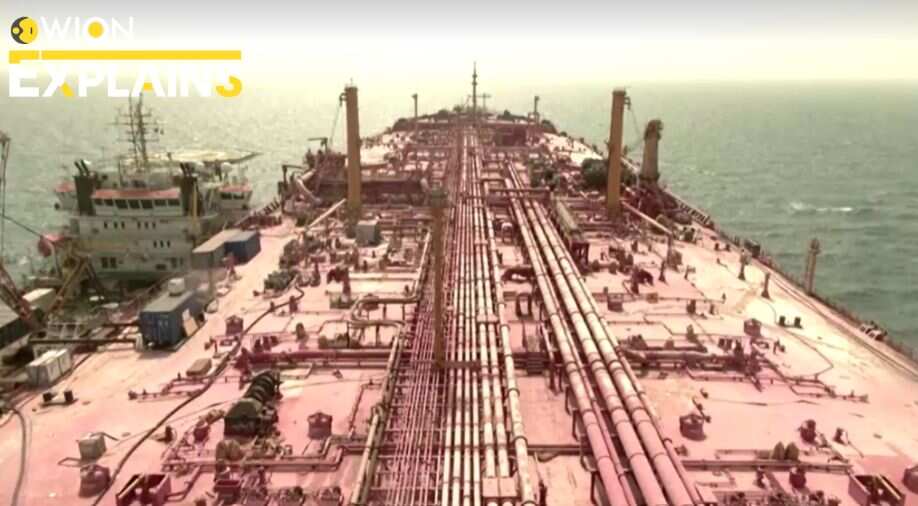
Race against time to prevent oil tanker ecological catastrophe
In its bid to prevent a disastrous spill, the United Nations on Tuesday released a statement saying that it had commenced the process of transferring one million barrels of oil from a super-tanker, that was rusting, off the war-torn country Yemen.
"The United Nations has begun an operation to defuse what might be the world's largest ticking time bomb," UN Secretary-General Antonio Guterres said in a statement.
"A complex maritime salvage effort is now underway in the Red Sea off the coast of war-torn Yemen to transfer one million barrels of oil from the decaying FSO Safer to a replacement vessel."

Taking to social media, the United Nations resident coordinator for Yemen, David Gressly, said that the transfer of 1.14 million barrels of Marib light crude from the 47-year-old FSO Safer to the new vessel will most likely take "less than three weeks".
Success is far from certain, say experts
According to experts, factors like soaring temperatures, old pipelines and sea mines loitering in surrounding waters, pose a grave threat to the success of the operation.
"Because it is the start of the emergency phase of the project to remove the oil, we need to be very cautious," Sarah Bel, spokeswoman for the UN Development Programme, told reporters in Geneva.
The United Nations hopes that the operation, worth $143 million, will obliterate the risk of an environmental tragedy, that if occurs, will on an estimate cost $20 billion to clean up.
Considering the Safer's position in the Red Sea, a spill would also cost billions of dollars per day as it would cause shipping disruptions through the Bab al-Mandab Strait to the Suez Canal, and would also destroy ecosystems, coastal fishing communities and lifeline ports.
The Safer, which is a floating storage and offloading facility, has been tied up around 50 kilometres (30 miles) from the port of Hodeida since the 1980s.
The storage has not been serviced since the war broke out, which happened nearly eight years ago between Yemen's Huthi rebels, who regulate the capital Sanaa and the waters where the Safer is placed, and a Saudi-led alliance supporting the internationally recognised government based in the southern Yemeni city of Aden.
The rusting tanker is holding four times as much oil as was spilled in the 1989 Exxon Valdez disaster off Alaska.
Also read: Explained | What is Middle East Respiratory Syndrome Coronavirus infection detected in a UAE man?
Even if the transfer succeeds, Safer will still pose a threat, warns UN
For years now, a scaffolding crew of workers on the ship, which at any given time were merely around seven or eight, were the ones who made efforts to prevent any kind of leakage or on-board detonation that would send a thin slick of oil across the Red Sea.
In the month of March, the United Nations bought a replacement vessel, dubbed Nautica, with an aim to get the oil out of Safer.
Experts from the private company SMIT Salvage were called two months later to analyse if the Safer could resist the transfer operation.
Last week, the United Nations engaged in a symbolic handover of the Nautica to "the people of Yemen", though the shipping company Euronav will continue to assist it on the UN's behalf for at least six months.
The United Nations also released a warning saying that even if the transfer successfully takes place, the Safer "will pose a residual environmental threat, holding viscous oil residue and remaining at risk of breaking apart."
Disputes are also expected over the ownership of the oil and the Nautica.
But as per some people, the Safer crisis is a positive sign.
"I hope it will be the beginning of the peace process," news agency AFP quotes Fathi Fahem, the Yemeni business leader who first put forward the idea of a replacement vessel for the Safer two years ago, as saying.
In what United Nations calls one of the world's worst humanitarian crises, thousands of people have lost their lives in the battle in Yemen or from factors such as lack of food and water.
Yet clashes between the Iran-backed Huthis and the Saudi-led coalition have reduced sharply since a UN-brokered truce began in April last year, even though it lapsed in October.
UN's Gressly said in a conversation with news agency AFP that the collaboration over the Safer could help pave the way for an enduring ceasefire between Yemen's clashing parties.
"Any time that you have an initiative, a project, where all parties need to cooperate, it's a positive sign that can be used and built upon," AFP quoted UN's Gressly as saying.
"But there's much work to be done to achieve peace here, many issues still outstanding. This issue by itself won't solve those."
(With inputs from agencies)
WATCH WION LIVE HERE
You can now write for wionews.com and be a part of the community. Share your stories and opinions with us here.