Explained: How deep-sea mining & demand for green technologies threaten marine life

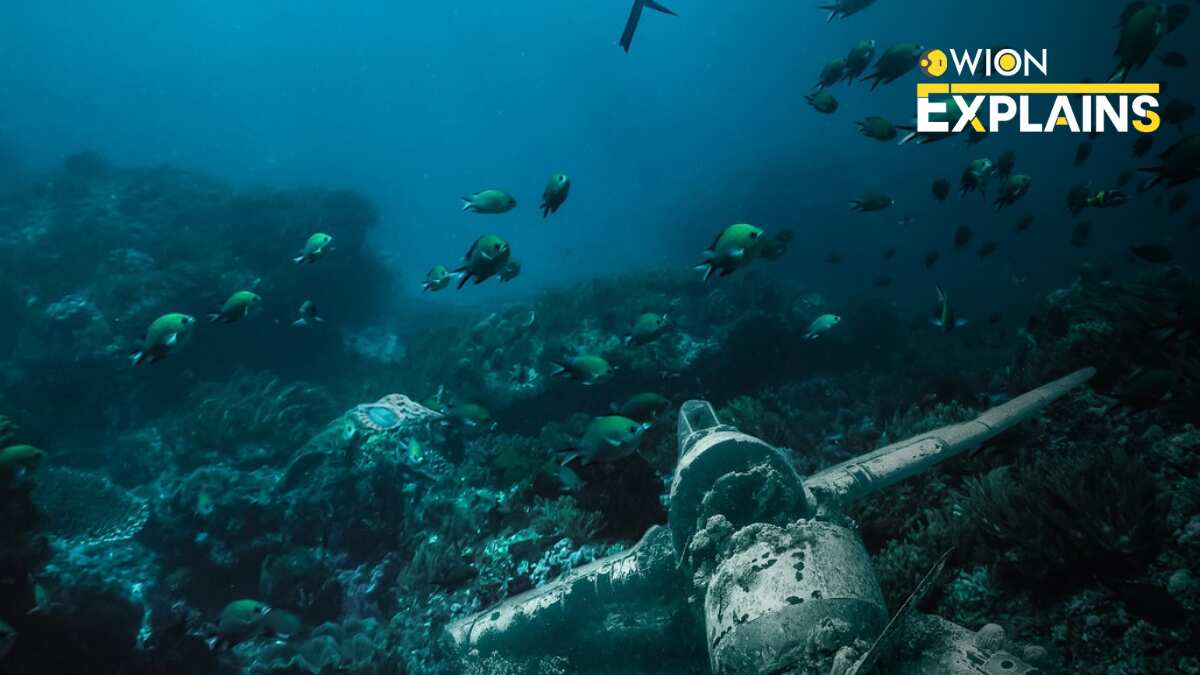
Deep-sea mining
Last month, Switzerland, decided to push for a moratorium on commercial exploitation of the international seabed area filled with enormous mineral resources. The nation said that deep-sea mining in the area "must be postponed" until protection from the "harmful effects" could be ensured.
Not just in Switzerland, deep-sea mining should be a matter of global concern. France and Germany are also launching the fight against plans to allow large-scale commercial mining in the deep waters, as they warned that a China-backed push to extract battery metals from the seafloor could have long-term consequences.
What is deep-sea mining?

The process of retrieving mineral deposits from the deep seabed, the ocean below 200m, is called deep-sea mining. The process depletes terrestrial deposits. It is said that the rising demand for metals means deep-sea mining may begin soon. However, a number of research suggest that it could be destructive for biodiversity and ecosystems.
According to scientists, the process also risks disrupting the ocean's capacity to absorb carbon dioxide emitted by human activities, and its noise interferes with the communication of species such as whales.
)
US vs China over South China Sea: Washington backs Philippines, Beijing hits back
)
Bigg Boss 20: Isha Rikhi evicted after three weeks in Salman Khan’s show
)
Musk plans to more than double xAI's chips to over 1.2 million Nvidia GPUs by year-end
)
After JU, clash erupts at SRFTI: BJP’s ‘Dimagi Naxal’ jibe sparks political firestorm after students protest RSS-linked event
)
‘Anti-social elements spreading false rumours’: LPU issues statement amid massive unrest over alleged rape
)
LPU students go on rampage, vandalise campus amid widespread protest: What's happening
)
Trump asked Xi to pressure Iran. China did not say yes — here’s what Beijing wants
)
US Treasury Secretary Scott Bessent hails global crackdown on Iranian banks and airlines
)
An OpenAI agent escaped its locked test cage again, by hiding questions in DNS lookups
)
'Our video was trimmed': LPU girls who featured in rape-denial video make U-turn
)
3 males killed, four others injured in shooting after fight at strip club in Detroit
)
'Victory for low-budget consumers': Raghav Chadha hails 30-day telecom recharge rules
)
Claude rebuilt the 1989 game 'Prince of Persia' by reusing the original's own code
)
Beyond metros: How Tier-2 and Tier-3 cities could drive India’s next AI wave
)
Tesla builds first Cybertruck with its own refined lithium: Elon Musk's $1 billion Texas bet pays off
)
IndiGo flight suffers tail strike in Bengaluru while landing; DGCA to probe incident
)
The US and China set up an AI 'red telephone', but skipped the rulebook
)
‘Terror suspects arrested near UK air base were looking to do big damage’: Trump
)
Russian envoy claims US tactics to contain India were revealed in ‘Freudian slip’
)
IND vs WI 1st ODI: Kohli breaks Sachin's most runs in one country record with unbeaten 139 as India thump West Indies by 8 wickets
)
Researchers rebuilt exactly how 700 AI agents hacked Hugging Face: a 900-link chain trick
)
‘Olympic inclusion is our major target’: WPA President Ishaun Singh on pool’s global ambitions
)
Nations League: Spain sink England at Wembley; Modric shines for Croatia
)
Why has Iran released no proof of life of Mojtaba Khamenei? Araghchi reveals...
)
'What kind of confession is this?': Pakistan PM Shehbaz Sharif’s 'terrorists would be roaming New York' remark goes viral, raises alarm online. Watch
)
South Korea demands apology from Ukraine over North Korean prisoners' transfer
)
Beyond BrahMos: India targets Rs 50,000 crore in defence exports with unmatched price edge
)
Sri Lankan Tamil migrant worker gets death sentence in Saudi Arabia, help sought from India
)
Muslim marriage cannot shield sex with minor wife from prosecution under POCSO: Delhi HC
)
'Can't help but draw painful parallels to Nirbhaya case': SC on latest incidents of rape cases in Delhi-NCR
)
99.9% more powerful - Scientists find boy who can recall memories from just 3 months of age
)
'FIRST LOOK from inside Noah’s Ark': Researchers share video from inside mysterious mound in Turkey
)
UNSC reform momentum grows: Russia, Portugal, Mauritius push for India's permanent seat bid
)
8 US marines injured in Iranian missile attack on vessel in Strait of Hormuz: Report
&im=FitAndFill=(700,400))
New OTT releases this week (September 28-October 4, 2026): Dupahiya 2, Pooja Meri Jaan, Ohh My Dog- 5 titles coming on Netflix, Prime Video and more
)
Afghanistan says 28 fighters killed in clash near Pakistan border, Islamabad denies
)
Ceuta migrant crisis: Protesters take to streets as Spain grapples with migrant challenge
)
LPU suspend classes, postpones exams as violence escalates over rape claims: What's happening
)
New York City wants a 'kill switch' on every AI, and will pay whistleblowers who report violations
The interest in this area is gaining momentum because of the depletion of terrestrial metal reserves such as copper, nickel, aluminium, manganese, zinc, lithium, and cobalt.
These metals are also in high demand for the manufacture of devices such as cell phones, wind turbines, solar panels, and batteries.
Scientists are concerned, but some support the process of deep-sea mining as they argue that these minerals found beneath the sea are needed if the world is to meet the growing demand for green technologies.
International Seabed Authority (ISA)
ISA regulates activities in the seabed beyond national jurisdiction ('the Area'). It was established under the 1982 UN Convention on the Law of the Sea and is responsible for protecting the seabed in the high seas as well as regulating activities related to coveted minerals.
Currently, the Jamaica-based organisation only awards exploration permits for certain places, which the United Nations Convention on the Rights of the Child deems as "the common heritage of mankind".
By May 2022, the body had issued 31 contracts to explore deep-sea mineral deposits. More than 1.5 million km2 of international seabed has been set aside for mineral exploration.
Emma Wilson of the Deep Sea Conservation Coalition told AFP, "I think it's a very real possibility that we see an application submitted this year."
"So it's crucial for states to be bold and implement the necessary measures to protect our ocean," she said, further adding that ISA is entering "the most critical decision-making period in the history of its existence".
What's the controversy?
In 2021, the small Pacific island state of Nauru threw a spanner into the works of the decade-long negotiations for the mining code by triggering a clause demanding that agreement be reached within two years.
Despite the fact that there are few restrictions in existence, the formal request triggered a clause that put the ISA on a two-year countdown to assess the application.
The deadline has passed now and if Nauru applied for a contract with Naura Ocean Resources (Nori), a subsidiary of Canadian corporation The Metals Company, ISA would have to review the proposal,but may not necessarily grant it.
Experts have said that the Nauru authorities have given assurances that they will not act immediately, but other companies sponsoring states' underwater mining ventures could take advantage of the opportunity.
Pradeep Singh, laws of the sea expert at the Research Institute for Sustainability in Potsdam, Germany, told AFP, "I'm not too concerned. I think it would be a mistake to submit an application anytime soon, seeing that states are still negotiating and working towards completing the regulation."
"The indication is quite clear that states are very reluctant and hesitant to allow mining to commence without regulations," he added.
Experts are concerned
It is said that crucial research and work to adopt the required regulations, standards and guidelines to manage deep-sea mining sustainably is far from complete, but deep-sea mining in international waters could start as soon as 2026.
The 36 member states of the ISA Council, which is the decision-making body on contracts, said in March that commercial exploitation "should not be carried out" until the mining code was in place.
However, they couldn't agree on the procedure for reviewing a potential application or the precise meaning of the clause triggered by Nauru.
Scientists say that it is quite difficult to assess the potential impacts of deep-sea mining because it remains understudied and poorly understood. Any disturbances on the seabed may impact three billion people whose livelihoods depend on marine and coastal biodiversity. Hence, placing measures to protect the marine environment is not an easy task.
In order to mitigate the issue, some experts suggested that there's a need to reduce reliance on metals from mining, which can be accomplished through redesigning, reusing, and recycling.
(With inputs from agencies)
WATCH WION LIVE HERE
You can now write for wionews.com and be a part of the community. Share your stories and opinions with us here.