Explained: How Saudi Arabia, UAE are expanding chip wars in a bid to lead AI race

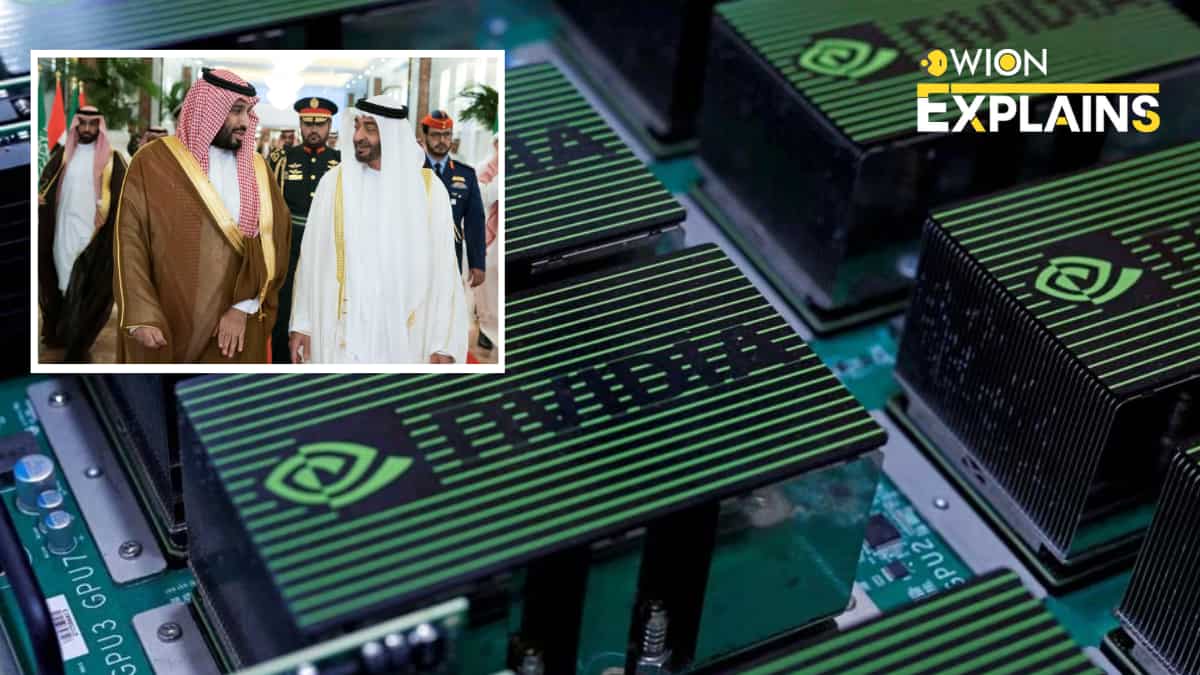
UAE, Saudi enter chip wars
Saudi Arabia and the United Arab Emirates are procuring significant quantities of high-performance Nvidia chips, which are crucial for developing artificial intelligence software.
This move places them among participant nations of the global AI competition that is straining the supply of Silicon Valley's most sought-after commodity: the semiconductors.
How Saudi Arabia and the UAE have joined chip wars

Both Saudi Arabia and the UAE have previously, albeit separately, have expressed their ambitions to become AI leaders as part of their efforts to diversify their economies.
But reports in western media point out scepticism about potential misuse of AI technology by their authoritarian leaders.
Reports indicate that Saudi Arabia has acquired over 3,000 of Nvidia's H100 chips, which are valued at $40,000 each.
&imwidth=180&imheight=135&format=webp&quality=medium)
'Baseless and misconceived': India issues statement after Elon Musk's 'oligarchs' claim over Starlink delay
&imwidth=180&imheight=135&format=webp&quality=medium)
‘You earned that love’: Messi’s wife shares heartfelt message as football icon bids farewell to international stage
&imwidth=180&imheight=135&format=webp&quality=medium)
BJP chief Nitin Nabin calls Rahul Gandhi ‘anarchist’, says Oppn ‘spreading poison’ in society
&imwidth=180&imheight=135&format=webp&quality=medium)
‘Team first and team ahead’: India coach Gambhir pens heartfelt wish for chief selector Ajit Agarkar
&imwidth=180&imheight=135&format=webp&quality=medium)
Trump's naked 23-karat gold statue unveiled near European Parliament
&imwidth=180&imheight=135&format=webp&quality=medium)
Nana Patekar: Remembering a legend of the Indian cinema
&imwidth=180&imheight=135&format=webp&quality=medium)
Thai Actors Fourth Nattawat, Gemini Norawit face racism accusations from Indian fans over viral Bollywood act
&imwidth=180&imheight=135&format=webp&quality=medium)
Captain Smit Machchhar on feet again, walks 10 steps as recovery continues after Flydubai flight attack
&imwidth=180&imheight=135&format=webp&quality=medium)
Ronaldo sends 'a hug' after Messi says he misses 'wearing the blue and white'
&imwidth=180&imheight=135&format=webp&quality=medium)
A Love Other Than Yours: The temptation to cheat and what pushes people over the edge
&imwidth=180&imheight=135&format=webp&quality=medium)
Narendra Modi Stadium bomb threat declared hoax; India & Australia U19 squads safe
&imwidth=180&imheight=135&format=webp&quality=medium)
US midterms 2026: Why the Latino vote could shape control of Congress
&imwidth=180&imheight=135&format=webp&quality=medium)
BTS agency HYBE announces first-ever Weverse Con Festival in India
&imwidth=180&imheight=135&format=webp&quality=medium)
US Midterms 2026: Barack Obama hits campaign trail to boost Democratic candidates
&imwidth=180&imheight=135&format=webp&quality=medium)
Shia LaBeouf and Mia Goth head for divorce after nearly 10 years
&imwidth=180&imheight=135&format=webp&quality=medium)
Who is DogeDesigner? All we know about the X account that sparked India-Musk-Starlink ‘oligarchs’ controversy
&imwidth=180&imheight=135&format=webp&quality=medium)
Christa Pike wakes after failed execution, asks 'Where am I and who are you?'
&imwidth=180&imheight=135&format=webp&quality=medium)
Christa Pike 'angry' and 'confused' after failed execution; judge orders to preserve evidence
&imwidth=180&imheight=135&format=webp&quality=medium)
Nigerian President Bola Ahmed Tinubu hails Modi’s 25-year leadership milestone, calls for deeper Nigeria-India strategic ties
&im=FitAndFill=(700,400)&imwidth=180&imheight=135&format=webp&quality=medium)
US midterms 2026: 10 leaders and candidates to watch in the battle for Congress
&imwidth=180&imheight=135&format=webp&quality=medium)
Nana Patekar's #MeToo controversy: From Tanushree Dutta’s allegations to court ruling
&imwidth=180&imheight=135&format=webp&quality=medium)
Atlantic hurricane Isaias could make landfall as a strong Category 2 storm, tornado warnings issued
&imwidth=180&imheight=135&format=webp&quality=medium)
Veteran actor Nana Patekar dies at 75 after suffering cardiac arrest
&imwidth=180&imheight=135&format=webp&quality=medium)
Musk alleges ‘oligarchs’ blocking Starlink in India, here is what we know so far
&imwidth=180&imheight=135&format=webp&quality=medium)
Lightning strikes IndiGo Patna-Lucknow flight at 17,000 feet, damages nose; all 110 safe
&imwidth=180&imheight=135&format=webp&quality=medium)
Who is Nana Patekar's wife Neelakanti? The bank officer who earned Rs 2,500 when he earned Rs 50
&imwidth=180&imheight=135&format=webp&quality=medium)
Mall of America attack: FBI arrests man over alleged ISIS-inspired mass shooting plot with AK-47 and 200 rounds
&imwidth=180&imheight=135&format=webp&quality=medium)
France holds talks with Taliban government amid diplomatic outreach
&imwidth=180&imheight=135&format=webp&quality=medium)
Nadella to be honoured with national medal of technology & innovation
&imwidth=180&imheight=135&format=webp&quality=medium)
IndiGo flight struck by lightning at 17,000 feet, nose of Patna-Lucknow flight damaged
&imwidth=180&imheight=135&format=webp&quality=medium)
US readying to strike Iran? Report suggests Trump preparing to put on show of strength ahead of US midterms
&imwidth=180&imheight=135&format=webp&quality=medium)
Zendaya gives The Odyssey white lace jacket a stylish twist at Paris Fashion Week 2026
&im=FitAndFill=(700,400)&imwidth=180&imheight=135&format=webp&quality=medium)
World’s top vehicle producers: Top 10 countries making the most cars. Check where India stands
&imwidth=180&imheight=135&format=webp&quality=medium)
Trump to honour Elon Musk, Sergey Brin and Jensen Huang with top science honour at White House. Check the full list here
&imwidth=180&imheight=135&format=webp&quality=medium)
'We don't think so': Trump says Russian plague lab worker's death not linked to bio-weapon
&imwidth=180&imheight=135&format=webp&quality=medium)
Sri Lankan Tamil worker gets death sentence in Saudi Arabia over blasphemy, calls for pardon intensify
&imwidth=180&imheight=135&format=webp&quality=medium)
France protests: How a Gen Z school movement turned into a political war | The Verdict
These chips, described by Nvidia's CEO Jensen Huang as "the world's first computer chip designed for generative AI," were obtained through the research institution King Abdullah University of Science and Technology (Kaust).
Simultaneously, the UAE has gained access to a substantial number of Nvidia chips and has developed its own open-source large language model, known as Falcon, at the state-owned Technology Innovation Institute in Abu Dhabi.
Both countries are strategically investing in computational power and talent to reduce dependency on other global powers. Their considerable resources and ability to attract top talent have facilitated these efforts.
Saudi Arabia and UAE in chip wars: What does it mean?
The Nvidia chip purchases by Saudi Arabia and the UAE align with a broader trend where leading tech companies worldwide are rushing to secure scarce AI development chips.
Chinese tech giants like Tencent and Alibaba have also been seeking to acquire Nvidia's high-performance chips. But their efforts have been marred by Biden administration's clampdown on Chinese purchases related to critical US-made technologies.
Also watch |Gravitas Plus: Who's winning the Chip War?
According to multiple sources close to Nvidia and its manufacturer, Taiwan Semiconductor Manufacturing Company cited by Financial Times newspaper, the chipmaker will ship about 550,000 of its latest H100 chips globally in 2023, primarily to the US-based tech companies.
UAE was the first to establish an AI ministry
In 2017, the United Arab Emirates was the first nation to establish a ministry of Artificial Intelligence. The country has now launched a "Generative AI Guide" as part of Abu Dhabi's "commitment to reinforcing its global position as a pioneer in technology and artificial intelligence sectors" as well as "regulatory frameworks to limit the negative use of technology".
What is the bottom line?
Both Saudi Arabia and the United Arab Emirates manage some of the world's largest and most powerful sovereign investment funds. So the two West Asian economic powers have what many nations who aspire to lead the AI race do not have enough: the financial prowess.
The representatives of Gulf state-affiliated funds have reportedly approached AI start-ups in the West in an effort to access code and expertise in exchange for computing resources.
"We have had offers of immense financings and access to data, in order to tap indirectly into our talent," one of the chief executives of two European AI companies, who reportedly declined their offers, were quoted as saying by Financial Times.
Earlier, the OpenAI chief executive Sam Altman in June praised the UAE's foresight in recognising the importance of AI during a visit to the region. He said that Abu Dhabi could “play a central role in this global conversation” around the emerging technology and its regulation.
“There has been discussion about AI, here in particular, in Abu Dhabi, before it was cool,” he said. “Now everyone is on the AI bandwagon, which we are excited about, but we have special appreciation for the people who were talking about this when everyone thought AI was not going to happen.”
But the US, by far, is leading the chip war
There has seen a whopping $166 billion of investments in semiconductors and electronics in its first year, according tothe US government.
The CHIPS Act provides nearly $53bn in incentives for semiconductor manufacturing, research and development, and workforce development in the United States. It further specifies25 per cent tax credit for capital investments in semiconductor manufacturing.
The $166bn in manufacturing for semiconductors and electronics is supported by at least 50 community colleges in 19 states that have announced new or expanded programming to help the US workers access good-paying jobs in the semiconductor industry.
Last week, the US Department of Commerce unveiled the released the first tranche of CHIPS grants aimed at bolstering the advancement of open and inter-operable wireless networks.
Meanwhile, there have been collaborative developmentstaken by the National Science Foundation, along with the Departments of Energy, Commerce, and Defence, in their pursuit of establishing the National Semiconductor Technology Centre, one of the first of its kind in the world.
WATCH WION LIVE HERE
You can now write for wionews.com and be a part of the community. Share your stories and opinions with us here.