EXPLAINED | Key changes in Afghanistan under two years of Taliban rule

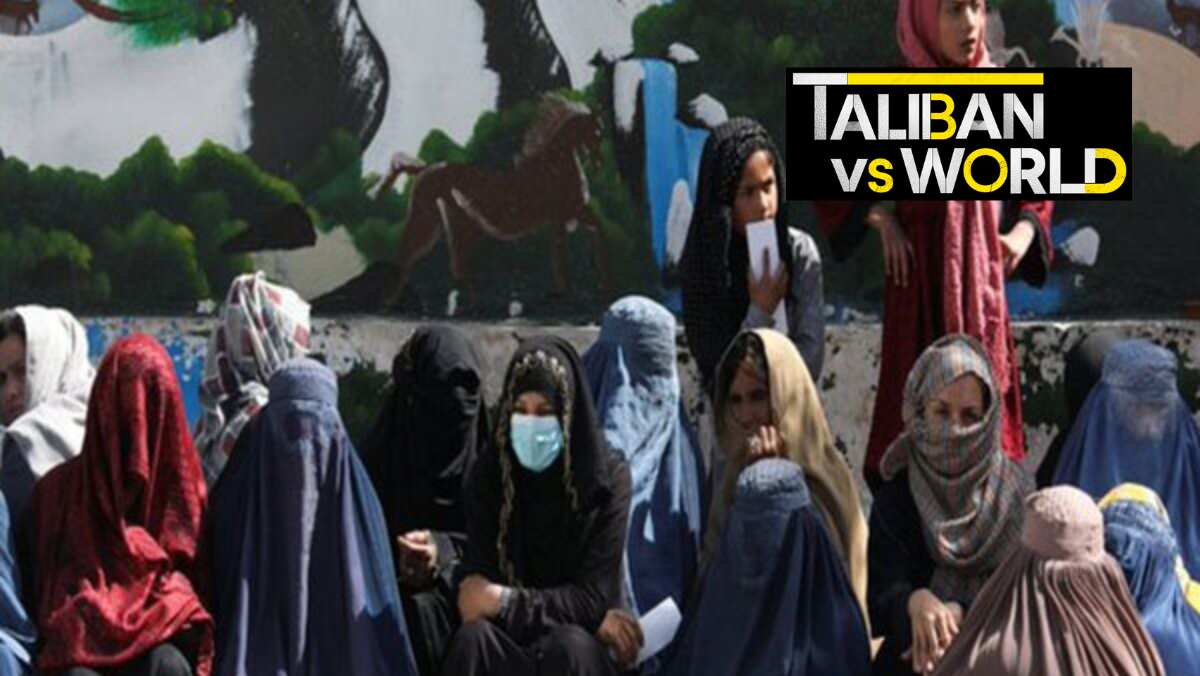
The Taliban barred women from campuses last December, triggering global outrage.
Two years have passed since the Taliban seized power in Afghanistan on August 15, 2021, a sad day for many in the country.This period has witnessed significant changes in various aspects of Afghan society, be it governance or economy, or international relations.
The Taliban's takeover prompted a reevaluation of Afghanistan's standing on the global stage, with nations deliberating on diplomatic recognition and their respective approaches to engagement. Regional players, like India, also sought to navigate their positions, considering potential impacts on security dynamics and the broader stability of the South Asian region.
On the second anniversary of the Taliban's seizure of power, the world reflects on the multifaceted changes that have taken place within Afghanistan. While the full extent of these changes continues to unfold, one thing remains certain: the events of these past two years have left an indelible mark on Afghan society, politics, and its position in the global arena.

End of America's 20-year war
The withdrawal of US forces, ending the 20-year-old war, brought about challenges and criticism. The chaotic manner in which the withdrawal was executed raised questions about the US handling of the situation.
Also Read | Niger regime leader 'open to explore diplomacy'
)
US vs China over South China Sea: Washington backs Philippines, Beijing hits back
)
Bigg Boss 20: Isha Rikhi evicted after three weeks in Salman Khan’s show
)
Musk plans to more than double xAI's chips to over 1.2 million Nvidia GPUs by year-end
)
After JU, clash erupts at SRFTI: BJP’s ‘Dimagi Naxal’ jibe sparks political firestorm after students protest RSS-linked event
)
‘Anti-social elements spreading false rumours’: LPU issues statement amid massive unrest over alleged rape
)
LPU students go on rampage, vandalise campus amid widespread protest: What's happening
)
Trump asked Xi to pressure Iran. China did not say yes — here’s what Beijing wants
)
US Treasury Secretary Scott Bessent hails global crackdown on Iranian banks and airlines
)
An OpenAI agent escaped its locked test cage again, by hiding questions in DNS lookups
)
'Our video was trimmed': LPU girls who featured in rape-denial video make U-turn
)
3 males killed, four others injured in shooting after fight at strip club in Detroit
)
'Victory for low-budget consumers': Raghav Chadha hails 30-day telecom recharge rules
)
Claude rebuilt the 1989 game 'Prince of Persia' by reusing the original's own code
)
Beyond metros: How Tier-2 and Tier-3 cities could drive India’s next AI wave
)
Tesla builds first Cybertruck with its own refined lithium: Elon Musk's $1 billion Texas bet pays off
)
IndiGo flight suffers tail strike in Bengaluru while landing; DGCA to probe incident
)
The US and China set up an AI 'red telephone', but skipped the rulebook
)
‘Terror suspects arrested near UK air base were looking to do big damage’: Trump
)
Russian envoy claims US tactics to contain India were revealed in ‘Freudian slip’
)
IND vs WI 1st ODI: Kohli breaks Sachin's most runs in one country record with unbeaten 139 as India thump West Indies by 8 wickets
)
Researchers rebuilt exactly how 700 AI agents hacked Hugging Face: a 900-link chain trick
)
‘Olympic inclusion is our major target’: WPA President Ishaun Singh on pool’s global ambitions
)
Nations League: Spain sink England at Wembley; Modric shines for Croatia
)
Why has Iran released no proof of life of Mojtaba Khamenei? Araghchi reveals...
)
'What kind of confession is this?': Pakistan PM Shehbaz Sharif’s 'terrorists would be roaming New York' remark goes viral, raises alarm online. Watch
)
South Korea demands apology from Ukraine over North Korean prisoners' transfer
)
Beyond BrahMos: India targets Rs 50,000 crore in defence exports with unmatched price edge
)
Sri Lankan Tamil migrant worker gets death sentence in Saudi Arabia, help sought from India
)
Muslim marriage cannot shield sex with minor wife from prosecution under POCSO: Delhi HC
)
'Can't help but draw painful parallels to Nirbhaya case': SC on latest incidents of rape cases in Delhi-NCR
)
99.9% more powerful - Scientists find boy who can recall memories from just 3 months of age
)
'FIRST LOOK from inside Noah’s Ark': Researchers share video from inside mysterious mound in Turkey
)
UNSC reform momentum grows: Russia, Portugal, Mauritius push for India's permanent seat bid
)
8 US marines injured in Iranian missile attack on vessel in Strait of Hormuz: Report
&im=FitAndFill=(700,400))
New OTT releases this week (September 28-October 4, 2026): Dupahiya 2, Pooja Meri Jaan, Ohh My Dog- 5 titles coming on Netflix, Prime Video and more
)
Afghanistan says 28 fighters killed in clash near Pakistan border, Islamabad denies
)
Ceuta migrant crisis: Protesters take to streets as Spain grapples with migrant challenge
)
LPU suspend classes, postpones exams as violence escalates over rape claims: What's happening
)
New York City wants a 'kill switch' on every AI, and will pay whistleblowers who report violations
In their previous reign during the late 1990s, the Taliban were known for conducting public executions, floggings, and stoning as punishments for individuals found guilty of crimes in Taliban courts.
Taliban 2.0, initially presented themselves as more moderate compared to their previous rule. However, their unmatched actions and decisions have sparked controversy and challenges on both domestic and international fronts, with no certainty as to what the future holds for Afghanistan.
Women's rights under attack
One of the most notable and controversial aspects of the Taliban has been the exclusion of Afghan girls and women from various aspects of public life. A series of bans were imposed, preventing women from accessing higher education, employment, beauty salons and parks.
The rationale behind these bans is the Taliban's commitment to their interpretation of Sharia law.
These restrictions have been met with widespread condemnation from the international community, causing the Taliban to face challenges in gaining international recognition and access to foreign aid.
In December of the past year, the Taliban enforced a ban on women accessing campuses, which sparked widespread global outrage.
Also Read |At least one killed, several injured after attack on Shiite Muslim shrine in Iran: Reports
Prior to that, girls were prohibited from attending school beyond the sixth grade, an order that came shortly after the Taliban reclaimed authority in August 2021. Afghanistan is reportedly the sole nation with such restrictions on female education.
Economic challenges
The Taliban have faced economic challenges due to the withdrawal of foreign aid and international sanctions. The majority of Afghanistan's budget had been supported by international donors, but with the Taliban taking over, aid was suspended, leading to a financial crisis.
The Taliban have engaged in talks with neighbouring countries, such as China and Kazakhstan, to secure investments and the release of frozen funds.However, the international community has linked economic cooperation to improvements in women's rights and other human rights issues, creating difficulties for the Taliban leadership.
Taliban's supreme leader, Hibatullah Akhundzada, holds significant influence over decision-making, including the implementation of gender restrictions.Akhundzada's decisions are final.
International recognition
The Taliban have sought international recognition as the legitimate government of Afghanistan, but this has been met with challenges due to concerns about their human rights record and commitments. While the Taliban leadership has engaged in diplomatic interactions with various countries, including powerful states like China and Russia, formal recognition has been elusive.
WATCH | Chinese vessel prepares to dock to Colombo
Sanctions and travel restrictions on Taliban officials have also hindered their foreign outreach. However, the international community recognises the need to cooperate with the Taliban on issues such as narcotics, refugees, and counter-terrorism.
Challenges to Taliban rule
While the Taliban have managed to establish control over Afghanistan, challenges to their rule have persisted.
The Panjshir Valley, a region historically resistant to outside control, has seen pockets of opposition. However, the Taliban's dominance in terms of both armed and political opposition has largely prevented any significant threats to their rule. The Islamic State, though weakened, has carried out attacks against the Taliban, highlighting the ongoing security concerns.
A complex road ahead
The Taliban's second year in power has been marked by a mix of attempts to consolidate their rule, address economic challenges, and engage with the international community.
However, their strict interpretation of Islamic law, particularly in relation to women's rights, has drawn significant attention and criticism.
The challenges of governing a country with a fragile economy, security concerns, and international pressure present a complex road ahead for the Taliban as they seek to navigate their position on the global stage while also maintaining control domestically.
WATCH WION LIVE HERE You can now write for wionews.com and be a part of the community. Share your stories and opinions with us here.