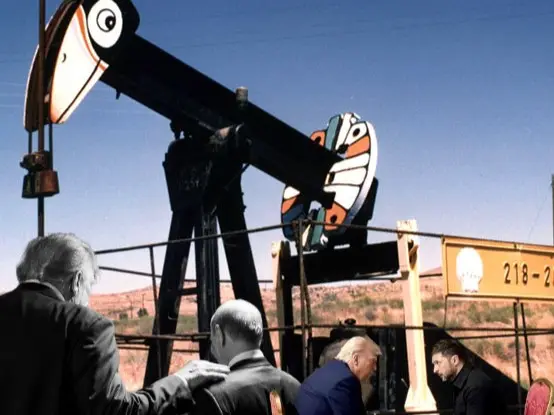
Drill Baby, Drill: How Trump’s Russia-Ukraine war mediation helps US oil deals on both sides

&imwidth=600&imheight=450&format=webp&quality=medium "Drill Baby, Drill: How Trump’s Russia-Ukraine war mediation helps US oil deals on both sides")
Agressive oil production in US needs markets abroad. And Russia-Ukraine war provides it Photograph: (Others)
Trump’s ‘Drill Baby, Drill’ energy strategy is gaining from the Russia-Ukraine war, as US oil firms profit by replacing Russian supply in Europe—while quietly staying linked to Russian markets too. Wonder how? Read on:
Sometimes, war is good for business. American oil and gas firms would certainly agree, in the context of the Russia-Ukraine war. Since Russia invaded Ukraine in February 2022, Europe rushed to cut its historic dependence on Russian oil and gas. One of the biggest beneficiaries of this situation has been the United States. Fueled by the “Drill, Baby, Drill” approach on fossil fuels championed by President Donald Trump, American producers and marketers have found a new ‘gold rush’ amid the ruins of the Russia-Ukraine conflict. Here is that story:
Russia-Ukraine war and the energy shockwave that helped the US
Before the war, Russia accounted for approximately 31 per cent of the European Union's crude oil imports and nearly 45 per cent of its natural gas imports. But after the war, bans on seaborne Russian crude oil (effective December 2022), restrictions on refined oil products (early 2023), and voluntary reductions in Russian gas imports left Europe scrambling to fill a massive energy gap.
Enter the United States, whose shale boom and ever-growing LNG export infrastructure positioned it as the top replacement supplier for Europe.
The result? American crude oil exports to Europe surged from roughly 0.6 million barrels per day (b/d) in 2021 to nearly 1.85 million b/d by 2023. American LNG export volumes to Europe rose from about 2.4 billion cubic feet per day (Bcf/d) in 2021 to over 7 Bcf/d by 2023, making the US Europe’s largest LNG supplier.
By mid-2025, Europe had reduced Russian energy imports by nearly 89 per cent, dramatically weakening Russia’s fossil fuel revenue stream, which fell by around 8 per cent year-on-year to nearly €847 billion since 2022.
Trending Stories
&imwidth=280&imheight=210&format=webp&quality=medium)
&im=FitAndFill=(700,400)&imwidth=280&imheight=210&format=webp&quality=medium)
&imwidth=280&imheight=210&format=webp&quality=medium)
&imwidth=280&imheight=210&format=webp&quality=medium)
&imwidth=280&imheight=210&format=webp&quality=medium)
&im=FitAndFill=(700,400)&imwidth=280&imheight=210&format=webp&quality=medium)
&imwidth=280&imheight=210&format=webp&quality=medium)
&imwidth=280&imheight=210&format=webp&quality=medium)
&imwidth=280&imheight=210&format=webp&quality=medium)
&imwidth=280&imheight=210&format=webp&quality=medium)
&imwidth=280&imheight=210&format=webp&quality=medium)
&imwidth=280&imheight=210&format=webp&quality=medium)
&imwidth=280&imheight=210&format=webp&quality=medium)
&imwidth=280&imheight=210&format=webp&quality=medium)
&imwidth=280&imheight=210&format=webp&quality=medium)
&imwidth=280&imheight=210&format=webp&quality=medium)
&imwidth=280&imheight=210&format=webp&quality=medium)
&imwidth=280&imheight=210&format=webp&quality=medium)
&imwidth=280&imheight=210&format=webp&quality=medium)
&imwidth=280&imheight=210&format=webp&quality=medium)
&imwidth=280&imheight=210&format=webp&quality=medium)
&imwidth=280&imheight=210&format=webp&quality=medium)
&imwidth=280&imheight=210&format=webp&quality=medium)
&imwidth=280&imheight=210&format=webp&quality=medium)
&im=FitAndFill=(700,400)&imwidth=280&imheight=210&format=webp&quality=medium)
&imwidth=280&imheight=210&format=webp&quality=medium)
&imwidth=280&imheight=210&format=webp&quality=medium)
&imwidth=280&imheight=210&format=webp&quality=medium)
&imwidth=280&imheight=210&format=webp&quality=medium)
&imwidth=280&imheight=210&format=webp&quality=medium)
&imwidth=280&imheight=210&format=webp&quality=medium)
&imwidth=280&imheight=210&format=webp&quality=medium)
&imwidth=280&imheight=210&format=webp&quality=medium)
&imwidth=280&imheight=210&format=webp&quality=medium)
&imwidth=280&imheight=210&format=webp&quality=medium)
Fishing in troubled waters: American firms find new markets in a war-torn world
The success of ‘Drill, Baby, Drill,’ Trump’s hallmark policy to ramp up American fossil fuel production, depends on one critical factor: Buyers. Production growth alone doesn't guarantee profits. American oil and gas must be sold abroad to absorb the increased supply and sustain prices.
The Ukraine war created an ideal hunting ground for American producers. US crude oil and LNG exporters suddenly had a ready customer base, enabling them to sell record volumes at premium prices. The American crude oil export value to Europe soared to around $50–60 billion annually by 2023, while LNG exports generated an additional $40–50 billion per year.
New American LNG terminals like Plaquemines Phase 1 and a 35 per cent increase in EU regasification capacity helped sustain the boom in sales.
Also read: 'We don’t want to punish India': US tells India to buy oil from 'anywhere, just not Russia'
It doesn't end there: American oil firms are dealing with Russia too
American oil companies have found ways to benefit from both sides of the war. The US is supplying Europe, whose erstwhile supply from Russia it is forcibly cutting through pressure tactic. At the same time, US firms continue to engage in energy trade with Russia itself.
Despite sanctions and price caps, Russian crude exports have not disappeared entirely and still reach some global markets, occasionally with involvement from US trading firms and middlemen. Russian President Vladimir Putin had signed a decree allowing foreign investors to potentially regain shares in the Sakhalin-1 oil and gas project. ExxonMobil, which had previously exited Sakhalin-1 due to sanctions, is reportedly interested in re-entering the Russian oil market. A Kremlin spokesperson noted that ExxonMobil is not the only American energy firm exploring re-entry.
Meanwhile, US energy giants like ExxonMobil, Chevron, and Cheniere reported record profits. Oil and gas majors globally have generated more than $281 billion in profits since February 2022, nearly half of which has flowed to American companies.
Why Trump wants Europe to limit Russian oil purchases: A hidden agenda helping US firms
Trump’s public calls for Europe to reduce and eventually stop purchasing Russian oil align with his broader agenda: to weaken Russia economically and bolster American energy dominance.
He has advocated for European allies to adopt ‘secondary sanctions’ and curtail Russian imports aggressively.
This strategy automatically positions America as the more “reliable” energy partner for Europe while ensuring sustained demand for US-made fossil fuels abroad.
Europe is effectively paying more for energy products from the US, such as LNG, even as increased fossil fuel purchases from the US run counter to its climate commitments. The phrase ‘renewable energy,’ once Europe’s clarion call, is not uttered as loudly anymore in the face of immediate energy security concerns.