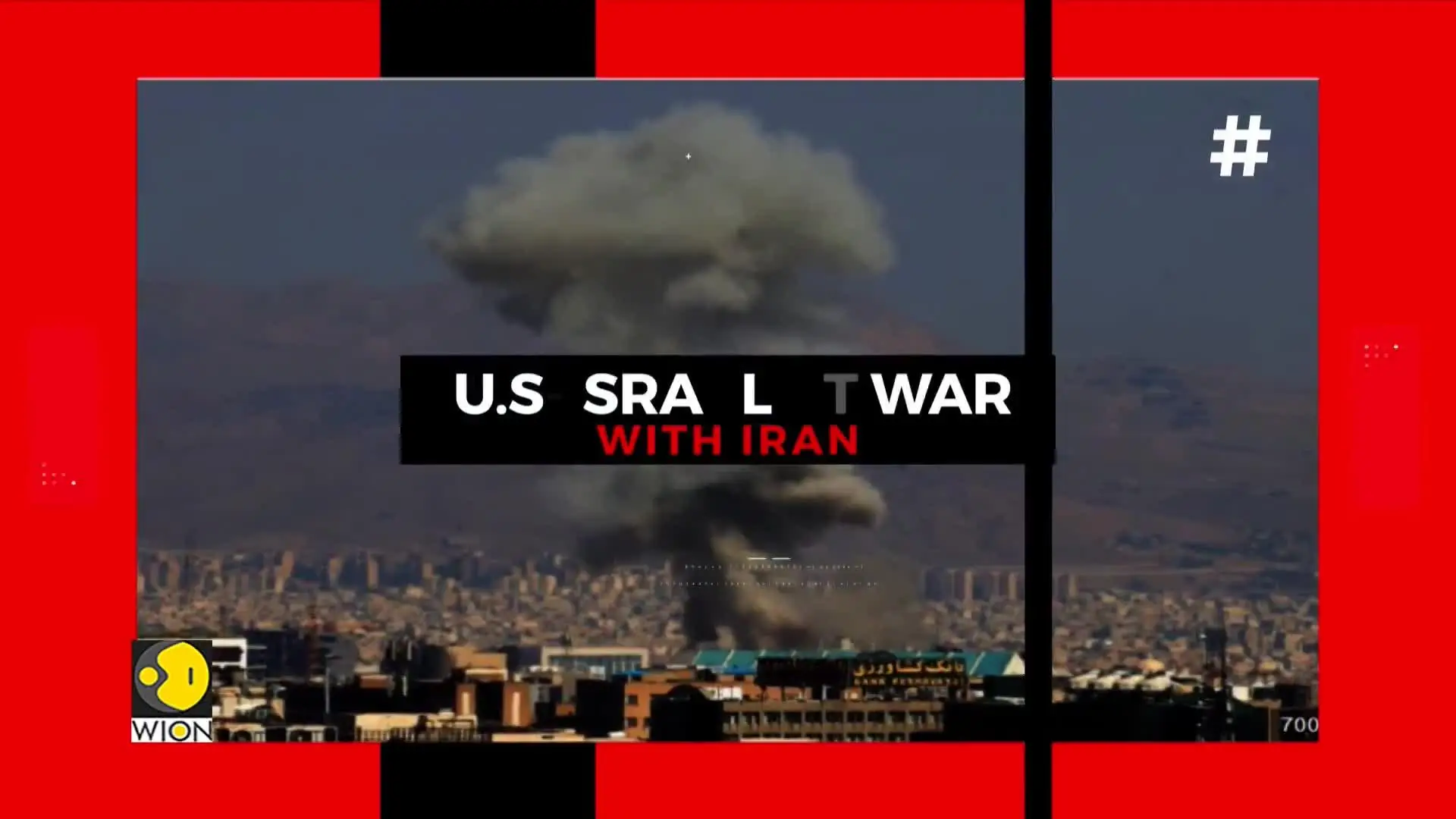
Did the US just ask Americans in Israel to find their own way out? Embassy issues stark warning on exiting

&imwidth=600&imheight=450&format=webp&quality=medium "Did the US just ask Americans in Israel to find their own way out? Embassy issues stark warning on exiting")
US President Donald Trump monitoring Operation Epic Fury against Iran, and the facets of the conflict are shown here Photograph: (Others)
In what appears to be a moment of helplessness, the US Embassy has said it cannot evacuate Americans from Israel amid escalating conflict with Iran. It is urging citizens to make their own exit plans as flights remain limited and border crossings are uncertain
In a stark warning to Americans trying to exit Israel amid the escalating conflict with Iran, the US Embassy said on Tuesday (Mar 3) it is “not in a position at this time to evacuate or directly assist” them. In a post on X and an earlier message on the embassy website, the US effectively urged Americans stuck in Israel to make their own arrangements to leave if they so choose. The embassy said it cannot provide evacuation flights, transportation or guarantees of safety to US citizens, urging them instead to plan independently for their departure. Commercial flights are limited or non-operational, and broader travel warnings are in effect, leaving few options for those who decide to leave.
Shuttle option through Israeli authorities
The security notice pointed to an initiative by Israel’s Ministry of Tourism, which began operating shuttles to the Taba border crossing on 2 March. Americans wishing to use this service were asked to register through the ministry’s evacuation form. However, US officials explicitly declined to recommend for or against this option, stressing that the US government cannot guarantee the safety of those who choose it.
It said that from Eilat, passengers may then proceed on their own, typically by taxi, to the Yitzhak Rabin (Wadi Araba) crossing into Jordan, offering one of the few available overland exit routes. The land crossing at Taba into Egypt is operating 24 hours a day, though travellers may be subject to visa fees depending on their plans. US citizens who remain within the Sinai region and do not travel onwards into mainland Egypt are not required to pay the fee, the notice said.
Also read: FACT CHECK: Benjamin Netanyahu assassinated in Iranian strike? Truth behind massive claim
'Security conditions can change without warning'
Trending Stories
&im=FitAndFill=(700,400))
)
)
)
)
)
)
)
)
)
)
)
)
)
)
&im=FitAndFill=(700,400))
)
)
)
)
)
)
)
)
)
)
)
)
)
&im=FitAndFill=(700,400))
The notice warned that any border crossing could close at short notice. The southern Yitzhak Rabin/Wadi Araba crossing into Jordan was accepting its last passengers at 7.00 pm on Monday. Queen Alia International Airport in Jordan was open, with limited flights available, including services operated by Royal Jordanian Airlines, the advisory said. Limited flight options were also available from airports in Taba and Sharm el-Sheikh in Egypt, it added.
Buses organised by Israeli authorities are stationed at meeting points across the country, including Herzliya, Haifa, Jerusalem and Tel Aviv, to transport passengers to the southern border area, it said.
Also read: 'US entered war on behalf of Israel': Iran slams Rubio's justification of 'pre-emptive attack'
Shelter-in-place order for US personnel
The embassy has directed all US government employees and their families to continue sheltering in place in and near their residences until further notice. The notice warned that the security environment is complex and can change quickly, with incidents such as rocket and missile fire, mortar attacks and unmanned aircraft intrusions occurring with little or no warning.
The embassy reminded American citizens to know the location of the nearest bomb shelter or protected space and to treat all red alert sirens as real.
What Americans in Israel were told to do
Americans were urged to monitor local media, avoid demonstrations and large gatherings, steer clear of areas with a heavy police presence, and follow instructions from local authorities.
They were also encouraged to enrol in the State Department’s Smart Traveler Enrollment Programme to receive security updates and facilitate contact in an emergency. The State Department’s travel advisory for Israel, the West Bank and Gaza remains in effect, with officials warning that further restrictions on US government personnel travel, including to parts of Jerusalem and the West Bank, could be imposed without advance notice.
The embassy’s repeated emphasis that it cannot evacuate or directly assist Americans in departing Israel marks a sobering moment for Americans in the region, leaving many to weigh difficult choices amid an increasingly unpredictable security landscape.
Disclaimer: WION takes utmost care to accurately and responsibly report ongoing conflicts in West Asia involving Israel, Iran, US, Gulf nations and non-state actors like Hezbollah, Hamas, Houthis, Islamic State, and others. Claims and counterclaims, disinformation and misinformation are being made online and offline. Given this context, WION cannot independently verify the authenticity of all statements, social media posts, photos and videos.