Deadly clashes in Kathmandu as youth-led protests erupt over social media ban

&imwidth=600&imheight=450&format=webp&quality=medium "Deadly clashes in Kathmandu as youth-led protests erupt over social media ban")
Nepal protest Photograph: (X)
According to the Ministry of Health and Population, 19 people including a 12-year-old child were killed in police firing during protests nationwide. Dozens more remain injured, with several hospitalized.
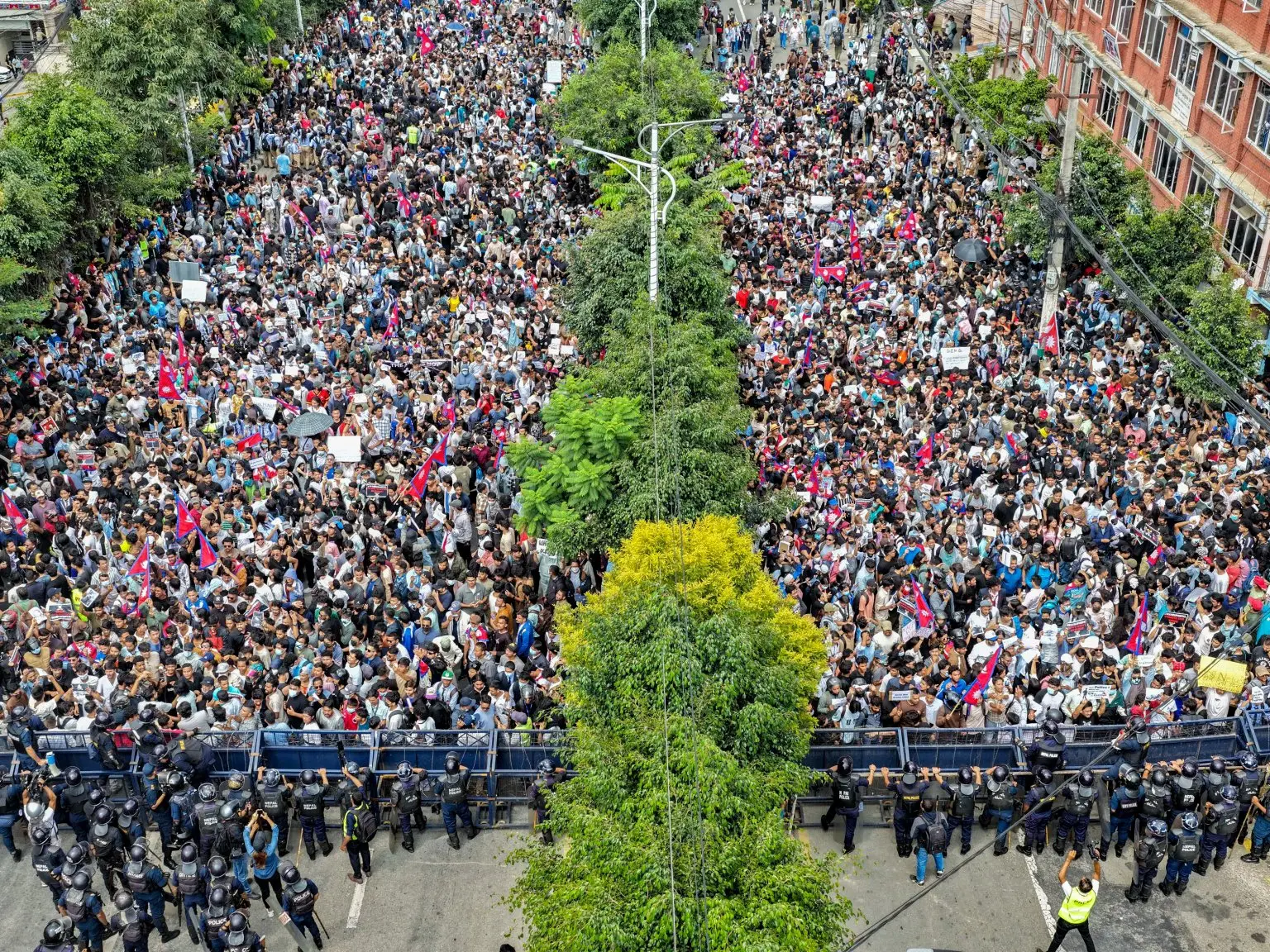
What began as a peaceful demonstration led by Gen-Z activists against corruption and the government’s decision to restrict social media platforms has spiraled into deadly violence across Nepal.
By mid-morning on Monday, thousands had gathered at Maitighar, chanting slogans such as “Give our country back” and demanding Prime Minister KP Sharma Oli’s resignation. The protest, fueled by hashtags like #NepoKid and #NepoBabies, marked a dramatic shift as online dissent spilled into the streets.
According to the Ministry of Health and Population, 19 people including a 12-year-old child were killed in police firing during protests nationwide. Dozens more remain injured, with several hospitalized.
Security forces responded with tear gas, rubber bullets, and eventually live ammunition as protesters broke through barbed wire barricades near Parliament, hurling water bottles and branches. In response, the government deployed the army in New Baneshwor and enforced a curfew across adjoining areas, including Bijulibazar and Central Baneshwor.
"I am protesting because there are many unfinished roads, many problems are unresolved, and for this solution, I believe today, we gathering here is just a beginning of the solutions. So I believe showing anger, showing motivation that this nation can change. I belive that we all can also chnage as well with the nation. I am here to show that youth stands with the nation. Everyone here is excited for new nepal and I hope it can start with today," Yaman Shrestha, high school student told WION.
The demonstrations were called on social media in defiance of the ban, with youths, many in school and college uniforms, marching with national flags and placards reading “Shut down corruption, not social media” and “Youths against corruption.”
Trending Stories
)
)
)
)
)
)
)
)
)
)
)
)
)
)
)
&im=FitAndFill=(700,400))
)
)
)
)
)
)
)
)
)
&im=FitAndFill=(700,400))
)
)
)
)
)
)
)
)
)
)
)
“We are fighting for our rights. Due to the social media ban, my friend here has not been able to talk to her own father. All apps Instagram and WhatsApp are to us. All ‘Nepo babies’ have got the money, and look at the situation of our country, no wonder everyone is leaving the country,” Rudra, another high school student told WION.
Meanwhile, many political parties have called for a emergency meeting of lawmakers in response to the deadly protests in the capital.
The unrest comes after the Oli government ordered a sweeping shutdown of over two dozen social media platforms shortly after midnight on September 4. The government argues the move aims to curb hate speech, fake news, and online fraud, and insists platforms must open offices in Nepal and pay taxes as per a Cabinet decision and an August 17 Supreme Court ruling.
So far, apps like Viber, TikTok, Wetalk, and Nimbuzz are registered in Nepal, while Telegram and Global Diary are in the process. But widely used platforms, including Facebook, Instagram, and WhatsApp, have yet to comply prompting the government’s drastic action.
Authorities continue to defend the shutdown, blaming users with fake accounts for spreading disinformation. But for Nepal’s youth, the ban has become a rallying cry, transforming a digital protest into one of the country’s most intense street movements in recent years.

