Chernobyl nuclear disaster: Worms at affected site 'exceptionally resilient' to radiation

File photo.
The 1986 Chernobyl disaster is among the worst nuclear energy accidents of all time. A total of 50 people died of acute radiation syndrome and thousands of others might die in future due to radiation-related causes. Humans were evacuated from the Chernobyl Nuclear Power Plant but many plants and animals continue to live in the region, despite the high levels of radiation that persist nearly four decades later.
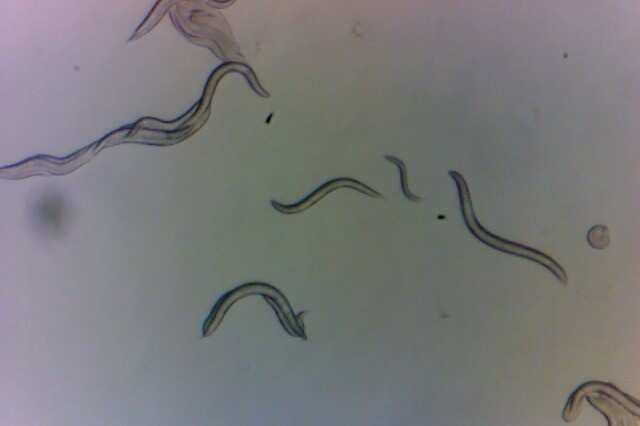
Now, a study by New York University has found that exposure to chronic radiation from Chernobyl has not damaged the genomes of microscopic worms living there today.
The study, published in PNAS (Proceedings of the National Academy of Sciences) on March 5, said the non-damage did not mean that the region was safe but suggested that these worms were "exceptionally resilient."

"The 1986 disaster at the Chornobyl Nuclear Power Plant transformed the surrounding region into the most radioactive landscape known on the planet. Whether or not this sudden environmental shift selected for species, or even individuals within a species, that are naturally more resistant to mutagen exposure remains an open question," the study said.
Sophia Tintori, the author of the study said that Chernobyl was a tragedy of incomprehensible scale, but researchers still did not have a great grasp on the effects of the disaster on local populations.
“Did the sudden environmental shift select for species, or even individuals within a species, that are naturally more resistant to ionizing radiation?” Tintori said.
)
Susan Sarandon and Hannah Einbinder detained by NYPD outside UN Headquarters
)
Tesla is preparing something big for Optimus: new Gen 3 models surface in app
)
Scientists detect first radio signals directly from faraway planet
)
‘Not just a local tragedy’: Nepal PM Shah warns UN of growing climate threat, says Nepal floods were 'a warning to the world'
)
What’s in a name? Trump’s 'Lake America' move gets a tit-for-tat response from Canada
&im=FitAndFill=(700,400))
Netanyahu at UN: Mass walkout, attack on Mamdani and Iran threats | In Pics
)
UNGA 2026: Israeli PM attacks Britain, France for past colonialism
)
Yemen called Trump for US military support in fight against Houthis: Official
)
'Blockbuster' nor'easter develops an eye similar to hurricanes as warnings are issued
)
Farhan, who went viral for AK47 celebration vs India in Asia Cup, hopes to lead Pakistan beyond Asian Games
)
‘We’ve never gotten along better’: Trump praises Xi, jokes about White House ballroom at high-stakes state dinner
)
Nations League: Germany draw on Klopp debut; Portugal, Norway win
)
WATCH: Pak PM Shehbaz Sharif refuses to answer on Hafeez Sayeed, walks away
)
The Vvaan Review: This Ekta Kapoor's Tulsi Virani-coded world can't be saved by Sidharth Malhotra and Tamannaah Bhatia
Don't Be Shy movie review: A frothy coming-of-age tale that is too shy to experiment
)
US faces fresh cost crunch as mortgage rates hit 7%, oil tops $107 and gas prices surge
)
Park Ji Hyun makes history as first Korean actress nominated for International Emmy
)
Trump gifts Xi a bald eagle sculpture at White House dinner: Here’s what it symbolises
)
Bollywood mourns Mushtaq Khan: Sunny Deol, Rajpal Yadav and others pay tribute
)
'Fund people, not bombs': Hundreds take to New York streets as Netanyahu delivers speech at UN; dozens arrested
)
Ruckus in J&K Assembly over statehood resolution; BJP leaders enter well of house
)
'FIRST LOOK from inside Noah’s Ark': Researchers share video from inside mysterious mound in Turkey
)
China to test supersonic jet that moves at Mach 2, double the speed of sound
)
CNN, Politico and MS NOW back in White House after judge blocks Trump’s media ban
)
'We do not wish to continue. It's America that must choose': Iran president Pezeshkian calls on US to end war
)
Meet Adrian Abraham: 9-year-old Indian-origin guitar prodigy aiming for a Guinness World Record
)
Xi Jinping's 'special plane' vs Trump's Air Force One: What's the difference?
)
A seven-day roadmap? Iran proposes plan to end war, reopen Strait of Hormuz and resume nuclear talks
)
Outrage erupts after 3-year-old is married to 60-year-old man in Pakistan, link to her sister's murder being probed
)
OpenAI is building AI to fight cyber threats: What GPT-6 Cyber means for security
)
WION Iconic Tourism Summit 2026: Union Minister Shekhawat on 'experiential travel', peace diplomacy
)
Air India pilot suspended after failing pre-flight alcohol test on Zurich-Delhi route
)
'What kind of confession is this?': Pakistan PM Shehbaz Sharif’s 'terrorists would be roaming New York' remark goes viral, raises alarm online. Watch
)
India-New Zealand FTA is ‘an expression of trust’, NZ High Commissioner Patrick John Rata says
)
West Indies coach Sammy looking at India series as opportunity to finetune ahead of ODI World Cup 2027 qualifiers
)
Bias or safety concerns? Bengaluru CEO says firm will not hire men from UP, Bihar, Rajasthan, MP. Here's why
)
'Making history': Xi Jinping praises Trump as US-China leaders dine at White House
)
Trump's welcome to Xi demonstrates 'attraction' to dictators: Chuck Schumer
)
Myanmar training camp case: US national, 6 Ukrainians allowed to meet their families abroad
)
To dig into this, Tintori and her colleagues turned to nematodes, tiny worms with simple genomes and rapid reproduction, which makes them particularly useful for understanding basic biological phenomena.
The study's senior author Matthew Rockman said, these worms live everywhere, and they live quickly, so they go through dozens of generations of evolution while a typical vertebrate is still putting on its shoes.
In 2019, Tintori and Rockman visited the Chernobyl Exclusion Zone to see if chronic radiation had had a detectable impact on the region’s worms. The researchers gathered worms from samples of soil, rotting fruit, and other organic material.
Worms were collected from locations throughout the zone with different amounts of radiation, ranging from low levels on par with New York City (negligibly radioactive) to high-radiation sites on par with outer space (dangerous for humans, but unclear if it would be dangerous to worms).
After the samples were collected, the team brought them to biologist Timothy Mousseau's (a member of the 2019 visit) field lab in a former residential home in Chornobyl, where they separated hundreds of nematodes from the soil or fruit.
The researchers were surprised to find out that using several different analyses, they could not detect a signature of radiation damage on the genomes of the worms from Chernobyl. But this did not mean that Chernobyl is safe, "it more likely means that nematodes are really resilient animals and can withstand extreme conditions,” noted Tintori.
“We also don’t know how long each of the worms we collected was in the Zone, so we can't be sure exactly what level of exposure each worm and its ancestors received over the past four decades,” she added.