&imwidth=800&imheight=600&format=webp&quality=medium "Ceuta migrant crisis: 67 dead as Spain says most migrants return to Morocco")
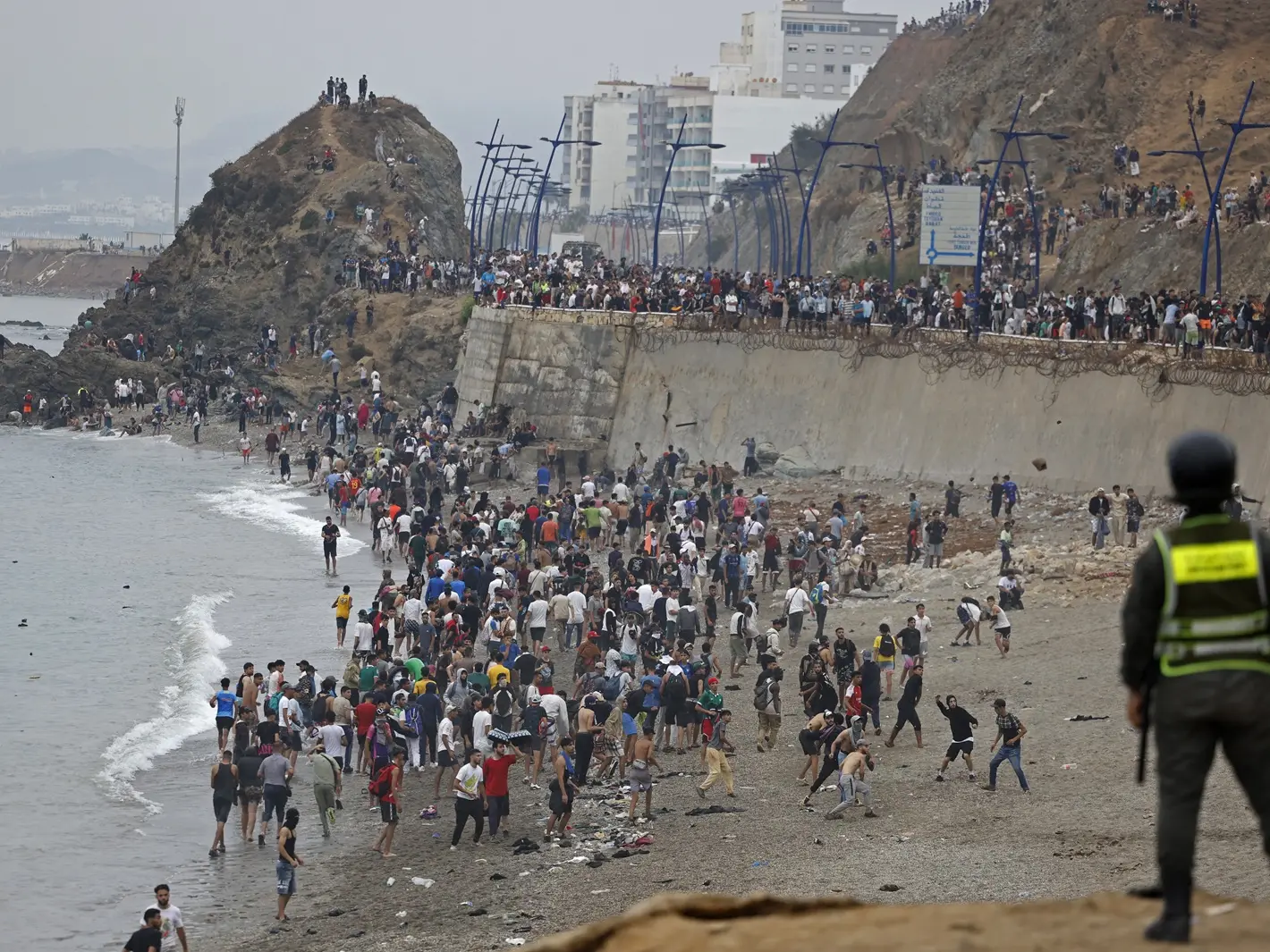
Most of the up to 60,000 migrants who entered Spain's North African enclave of Ceuta from Morocco have now returned, while at least 67 people died during the latest surge in crossings, Spanish Interior Minister Fernando Grande Marlaska said on Saturday.
The migrants crossed into Ceuta in large numbers, with many reportedly swimming around a small frontier post extending into the Mediterranean Sea. By Saturday, authorities said the situation had largely returned to normal as most of those who entered the enclave went back to Morocco.
"Almost all of them have already left Ceuta," the minister said when asked about the tens of thousands of migrants who had crossed into the enclave. "The situation has been almost entirely reversed."

Sanchez blames traffickers
Prime Minister Pedro Sanchez blamed people traffickers for the sudden influx. He said trafficking groups had spread rumours about a Spanish Supreme Court ruling that irregular migrants arriving by sea could not be immediately returned.
"What has emerged from our talks with Moroccan authorities is that trafficking mafias took a self-serving interpretation of a Supreme Court ruling," he said. That interpretation "spread like wildfire in recent hours."
Trending Stories
)
Former Pak PM Imran Khan's ex-wife Jemima Goldsmith marries Australian financier: Who is Cameron O'Reilly
)
Did India risk its US trade deal despite softer stance at BRICS?
)
Who is Kalyan Bainsla, accused in the Gurugram hit-and-run case involving woman biker?
)
UPI payments up to Rs 2,000 to stays free, but bigger transactions may soon cost you: Govt
)
Saudi Arabia discovers 110 million tonnes of Uranium-rich ore in Madinah region
)
Legendary costume designer Bob Mackie dies at 87: A look back at his iconic legacy
)
Pakistan puts Pak Rs 70 lakh bounty on UN terrorist Masood Azhar; move draws skepticism in Delhi
&im=FitAndFill=(700,400))
Emmys 2026 Red Carpet: Zendaya, Nicole Kidman and Julia Garner lead the glamour peak
)
‘US ensuring global energy supplies’: Trump demands reimbursement for securing Strait of Hormuz
)
3 Italians fly from Delhi to Munich without immigration clearance; Air India gets notice on major security lapse
)
800 million years old - Scientists discover 'fingerprints' of supercontinent Gondwana in ancient rocks
)
Emmys 2026: Michael J Fox honoured with Bob Hope Humanitarian Award for Parkinson’s advocacy
)
China thinned Himalayan troop presence in 2025, India defence report says; terms border situation 'stable'
)
Sent home midway from UK tour, Pakistan's Salman Agha hits 300* in domestic return
)
Emmys 2026 In Memoriam: Catherine O’Hara honoured by on-screen children Macaulay Culkin, Annie Murphy, Dan Levy; Dolly Parton, Rob Reiner remembered
)
Turkish Airlines plane flies through a storm three times, triggering severe turbulence
)
Extreme warming in Indian Ocean added 695 billion tons of ice to Antarctica ice sheet
&im=FitAndFill=(700,400))
New OTT releases this week (September 14-20, 2026): Lust Stories 3, Waiting Hai, Irumudi- 5 new titles coming on Netflix, Prime Video and more
)
Emmy Awards 2026: Widow's Bay and The Pitt win in lead categories- check out the complete list of winners
)
Trump downplays China's alleged 'help' to Iran in strike on Jordan base | Gravitas
)
Nigerian Navy seizes 10,000 litres of suspected illegal fuel in Rivers State crackdown
)
BCCI VP Rajeev Shukla says Mohsin Naqvi 'did not object' India refusing trophy from ACC chief
)
Ex-CIA official David Rush nears plea deal in $40 million gold bar theft case
)
Dodgers beat Reds for playoff berth in bid for third consecutive World Series
)
Video of Pakistani lawmaker struggling to read English tribute to Jinnah goes viral - WATCH
)
'Definitely feel bad for yourself': Kuldeep Yadav opens up on India Test snubs
)
UK man admits drugging, raping wife for 20 years in shocking abuse case
)
'She married her brother': Ilhan Omar faces criminal probe over immigration fraud claims
)
Gurugram hit and run case: Police arrest car driver Kalyan Bainsla, book him for attempt to murder
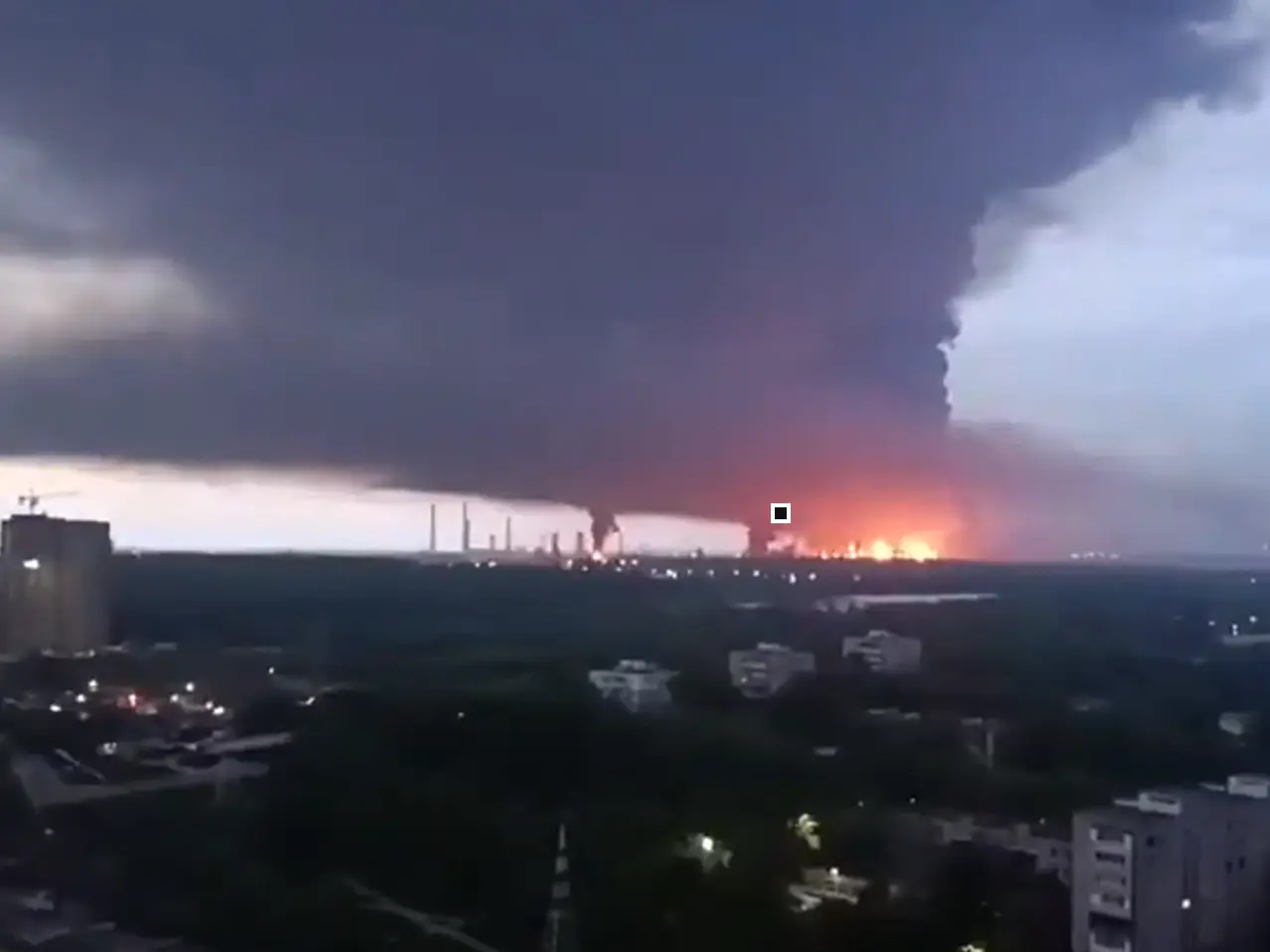)
Ukraine strikes Syzran Oil Refinery deep inside Russia, fires erupt
)
Russia proposes to build 360 kmph Ivolga FG trains in India: What happened on sidelines of BRICS
)
Iran, India agree to deepen humanitarian and political ties, President Pezeshkian says
)
Indian-origin woman, Nepali-American friend crushed to death by subway train in New York
)
China's property crisis deepens as investment plunges nearly 20%
)
Ecstasy tablets are rage in 'drug haven' Libya | Gravitas
)
'Now Trump is copying us': Shivakumar links US $5,000 plan to Congress guarantees
)
Delhi govt to roll out ₹13,820 crore development projects under Seva Sankalp Abhiyan: CM Rekha Gupta
)
Trump loses Supreme Court battle over mail ballots ahead of US midterms: What happened?
)
What is Hyrox, in news for athlete who soiled herself, but kept running and using common equipment?
)
Emmys 2026: Matthew Rhys wins Best Actor twice, sets historic 78-year record
Spain's Supreme Court issued the ruling on July 8. It stated that the immediate return of migrants without an administrative expulsion procedure does not apply to those who arrive by sea.
Also Read: 60,000 migrants from Morocco flood Spain's Ceuta, EU calls influx unacceptable, Trump warns US
Why migrants returned
Many migrants later chose to return voluntarily after finding that Ceuta lacked sufficient food and shelter for the sudden influx. One young man from Tangier said he had gone without food for more than 24 hours, while some others claimed that the Spanish army had forcibly removed them.
Many migrants had crossed hoping to find better employment, but they encountered chaos and realised that the overwhelmed city could not offer immediate job opportunities.
EU seeks urgent talks; France rejects Schengen exit
The sudden influx of tens of thousands of people into Ceuta also raised concerns across the European Union. Leaders from 22 of the bloc's 27 member states called for urgent talks among EU interior ministers to coordinate a response and prevent further uncontrolled crossings.
In an open letter, the leaders called for a swift and coordinated response to the situation.
"We have a duty to deter and relentlessly combat illegal migration effectively," it said.
France, meanwhile, ruled out seeking Spain's suspension from the Schengen zone, a set of laws that allows free movement across the 29-nation bloc, following the mass crossings into Ceuta. French Interior Minister Laurent Nunez said there was no such proposal under consideration and stressed the cooperation between the two countries.
"Spain does not need to leave the Schengen zone. It's absolutely not on the table. We have great cooperation with Spain," he told reporters.
Nunez made the remarks a day after Italy announced a one-month suspension of its Schengen agreement with Spain, which allows visa-free movement across their borders. "We are not asking for Spain's suspension from Schengen," he added.
France has also increased controls along its southern border with Spain, Nunez said.