

&imwidth=800&imheight=600&format=webp&quality=medium "Bombing raid on Qatar shows unique US-Israeli relationship")
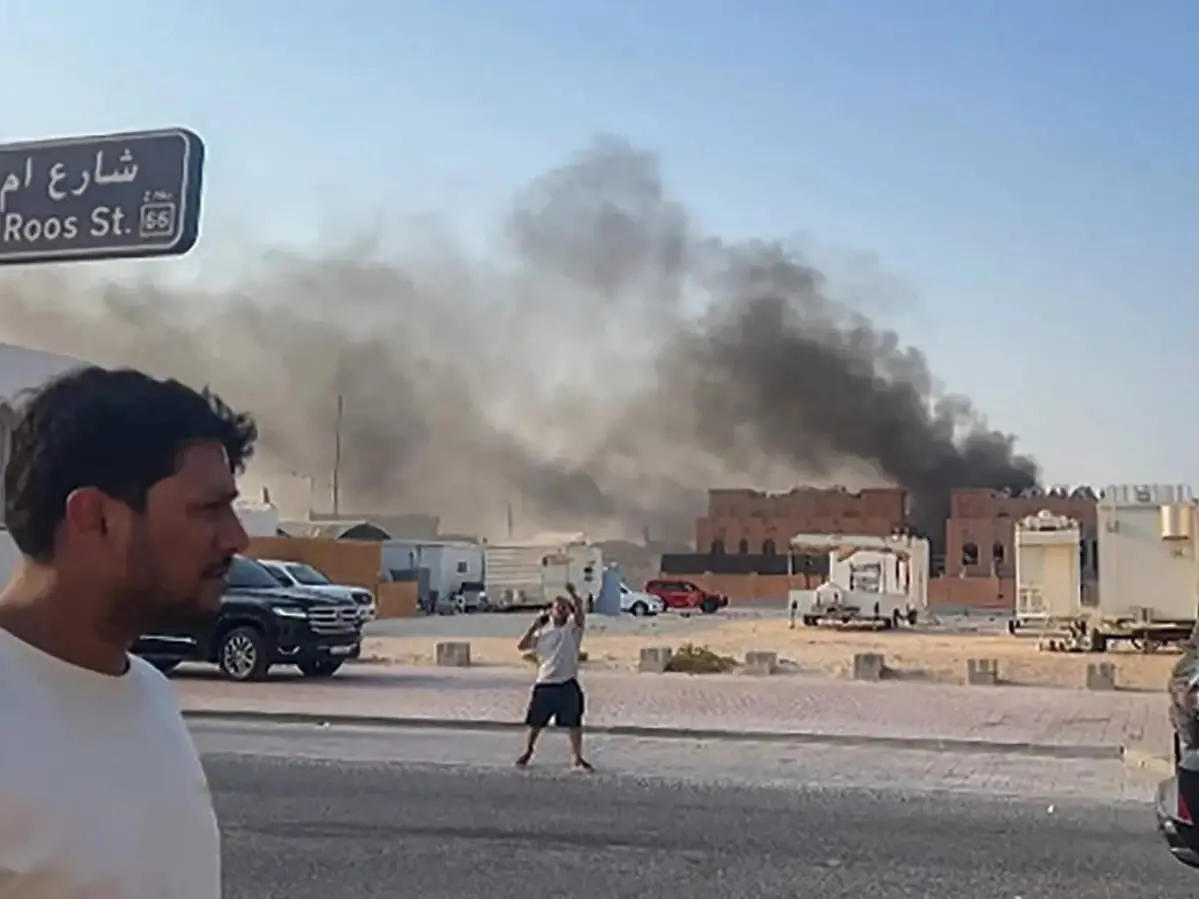
On February 9, Israel used the most sophisticated aircraft in its US-supplied arsenal to bomb a building in an upscale neighbourhood of Doha, Qatar’s capital, in an operation to kill senior leaders of Hamas, the terrorist group that murdered more than 1,000 Israelis on October 7 last year. Militarily, the raid was a partial success – its chief target, Kahlil al Hayya, survived but his son and four other Hamas members died. They had met to discuss a ceasefire in the devastating war on Gaza, a proposal, backed by US President Donald Trump. Politically, it drew shock and condemnation from around the world, from friends and foes alike.
Tactically, it was a mistake because it closed the most reliable back-channel route for negotiations with groups the US and others consider terrorists and therefore cannot have direct talks with them. Before Hamas had a political branch in Doha, the Taliban had one, too.
The first and most angry reaction to the attack came from The United Nations Secretary General, Antonio Guterres, who called it a flagrant violation of the sovereignty and territorial integrity of Qatar. The theme of trampled sovereignty and violations of international law was echoed by governments from Arab neighbours as well as France, Germany, Italy and the European Union.
For the United States, in large parts of the world seen as joint-at-the hip with Israel, reaction to the assault on a country hosting the largest US military airbase in the Middle East, has been an awkward affair. To dispel instant suspicion that the Israelis had been given green light from the US, spokeswoman Karoline Leavitt said the Trump administration had been notified about the attack by the US military, not by Israel. A senior official had then telephoned Qatar. But officials there said the call came as bombs already ripped into the building under attack.
Oddly, the violation of Qatar’s sovereignty came just four months after the U.S. administration accepted what was probably the most expensive gift ever from one country to another: a Boeing 747-8 so luxuriously outfitted it earned the nickname
Flying Palace. It’s meant to be used as the new Air Force One, the aircraft used by American presidents.
Trending Stories
&imwidth=180&imheight=135&format=webp&quality=medium)
Shreyas Iyer blames dew for West Indies' record run chase in 2nd T20I in Ranchi
&imwidth=180&imheight=135&format=webp&quality=medium)
100,000 strikes in 3 years: How October 7 redefined Israel's war
&im=FitAndFill=(700,400)&imwidth=180&imheight=135&format=webp&quality=medium)
Happy Birthday Rekha: Watch these 7 evergreen Bollywood hits on Netflix, Prime Video and more
&imwidth=180&imheight=135&format=webp&quality=medium)
'I am not going to be watching it': JD Vance on livestream of Nidal Hasan's firing squad execution
&imwidth=180&imheight=135&format=webp&quality=medium)
UK navy hit by espionage scandal: Sailor accused of spying for Russia | Gravitas
&imwidth=180&imheight=135&format=webp&quality=medium)
Katie Zacharia likely to succeed Karoline Leavitt as Trump's White House press secretary
&imwidth=180&imheight=135&format=webp&quality=medium)
Delhi on high alert for CJP protest: Delhi police to use body cams to 'prove whether we did anything’; Pink Force, RAF, 35,000 personnel deployed
&imwidth=180&imheight=135&format=webp&quality=medium)
‘Never-ending flow of cheap labour’: JD Vance hits back at Indian-origin Congresswoman over US green card curbs for major tech companies
&imwidth=180&imheight=135&format=webp&quality=medium)
Panama president declares ‘major disaster’ after powerful 7.7-magnitude earthquake; over 80 aftershocks recorded
&imwidth=180&imheight=135&format=webp&quality=medium)
‘250? Cool.’: Shai Hope takes swipe at Shubman Gill’s Instagram caption after Ranchi T20I masterclass
&imwidth=180&imheight=135&format=webp&quality=medium)
'Jantar Mantar not the story of India': BJP's Sambit Patra claims 'anarchists' tried to hold Delhi captive
&imwidth=180&imheight=135&format=webp&quality=medium)
'I ended 8 wars': Trump slams Nobel Peace prize decision, claims award was his due
&imwidth=180&imheight=135&format=webp&quality=medium)
Dhurandhar: The Revenge album submitted for Grammy consideration; But what does it mean?
&imwidth=180&imheight=135&format=webp&quality=medium)
J&K Government orders major police reshuffle, transfers 100 officers across UT
&imwidth=180&imheight=135&format=webp&quality=medium)
New York protests erupt as Trump administration defends ICE shooting
&imwidth=180&imheight=135&format=webp&quality=medium)
Delhi protest: Metro curbs, train cancellations, traffic diversions as protesters seek CEC Gyanesh Kumar’s resignation
&imwidth=180&imheight=135&format=webp&quality=medium)
'Spent Rs 2,000 cr to elect Trump': Elon Musk bought US President's loyalty by writing the biggest political cheque in human history
&imwidth=180&imheight=135&format=webp&quality=medium)
Powerful 7.7 magnitude earthquake strikes Panama, tsunami warning issued
&imwidth=180&imheight=135&format=webp&quality=medium)
Adéla gives KATSEYE’s Lara Raj and Megan Skendiel a shout-out at Fonda Theatre in LA
&imwidth=180&imheight=135&format=webp&quality=medium)
'Modi is a dictator': Abhijeet Dipke claims govt 'scared' of youth, slams stringent measures ahead of CJP Jantar Mantar protest
&im=FitAndFill=(700,400)&imwidth=180&imheight=135&format=webp&quality=medium)
New Friday OTT releases (October 9, 2026): Reporting Live, Animals, Take Charge of My Heart- 6 new titles coming on Netflix, JioHotstar and more
&imwidth=180&imheight=135&format=webp&quality=medium)
Two-thirds of competitive GOP candidates split with trump ahead of November midterms
&imwidth=180&imheight=135&format=webp&quality=medium)
'Ouch!!! That must hurt': Kangana Ranaut hails Kamal Haasan's sharp reply to Elon Musk over Starlink row
&imwidth=180&imheight=135&format=webp&quality=medium)
‘Right to protest must be protected, but...’: Delhi Police reveals why it denied CJP permission for October 10 Jantar Mantar protest
&imwidth=180&imheight=135&format=webp&quality=medium)
Trump announces Russian diesel deal as Zelensky criticises move
&imwidth=180&imheight=135&format=webp&quality=medium)
Pakistan denies reports of PAF jets being used in attacks against Iran-backed Houthis in Yemen
&imwidth=180&imheight=135&format=webp&quality=medium)
All 22 Indian seafarers safe in attack on Panama-flagged tanker off UAE coast
&imwidth=180&imheight=135&format=webp&quality=medium)
Ryan Reynolds’ private messages reveal his blunt views on Justin Baldoni from Blake Lively’s legal case
&im=FitAndFill=(700,400)&imwidth=180&imheight=135&format=webp&quality=medium)
Rakul Preet Singh birthday special: 7 times the Ramayana actress served glamorous looks

Kamal Haasan slams Elon Musk over Starlink delay row: 'Indian people, will decide our own future - not Western'
&im=FitAndFill=(700,400)&imwidth=180&imheight=135&format=webp&quality=medium)
Food shortages, suicide attempts and more: USS Abraham Lincoln returns to US after 321 day deployment — What happened aboard the US carrier?
&imwidth=180&imheight=135&format=webp&quality=medium)
Thai queen becomes first reigning monarch to fly jet solothailand #queen #wion
&imwidth=180&imheight=135&format=webp&quality=medium)
SC questions closure of 57 Delhi Metro stations, asks Centre to resume services in regulated manner
&imwidth=180&imheight=135&format=webp&quality=medium)
Rahul Gandhi calls Modi, Shah ‘cowards’ amid CJP protest crackdown in Delhi
&imwidth=180&imheight=135&format=webp&quality=medium)
Flydubai co-pilot developed extremist views while studying in Australia: UAE prosecutors
&imwidth=180&imheight=135&format=webp&quality=medium)
'Even Indira Gandhi didn't do this': Abhijeet Dipke, Saurav Das and Ashutosh Ranka detained from inside their flight | Watch video
&imwidth=180&imheight=135&format=webp&quality=medium)
Why was CJP founder Abhijeet Dipke detained? What Delhi Police said
&imwidth=180&imheight=135&format=webp&quality=medium)
Trump honours Microsoft CEO Satya Nadella with top technology honour amid immigration scrutiny
Israeli President Benjamin Netanyahu, also keen to avoid the belief that he routinely consults Trump before taking major action, said of the bombing: “Israel initiated it, Israel conducted it and Israel takes full responsibility.” Trump, in turn, voiced discontent over the Israeli action and told reporters he was “very unhappy” with it. “I’m not thrilled about the whole situation, very unhappy about the way it went down.”
The American president has used similar language repeatedly on the way Russia is conducting its war on Ukraine. But clearly the two leaders in charge of the 21st century’s bloodiest wars, Vladimir Putin and Benjamin Netanyahu pay no attention to expressions of Trunpian anger. They know his words are rarely followed by serious consequences.
The conduct of his foreign policy is the reverse of Theodor Roosevelt’s famous foreign policy approach he summed up as “speak softly and carry a big stick.” Trump on occasions speaks loudly – “Dear Vlad, stop the killing” – but carries a slender branch.
The slender branch has been a tool of U.S. foreign policy on Israel practically from the moment of its creation.
The first world leader to officially recognise Israel as an independent state, on June 14, 1948, was U.S. President Harry Truman – just 11 minutes after its creation.
In the 77 years since, Israel grew into Uncle Sam’s favourite child, for much of the time considered a strategic asset in an unstable region. For the past seven decades, Israel has been by far the largest recipient of U.S. assistance, military and economic, in the world. Aid has been running at more than $3.5 billion.
It is the only country that has an official U.S. commitment to what is known as the “Qualitative Military Edge,” which entitles it to more sophisticated weapons than any of its possible adversaries. He QME is enshrined in U.S. law.
The F-35 stealth fighter which was part of the attack fleet on the building in Doha where Hamas officials met for peacefire talks was part of the QME package.
The “asset” part of U.S, foreign policy thinking was seen as essential during the Cold War when Israel served as an American outpost in a region where the Soviet Union had strategic ambitions – and close allies.
As a former U.S. Secretary of State, the late Alexander Haigh put it at the time: “Israel…is the largest U.S. carrier that cannot be sunk, does not carry even one soldier, and is located in the most critical region for U.S. national security.”
He did not mention an element of power that is still rarely discussed: Israel is the only country in the Middle East with a nuclear arsenal.
The Cold War is long over and Israel is a regional superpower which helps explain why Israeli leaders, most of all Netanyahu, have felt fit to ignore American policy proposals, including a stop on building new settlements in the West Bank, occupied by Israel in the 1967 Arab-Israeli war.
Now, there are not many people left who think that land could be turned into a Palestinian state in the elusive dream of a “two-state” solution of an independent Palestinian state alongside Israel.
To see chances of that happening, you need strong rose-tinted glasses.
