
&imwidth=800&imheight=600&format=webp&quality=medium "B-52's eight engines leave a black smoke trail visible for miles and it is finally getting fixed")
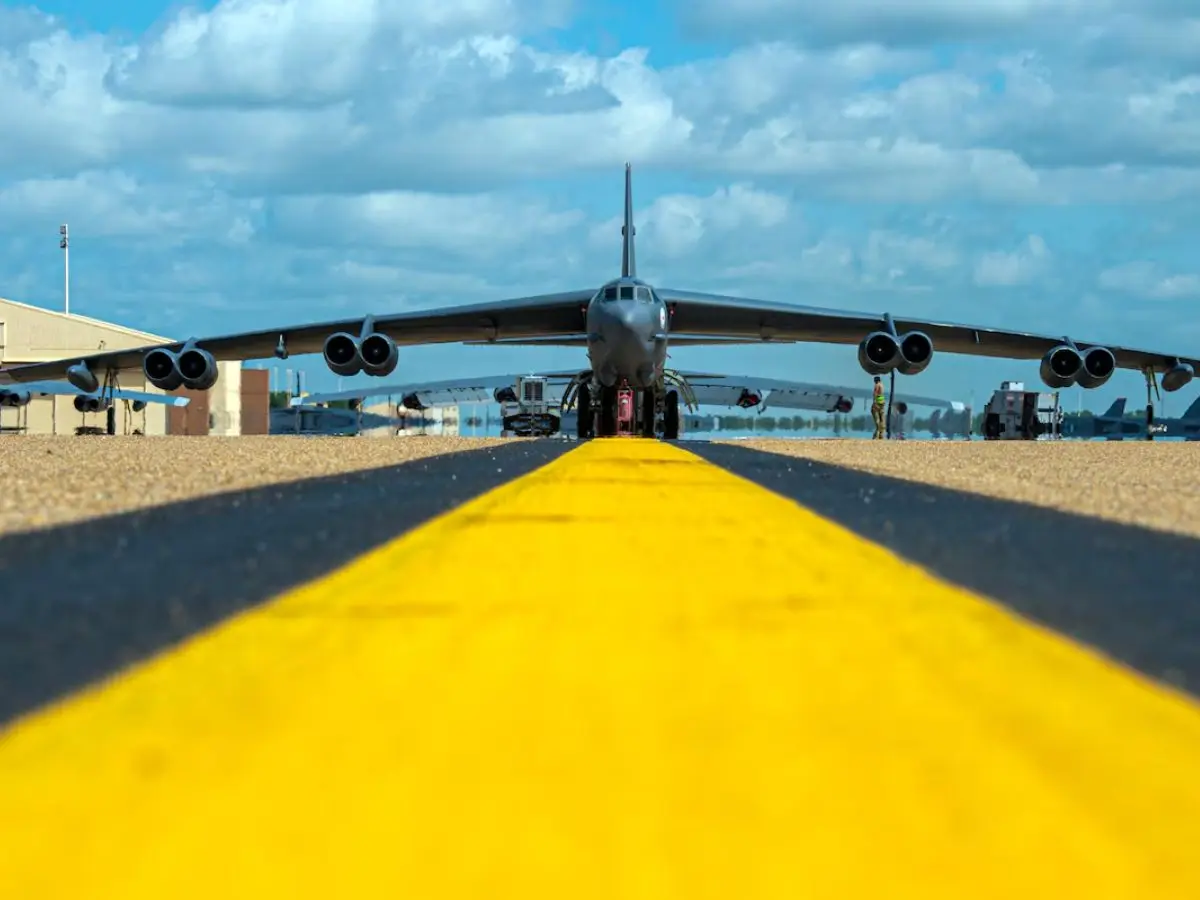
Every B-52 Stratofortress takeoff produces the same distinctive image: a massive aircraft climbing away from the runway trailing eight thick columns of black smoke that merge into a single dark smear across the sky. It is one of the most recognisable visual signatures in military aviation — and for a bomber that is supposed to deliver weapons deep into enemy territory, it is also one of the most problematic.
Why The Engines Smoke
The B-52H is powered by eight Pratt and Whitney TF33-P-3/103 turbofan engines — the military variant of the JT3D commercial engine that entered service in the early 1960s. These are low-bypass turbofan engines from an era when fuel efficiency and clean combustion were secondary to raw thrust. The TF33s burn jet fuel less completely than modern engines, producing visible soot particles — particularly during high-power settings at takeoff, climb, and acceleration. The result is a dense black exhaust trail that has become synonymous with the B-52 over the past six decades.

An Arrow Pointing Straight At You
In a combat environment, the B-52's smoke trail is a serious tactical liability. Any smoke trail at altitude is effectively a high-visibility arrow in the sky that makes the aircraft easy to locate for an adversary — whether from the ground, from intercepting fighters, or from satellite surveillance. The B-52 is already a large, non-stealthy aircraft with a significant radar cross-section. Adding a visible smoke trail that can be seen from miles away removes any remaining ambiguity about where the bomber is and which direction it is heading.
Contrails Make It Worse
Trending Stories
)
Trump-Xi Summit: Trade, Taiwan and the red lines shaping US-China talks | Race To Power
)
US citizen injured in Illinois after ICE agents mistook him for fugitive, hospitalised
)
US judge questions Trump’s decision to ban CNN, MS NOW and Politico from White House
)
Afghan woman cyclist who disguised herself as a boy to escape Taliban, wins Asian Games medal
)
'There will be elections': Venezuela's interim leader Delcy Rodriguez makes big announcement at UN
)
Would you date an AI? South Korea’s My AI Partner: Strange Love sparks buzz on relationship and intimacy
)
'Arrogant parasites': Milei blasts UN over Falklands dispute, warns Argentina will ‘take matters into our own hands’
)
IIT Bombay CCTV footage emerges: Sahil Wakode seen looking at phone in examination hall
)
Cyclone Arnab: Landfall expected before midnight tomorrow as IMD issues orange alerts across six states
)
9 killed, several injured as tourist bus catches fire on Yamuna Expressway
)
NBA player Steven Adams shares hilarious GTA VI theory
)
WION Iconic Tourism Summit 2026: Union Minister Shekhawat on 'experiential travel', peace diplomacy
)
'AI got into my speech': Prince Harry jokes after teleprompter failure at event in New York
)
Scientists detect first radio signals directly from faraway planet
)
China to test supersonic jet that moves at Mach 2, double the speed of sound
)
WION Iconic Tourism Summit: 'Hanuman Ansh' Director on blockbuster success
)
Bomb scare in New York amid UNGA: Suspicious suitcase found near UN headquarters
)
Hours before Xi-Trump meeting, US announces visa curbs targeting birth tourism: What is it?
)
'Partners rather than rivals': Xi Jinping's first message after landing in US for Trump summit
)
WION Iconic Tourism Summit: Is India's travel boom outrunning its airports, airlines and hotels?
)
IIT Bombay student suicide case: CCTV from the exam hall hours before suicide
)
2,000-foot tube, laser tests and more: China builds towns to expand nuclear arsenal, satellite images show
)
WION Iconic Tourism Summit and Awards 2026: Key voices to discuss India’s tourism future
)
French court upholds decision to send PSG and Morocco footballer Hakimi to rape trial
&im=FitAndFill=(700,400))
New OTT releases this week (September 21-27, 2026): Shaque: Trust No One, Hunkkaar, Don’t Be Shy- 5 new titles coming to Netflix, Prime Video and more
)
WATCH | China President Xi Jinping lands in US as Trump greets him ahead of high-stakes summit
)
Australian PM Anthony Albanese calls OpenAI AI incident 'unacceptable' after restricted data access
)
Claude Opus 5.5 is here: Anthropic claims it can finish a 680,000-line code migration in less than a day
)
'What kind of confession is this?': Pakistan PM Shehbaz Sharif’s 'terrorists would be roaming New York' remark goes viral, raises alarm online. Watch
)
WION Iconic Tourism Summit: How local tourism MSMEs must upskill for AI integration
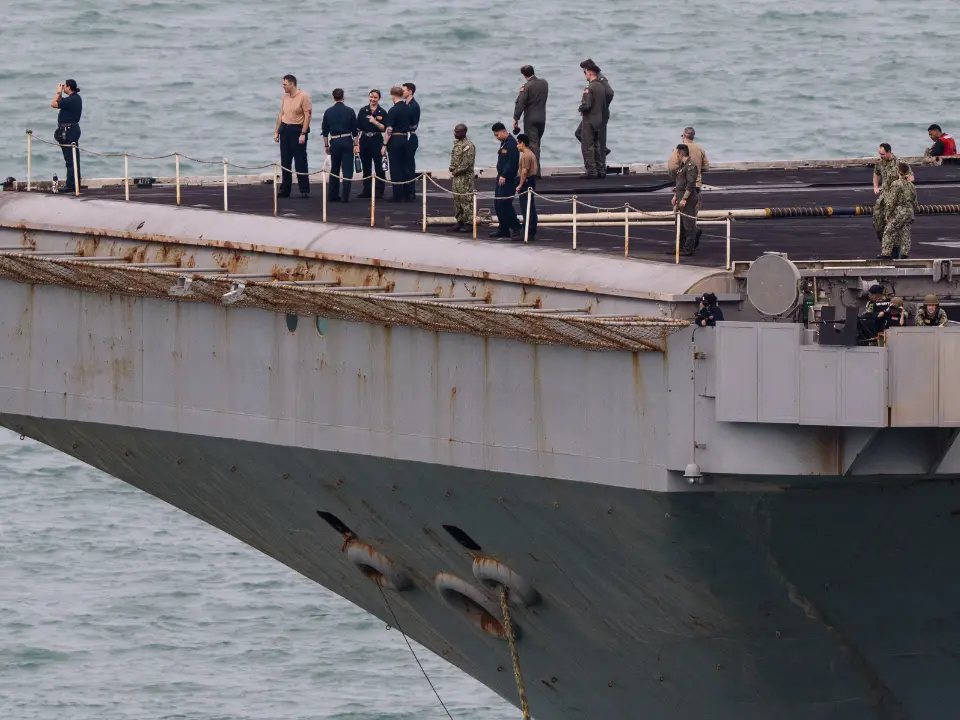)
Eight USS Abraham Lincoln sailors attempted suicide, Acting Navy Secretary says
)
EC appointment law: Why is the 2023 act controversial, and what happens next? WION explains
)
'Putin is patient zero': Zelensky slams Russian president at UNGA, accuses him of using fighters from 47 countries
&im=FitAndFill=(700,400))
National Film Awards 2026: Kartik Aaryan, Mammootty, Yami Gautam, Randeep Hooda and other key winners
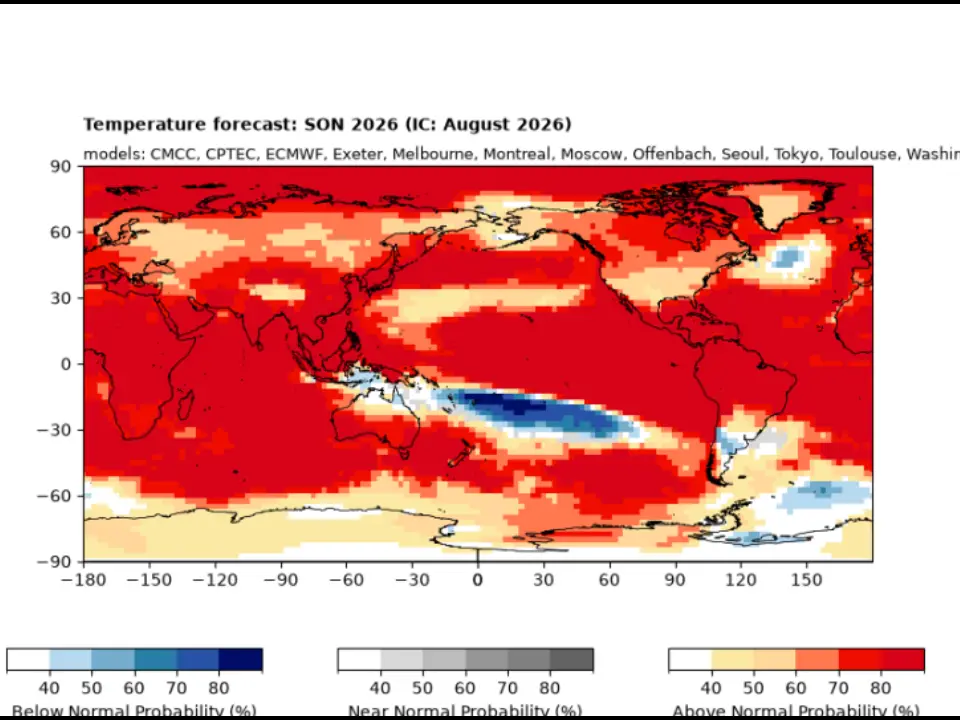)
El Niño 2026 heats up to become strongest in 1,000 years
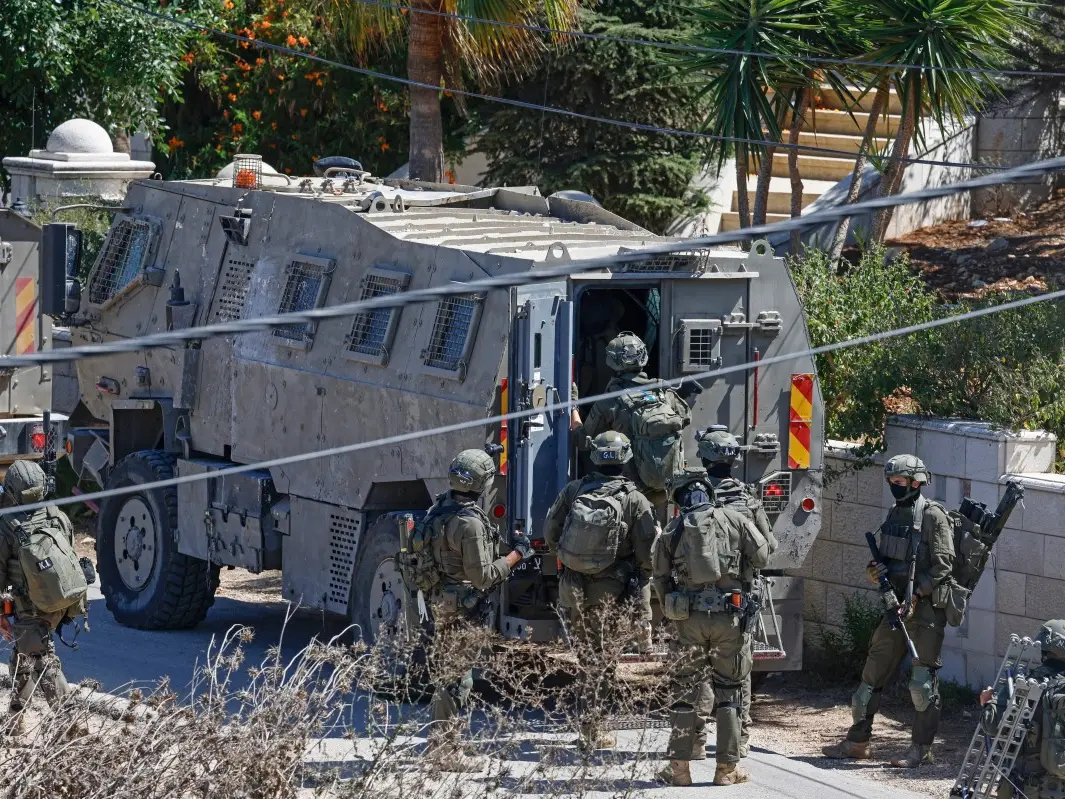)
Israeli envoy to US Yechiel Leiter’s son critically injured in West Bank ramming attack
&im=FitAndFill=(700,400))
Trump welcomes Xi Jinping in rare airport gesture: Photos from Chinese President's arrival in US
)
Xi-Trump meeting: China’s human rights red line and past protests explained
At the B-52's typical operating altitude of up to 50,000 feet, the cold temperatures cause additional contrail formation — the white condensation trails that form behind any aircraft at high altitude. But the B-52's soot-heavy exhaust makes contrail formation more pronounced and more persistent than it would be from a cleaner engine. The combination of black exhaust smoke at lower altitudes and thick contrails at higher altitudes means the B-52 leaves a visible trace across almost every phase of its flight profile.
The Fix: Rolls-Royce F130 Engines
Under the B-52 Commercial Engine Replacement Program, all 76 active B-52H bombers will receive new Rolls-Royce F130 engines — a modern, high-bypass turbofan adapted from the commercial BR725 engine. The F130 burns fuel far more efficiently and far more cleanly than the 1960s-era TF33. The black smoke trail that has followed every B-52 for over 60 years will be eliminated entirely. The new engines will also deliver significantly better fuel efficiency — extending the bomber's already considerable range — reduced maintenance requirements, and lower operating costs. When the upgraded B-52J enters service in the 2030s, it will be the first time in the aircraft's history that it flies without leaving a visible smoke signature behind it.
