
&imwidth=800&imheight=600&format=webp&quality=medium "Anthropic is building its own chips! Weeks after agreeing to pay Musk $1.25 billion a month for compute")
Anthropic has spent this year signing some of the largest compute contracts in the industry, paying other companies for the hardware its models run on. It has now decided to start building the hardware itself.
What Was Confirmed
On August 5, Anthropic confirmed it is assembling an in-house silicon team to design custom chips for its Claude models. The company is recruiting semiconductor engineers, with roles advertised at salaries reaching $485,000.

The stated objective is efficiency at scale: running Claude faster and more cost-effectively than general-purpose hardware allows. The technical case rests on hardware-software co-design — building chip architecture around the specific computational patterns of Claude's attention mechanisms, rather than adapting the model to silicon designed for a broad range of workloads.
Anthropic is not walking away from its suppliers. The company says it will continue to rely on chips from AWS, Google, Nvidia and AMD under a multi-chip strategy, with its own silicon added as a further option rather than a replacement. Reporting from The Information last month indicated Anthropic has been scouting Samsung as a potential manufacturing partner.
The Context That Makes This Notable
Trending Stories
)
Justice eludes Air India 1985 bombing victims as Canada probe goes 'inactive' | Gravitas
)
Trump revives India-Middle East-Europe economic corridor as India emerges central to West Asia’s future: What is it?
)
Erdogan again raises Kashmir issue at UNGA, calls for dialogue under UN Charter
)
Trump signs Greenland security deal with Denmark, paving way for two new US military bases
)
Most Americans want greater federal AI oversight
)
IND vs JPN T20I: How an overturned wide became point of difference between India's win and a tie
)
Trump-Xi summit: From trade to Taiwan, what will the US and Chinese presidents discuss in Washington?
)
Cyclone Arnab: Landfall expected before midnight tomorrow as IMD issues orange alerts across six states
)
ICC plans T20I expansion and fewer ODIs in 2027–2031 FTP cycle: Report
)
US-China tech war: Businesses in the front line
)
'Mumma’s boy from Gwalior who dared to dream': Kartik Aaryan pens long note after first National Award win
)
Gravitas | Boosting NHS productivity could save 20,600 lives in UK annually: Report
)
Nor'easter could batter 13 US states this week. What you should know
)
US and China vie for AI dominance as calls grow for regulation | Gravitas
)
Yemen clashes kill 154 people in two days as cornered Saudi battles Houthi offensive | Gravitas
)
Bomb scare in New York amid UNGA: Suspicious suitcase found near UN headquarters
)
IND vs JPN, one-off T20I: Japan captain Kendel on pushing India to the brink - ‘It was special’
)
Raaka creates history! Allu Arjun’s film secures Guinness World Record ahead of release
)
Mikel Arteta verbally agrees to three-year extension with Arsenal after title-winning Premier League season
)
WION Iconic Tourism Summit and Awards 2026: Key voices to discuss India’s tourism future
)
WION Iconic Tourism Summit and Iconic Awards 2026: India's travel economy leaders gather in Delhi
&im=FitAndFill=(700,400))
New OTT releases this week (September 21-27, 2026): Shaque: Trust No One, Hunkkaar, Don’t Be Shy- 5 new titles coming to Netflix, Prime Video and more
)
81st UN General Assembly: Burnham announces UK-US AI defence tie-up
)
Trump calls on nations to quit ‘rogue’ and ‘out-of-control’ International Criminal Court, rips UN
)
Infections transmitted from pregnant woman linked to autism risk
)
'What kind of confession is this?': Pakistan PM Shehbaz Sharif’s 'terrorists would be roaming New York' remark goes viral, raises alarm online. Watch
)
Elephants hide behind trees, stage surprise attack on poachers targeting rhinos in South Africa
)
IIT Bombay professor Suryanarayana Doolla sent on leave amid Sahil Wakode death probe
&im=FitAndFill=(700,400))
National Film Awards 2026: Kartik Aaryan, Mammootty, Yami Gautam, Randeep Hooda and other key winners
)
‘Strike a deal or drive Iran into hell’: Trump issues fresh warning to Tehran at UNGA
)
Anne Hathaway to run in supporting race for Nolan's epic
)
Over 4,200 books withdrawn from circulation in J&K colleges, 94% from Kashmir
)
From Gaddafi tearing up UN Charter to Trump’s ‘escalatorgate’: Most unforgettable UNGA moments
)
Explainer: Why rare-earth export licences and Board of Trade are US priorities ahead of Trump-Xi summit
)
Asia prepares for record El Nino, food shock
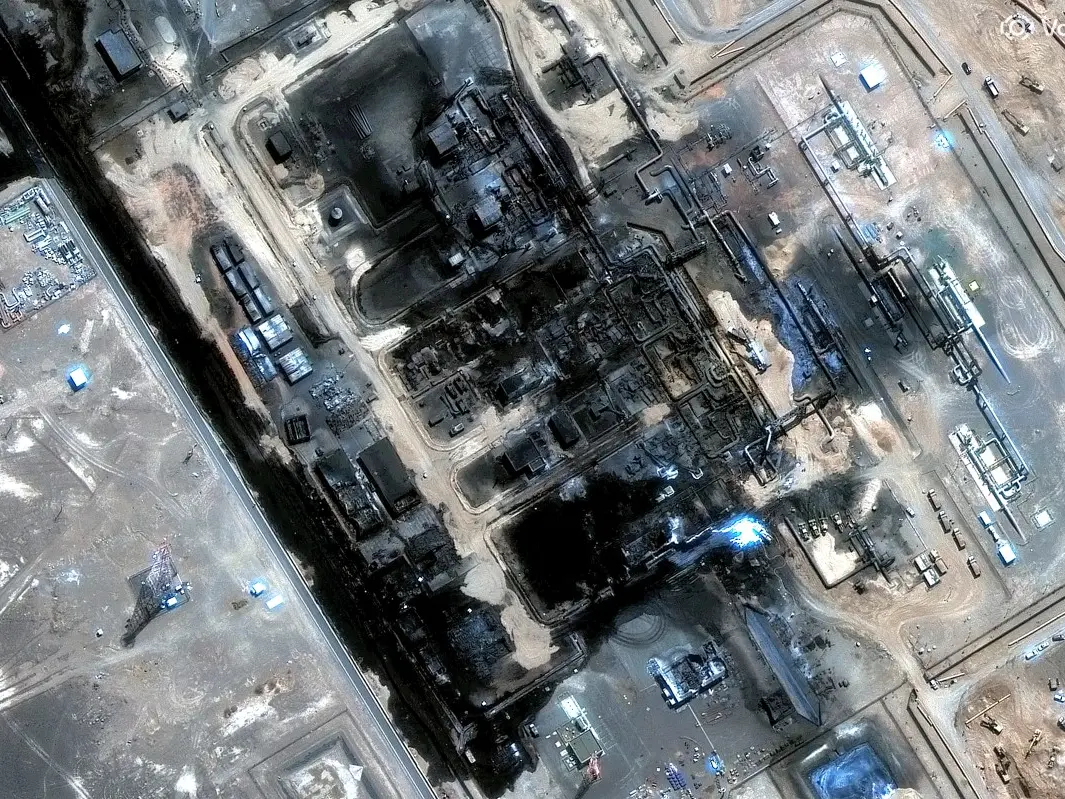)
Oil slips to $98 as Saudi Arabia restarts East-West oil pipeline
)
Four female students raped during 'Red Zone' at California university. What we know
)
'Taiwan and human rights are red lines': China warns US ahead of Xi-Trump visit
Anthropic's compute position has become unusually exposed this year.
The company agreed to pay xAI roughly $1.25 billion a month through May 2029 for exclusive use of the Colossus 1 data centre in Memphis — more than $40 billion over the term — for access to 220,000 Nvidia processors drawing 300 megawatts. Multiple reports describe a clause permitting the compute to be reclaimed if Anthropic's models are found to harm humanity, though its exact contractual status has not been jointly confirmed.
That arrangement solved an immediate capacity problem and created a longer-term dependency: a company whose market position rests on being the careful, safety-focused laboratory now runs a substantial share of its workloads on infrastructure owned by a competitor whose chief executive had previously called it ‘woke’ and ‘evil.’
Designing its own silicon does not undo that. But it is the beginning of a path where Anthropic's compute costs and capabilities are shaped by decisions it controls.
Everyone Else Is Already Doing It
Anthropic is late to this rather than early. Google's TPUs have underpinned DeepMind's systems for years. Amazon has Trainium and Inferentia. Microsoft has its own accelerator programme. Meta has been developing MTIA chips. OpenAI unveiled its Broadcom-built Jalapeño chip in June.
The logic driving all of them is the same. At sufficient scale, the margin a chip vendor earns becomes one of the largest line items in an AI company's cost structure. Nvidia's gross margins on data centre products have been extraordinary throughout this cycle, and every dollar of that margin is a cost borne by its customers. Custom silicon is how the largest buyers stop paying it.
There is a strategic dimension too. Nvidia has increasingly financed its own demand — reportedly in talks to guarantee some $250 billion for OpenAI's Ohio campus, and committing $5 billion to Safe Superintelligence in a deal that returns as Nvidia hardware purchases. Custom silicon is the counterweight to that gravity.
The Difficulty Should Not Be Understated
Designing a competitive AI accelerator is among the hardest problems in engineering. It requires years, enormous capital, access to leading-edge foundry capacity that is already allocated, and a software stack mature enough that researchers will actually use it — the obstacle that has kept CUDA dominant regardless of competing hardware's specifications.
Anthropic is starting this while committed to $40 billion in rented compute, while competing in the steepest AI price war the industry has seen, and while its models are the subject of security disclosures from both the company itself and the UK government. The chip team is a bet on a position several years out.
That it is being made at all indicates how the economics look from inside a frontier laboratory: paying for someone else's silicon is no longer viewed as sustainable, even by a company that just agreed to pay a rival $1.25 billion a month to do exactly that.
