
&imwidth=800&imheight=600&format=webp&quality=medium "An Australian startup just raised $2 billion for AI infrastructure, with Nvidia backing it")
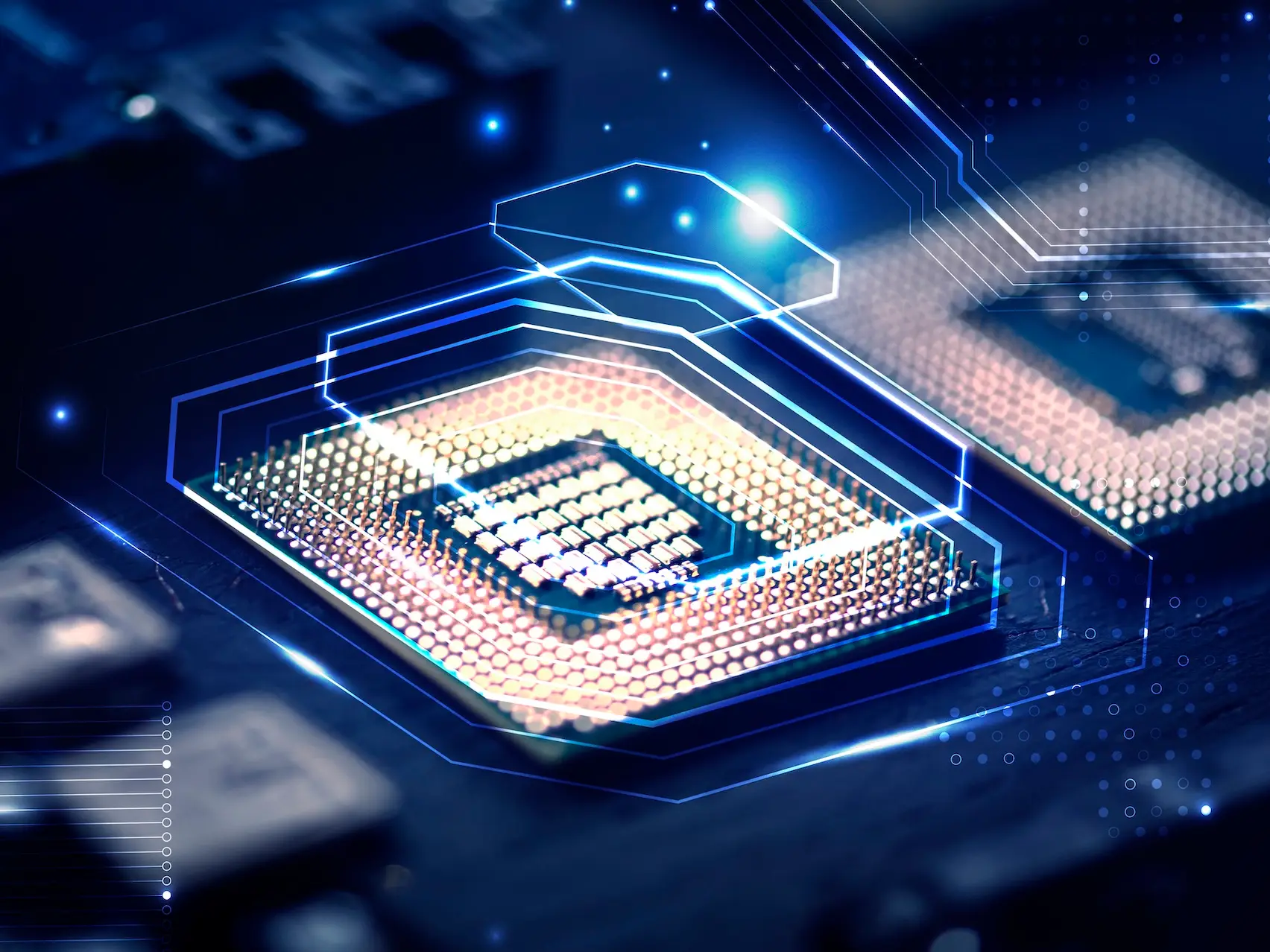
A startup most people outside the industry have never heard of just raised two billion dollars in a single round, at a valuation above ten and a half billion, to build physical infrastructure. Nvidia is among the backers.
The Round
Firmus, an Australian AI infrastructure company, raised $2 billion in equity at a valuation exceeding $10.5 billion. Nvidia participated alongside other investors.

The size of that round places it outside the normal venture capital range entirely. Two billion dollars in a single equity raise is the scale at which companies typically access public debt markets or strategic corporate investment, not private funding rounds — and it is being raised to build data centre capacity rather than to develop software.
The Pattern It Belongs To
Firmus is one instance of a broader shift. Global startup investment reached a record $510 billion in the first half of 2026, already exceeding the $440 billion invested across the whole of 2025, with nearly 40 AI startups reaching unicorn status in six months.
Trending Stories
)
Outrage erupts after 3-year-old is married to 60-year-old man in Pakistan, link to her sister's murder being probed
)
UNGA 2026: Israeli PM attacks Britain, France for past colonialism
)
Yemen called Trump for US military support in fight against Houthis: Official
)
Tesla is preparing something big for Optimus: new Gen 3 models surface in app
)
The Vvaan Review: This Ekta Kapoor's Tulsi Virani-coded world can't be saved by Sidharth Malhotra and Tamannaah Bhatia
)
Bollywood mourns Mushtaq Khan: Sunny Deol, Rajpal Yadav and others pay tribute
)
Xi Jinping's 'special plane' vs Trump's Air Force One: What's the difference?
)
‘We’ve never gotten along better’: Trump praises Xi, jokes about White House ballroom at high-stakes state dinner
)
Alarming video emerges as landslide damages houses in Sikkim’s Rimbi village. Watch
)
OpenAI is building AI to fight cyber threats: What GPT-6 Cyber means for security
)
China to test supersonic jet that moves at Mach 2, double the speed of sound
)
IIT Bombay CCTV footage emerges: Sahil Wakode seen looking at phone in examination hall
)
Scientists detect first radio signals directly from faraway planet
)
Nations League: Germany draw on Klopp debut; Portugal, Norway win
)
US faces fresh cost crunch as mortgage rates hit 7%, oil tops $107 and gas prices surge
)
2,000-foot tube, laser tests and more: China builds towns to expand nuclear arsenal, satellite images show
)
'What kind of confession is this?': Pakistan PM Shehbaz Sharif’s 'terrorists would be roaming New York' remark goes viral, raises alarm online. Watch
)
A seven-day roadmap? Iran proposes plan to end war, reopen Strait of Hormuz and resume nuclear talks
)
'Fund people, not bombs': Hundreds take to New York streets as Netanyahu delivers speech at UN; dozens arrested
)
Bias or safety concerns? Bengaluru CEO says firm will not hire men from UP, Bihar, Rajasthan, MP. Here's why
)
'Making history': Xi Jinping praises Trump as US-China leaders dine at White House
)
‘Not just a local tragedy’: Nepal PM Shah warns UN of growing climate threat, says Nepal floods were 'a warning to the world'
)
Farhan, who went viral for AK47 celebration vs India in Asia Cup, hopes to lead Pakistan beyond Asian Games
)
What’s in a name? Trump’s 'Lake America' move gets a tit-for-tat response from Canada
)
'We do not wish to continue. It's America that must choose': Iran president Pezeshkian calls on US to end war
)
Air India pilot suspended after failing pre-flight alcohol test on Zurich-Delhi route
)
WION Iconic Tourism Summit: How local tourism MSMEs must upskill for AI integration
)
WION Iconic Tourism Summit 2026: Union Minister Shekhawat on 'experiential travel', peace diplomacy
)
Israeli envoy to US Yechiel Leiter’s son critically injured in West Bank ramming attack
)
Trump gifts Xi a bald eagle sculpture at White House dinner: Here’s what it symbolises
)
West Indies coach Sammy looking at India series as opportunity to finetune ahead of ODI World Cup 2027 qualifiers
)
Meet Adrian Abraham: 9-year-old Indian-origin guitar prodigy aiming for a Guinness World Record
&im=FitAndFill=(700,400))
Netanyahu at UN: Mass walkout, attack on Mamdani and Iran threats | In Pics
)
CNN, Politico and MS NOW back in White House after judge blocks Trump’s media ban
)
'Blockbuster' nor'easter develops an eye similar to hurricanes as warnings are issued
)
Trump's welcome to Xi demonstrates 'attraction' to dictators: Chuck Schumer
Don't Be Shy movie review: A frothy coming-of-age tale that is too shy to experiment
)
'FIRST LOOK from inside Noah’s Ark': Researchers share video from inside mysterious mound in Turkey
)
But the composition has changed as much as the volume. A growing share of that capital is not funding product development — it is funding buildings, power contracts, cooling systems and chips. AI's binding constraint is compute, and compute is a physical asset, so the money is flowing to whoever will build it.
That reframes what these rounds are. Traditional venture funding buys equity in a business that might scale at near-zero marginal cost. Infrastructure funding buys a share of an asset that has construction timelines, depreciation schedules and utility bills. The AI sector is increasingly doing the second while calling it the first.
The Nvidia Question
Nvidia's presence on the cap table is worth examining, because it fits an established pattern rather than being an isolated investment.
Nvidia committed $5 billion to Safe Superintelligence in late July, in a deal that gives the startup access to Nvidia's Vera Rubin systems and a tenfold increase in compute over twelve months. It is reportedly in talks to guarantee roughly $250 billion in lease and construction financing for OpenAI's Ohio data centre campus, with a parallel discussion covering up to $350 billion more for chip purchases.
In each case, capital supplied by Nvidia returns to Nvidia as hardware demand. That is not improper — vendor financing is long established in capital-intensive industries, and Nvidia has both the balance sheet and the strategic interest to fund the buyers when compute is the bottleneck.
But it concentrates risk in a particular way. A meaningful share of Nvidia's demand is now underwritten by Nvidia, and the value of those positions depends on the same AI boom that Nvidia's revenue depends on. When both sides of a transaction are exposed to the identical variable, a downturn does not arrive as one problem.
Why It Matters Now
The timing places this round in an unusually testing environment. More than $1.3 trillion was erased from the market value of the world's largest semiconductor companies in a handful of trading sessions in late July — Nvidia itself losing roughly $238 billion — driven not by falling demand but by investors questioning whether AI infrastructure spending will produce returns that justify it.
Combined 2026 capital expenditure from Amazon, Alphabet, Meta and Microsoft is tracking toward roughly $740 billion, up about 77 per cent year-on-year. Meta has moved a $14 billion data centre off its own balance sheet to BlackRock-managed funds. Tesla and SpaceX have committed $16.8 billion to a chip factory that could eventually reach $119 billion.
Firmus raising $2 billion at $10.5 billion says the private capital markets have not yet reached the scepticism the public markets briefly showed. Whether that gap closes, and in which direction, is the question underneath every one of these numbers.
