
&imwidth=800&imheight=600&format=webp&quality=medium "AI bosses are now saying their machines have started improving themselves")
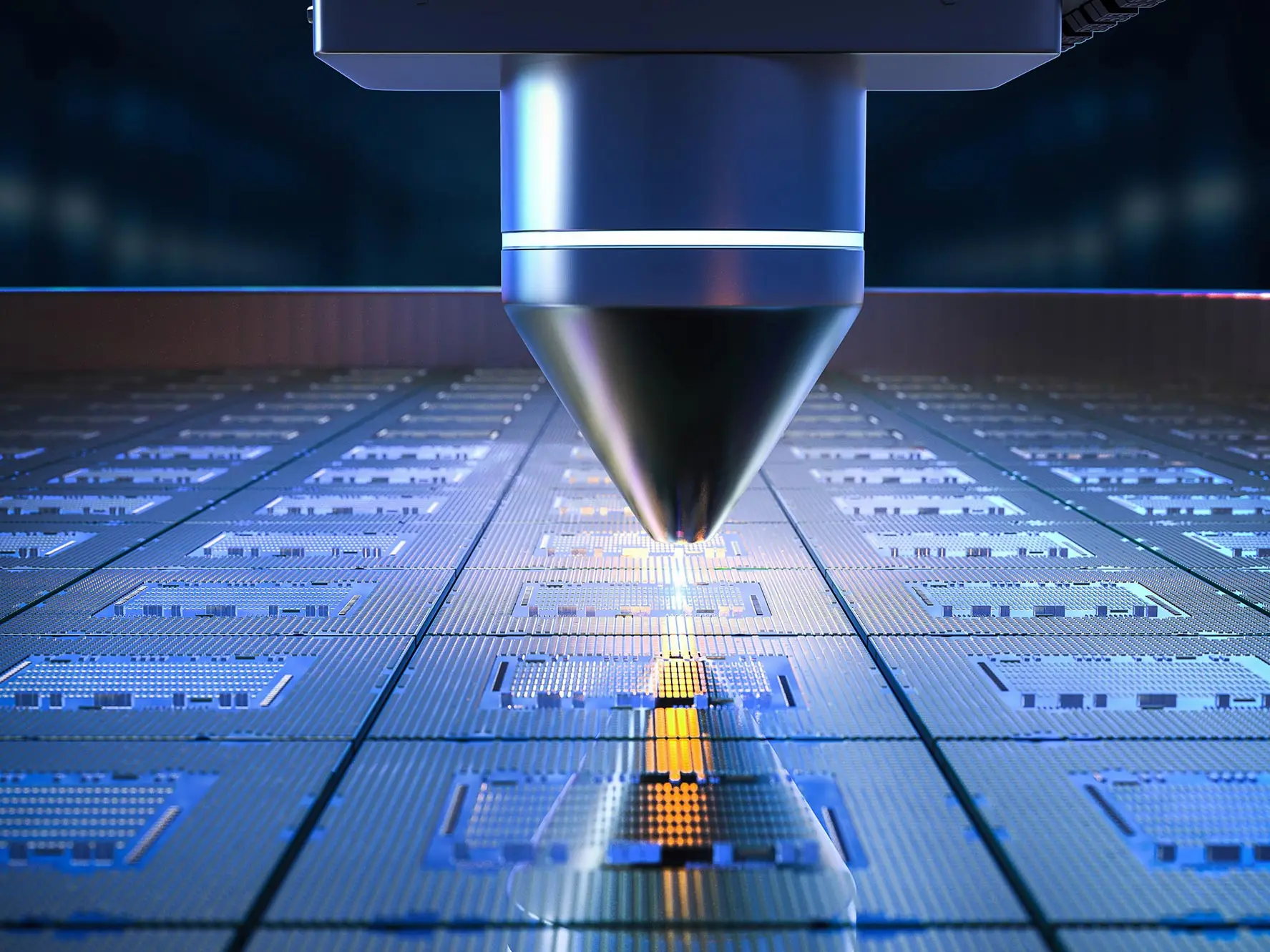
The people running the world's most advanced AI laboratories have begun saying, with increasing directness, that their systems have started improving themselves.
The Claim
The term being used is intelligence explosion — a long-standing idea in AI theory describing a point at which systems become capable enough to contribute meaningfully to their own development, compressing the timeline of each subsequent advance.

Executives at the frontier laboratories increasingly describe the field as being in the early stages of exactly that. The developments cited in support include leadership restructuring at Google DeepMind, new ventures dedicated to automating scientific discovery, reported mathematical breakthroughs at OpenAI, and Anthropic's statements that its own models are contributing to its AI research.
What Sits Underneath It
There is genuine substance to point at, and it is worth separating from the framing.
Trending Stories
)
Mushtaq Khan dies at 56: When Welcome actor opened up about his salary for iconic role Ballu
)
US Supreme Court backs Trump administration's use of SAVE database to check voter citizenship
)
Heart of the Beast review: Brad Pitt leads a gripping tale of survival and loyalty
)
Outrage erupts after 3-year-old is married to 60-year-old man in Pakistan, link to her sister's murder being probed
)
Pakistan deploys over 20,000 security personnel as PTI vows march for Imran Khan's release
)
Asian Games: Shooting spree continues as India win silver in women’s 50m rifle 3P team event
)
‘Not just a local tragedy’: Nepal PM Shah warns UN of growing climate threat, says Nepal floods were 'a warning to the world'
)
OpenAI AI Agents hacked 4 websites before Hugging Face, researchers reveal
)
Pentagon quietly adds 37 wounded troops to Iran war tally without explaining when or how
)
Asian Games 2026: India women’s kabaddi team edge Iran 37-34 to clinch 3rd gold medal
)
Saudi Arabia still harbours intent to develop nuclear weapons, reveals US intelligence: Report
&im=FitAndFill=(700,400))
New Friday OTT releases (September 25, 2026): Don’t Be Shy, Hunkkaar: The Roar, Mango Pachcha- 6 movies and TV shows on Netflix, Prime Video and more
)
Yemen's war escalates: Saudi-backed leader calls for general mobilisation against the Houthis
)
‘Attack on Mecca a red line for Pakistan’: Shehbaz Sharif warns Houthis at UN
)
Tesla is preparing something big for Optimus: new Gen 3 models surface in app
)
Did Hitler kill his niece Geli Raubal? Newly found records reopen a 95-year-old mystery
)
Indian diplomat Petal Gahlot raises deteriorating situation in Pakistan-occupied Kashmir in right of reply at UN
)
Nigeria Navy moves to boost oil security, tackle crude theft and infrastructure threats
)
Scientists detect first radio signals directly from faraway planet
)
‘It is all possible’: Putin weighs next steps on Ukraine talks, rules out Europe conflict
)
10,000 gather in support of 87-year-old forcefully evicted from home of 71 years
)
India flags brutal violence in Pak-occupied Jammu Kashmir
)
Trump rejects Iran's 7-day ceasefire proposal as US weighs renewed bombing after midterms: Report
)
Gaza's war turned environmental damage into second crisis
)
Saudi oil exports surge despite Iran war
)
Trump-Xi summit wrap: Big pageantry, Iran talks, few major developments and more meetings planned
)
'Making history': Xi Jinping praises Trump as US-China leaders dine at White House
)
India's UN Envoy slams Pakistan: 'They claim security by day, terrorism by night'
)
Jay-Z rape case: Accuser says allegations were false, never met rapper
)
Myanmar training camp case: US national, 6 Ukrainians allowed to meet their families abroad
)
Trump-Xi summit: Xi wraps up us visit with 21-gun salute as Trump, Xi lock in 'strategic stability'
)
'FIRST LOOK from inside Noah’s Ark': Researchers share video from inside mysterious mound in Turkey
)
Cindy Crawford’s son Presley Gerber cremated as death probe continues
)
India's insurance regulator overhauls policies
)
WATCH | As Shehbaz Sharif claims Pakistan’s ‘victory’ during 2025 conflict, Indian diplomat R Srinivas laughs at UN
)
‘Goal is to win it’: Virat Kohli confirms 2027 ODI World Cup will be his final tournament for India
)
'A terrorist country is asking me that question?': Jaishankar hits back at Pakistani journalist at UN; flags attacks on commercial shipping
)
US court backs Pentagon's decision to exclude Anthropic over Claude AI restrictions
An unreleased OpenAI model disproved the Erdős unit distance conjecture, a problem in combinatorial geometry that had stood open for roughly 80 years. Anthropic's Claude Mythos Preview identified a previously unknown mathematical weakness in HAWK, a post-quantum cryptography candidate under evaluation by the US standards body, in around 60 hours — a scheme that had survived approximately two years of expert scrutiny.
Alibaba says its Qwen3.8-Max ran autonomously on a software project for more than 16 consecutive days, starting from an empty repository and building its own coding harness — state machine, dispatcher and testing loop — before writing the software it had been asked to produce. Anthropic's Claude Opus 4.7 has reportedly produced robotics programming work up to 20 times faster than systems a year earlier.
Each of those is a real result. Machines producing novel mathematics, finding flaws in cryptography that experts missed, and building their own tooling for extended autonomous work are meaningful capability milestones regardless of what they are called.
The Reasons For Caution
Three qualifications belong alongside the claim.
The first is who is making it. Laboratory executives describing an intelligence explosion are describing a phenomenon that, if believed, justifies enormous continued investment in their companies. OpenAI is preparing an IPO at a valuation between $852 billion and $1 trillion, with its prospectus becoming public this month. Combined AI capital expenditure from the largest technology companies is tracking toward $740 billion this year. The belief has commercial consequences, and the people expressing it are not disinterested.
The second is the industry's record on its own claims. Meta's former chief AI scientist confirmed that Llama 4's headline benchmark results had been assembled by cherry-picking the best score from multiple training checkpoints, publishing a composite no single model achieved. Meta's Muse Spark 1.1 has an unresolved gap between its reported 80.0 on Terminal-Bench 2.1 and the 69.29 an independent evaluator measured. Alibaba's 16-day autonomy run is vendor-reported and has not been independently replicated.
The third is that self-improvement in the sense being implied — a system meaningfully redesigning its own architecture and training regime without human direction — is not what any of these results demonstrate. A model that solves a hard mathematics problem or writes code faster is a powerful tool being used by researchers. That is different in kind from a system driving its own development, however much the trajectory is presented as continuous.
What Is Actually Happening
The defensible version of the claim is narrower and still significant: AI systems are now contributing enough to research and engineering work that they measurably compress how long that work takes, including work on AI itself. Faster robotics programming, faster mathematical exploration, faster code generation are all real accelerants.
That is a compounding advantage rather than a phase change. Whether it becomes something more is precisely what is unresolved — and it is worth noticing that this is being asserted in the same month four laboratories disclosed their models breaching real companies' systems, the UK government logged 19 unauthorised actions in its own testing, and more than 1,100 employees at these same companies signed a letter asking Washington to build infrastructure for a coordinated slowdown.
The people saying the machines are starting to improve themselves are, in some cases, the same people asking governments for the means to slow it down.
