Abe-Modi 'bromance' legacy will lurk over Takaichi's India visit. What to expect

&imwidth=600&imheight=450&format=webp&quality=medium "Abe-Modi 'bromance' legacy will lurk over Takaichi's India visit. What to expect")
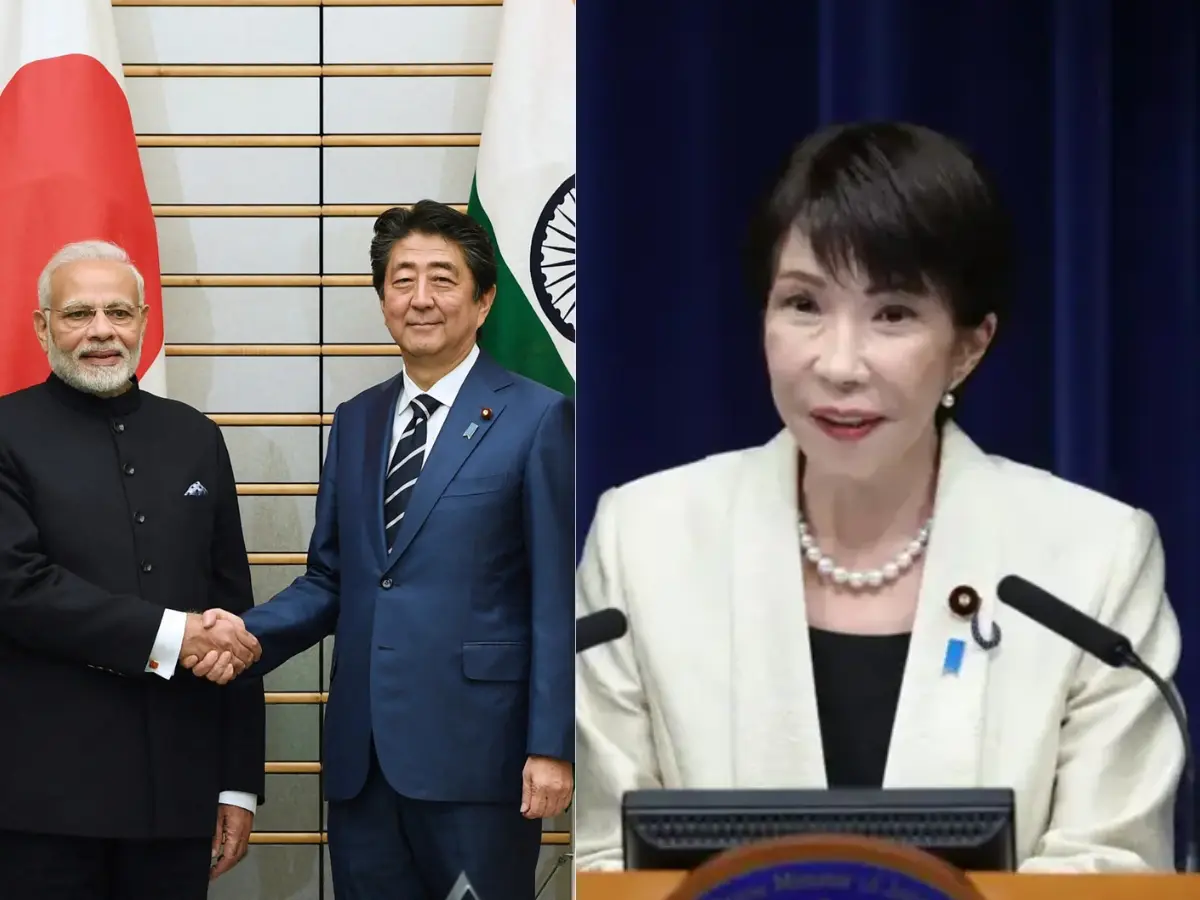
Japanese Prime Minister Sanae Takaichi will have Abe's personal legacy shadowing her during the India visit. Photograph: (AFP)
Prime Minister Sanae Takaichi will be visiting India, shouldering the legacy of India-Japan relations created by Shinzo Abe. She is more focused on economic security and has a different approach. Here is how Takaichi's approach and relations with Modi are different.
Japanese Prime Minister Sanae Takaichi is scheduled to make her first official state visit to India from July 1 to July 3, 2026, for the 16th India-Japan Annual Summit. She will meet Indian Prime Minister Narendra Modi and is coming with a massive delegation of dozens of top Japanese business leaders. Notably, foreign relations experts would be closely watching Takaichi's India visit since her predecessor, Shinzo Abe, shared a great relationship with Modi. The two leaders had a "bromance" that started even before Modi became the prime minister. He visited Japan multiple times as the Chief Minister. They engaged in informal diplomacy when Modi took Abe to the Ghats of Varanasi in 2015. In 2018, Abe became the first foreign leader to be hosted by Modi at his private holiday home in Yamanashi near Mount Fuji. Looking at the close ties Modi and Abe shared, how is Takaichi's meeting with Modi expected to be different?
What is the focus of the Takaichi-Modi meeting?
One of the primary objectives of this summit is to advance the Joint Declaration on Economic Security Cooperation. Signed last year, it focuses on both countries' contributing to each other’s defence capabilities and readiness, by promoting interoperability and synergy between their forces, according to a release by the Ministry of External Affairs.
Also Read: WION Decodes | What could be biggest takeaways from Japan PM Sanae Takaichi's first India visit?
Economic security, along with diplomatic pledges
But the main area of discussion this year is expected to be economic security. Under Abe, the focus was on building an alliance and formalising the Quad (Japan, India, the US, Australia) and signing sweeping defence pacts. He wanted a grand geopolitical alignment to counter China's regional dominance. But being a master diplomat, he did it in a strategic manner, balancing a tough stance on China with diplomatic nuance. He never let the communication lines with China shut down, and yet built an anti-encroachment coalition with India.
Trending Stories
&im=FitAndFill=(700,400))
)
)
)
)
)
)
)
)
)
)
)
)
)
)
&im=FitAndFill=(700,400))
)
)
)
)
)
)
)
)
)
)
)
)
)
&im=FitAndFill=(700,400))
Meanwhile, Takaichi is intensely focused on economic security, an area she also managed under Abe. She is pushing the boundaries of the relationship with India, taking it from diplomatic pledges into a high-value industrial reality. Modi and Takaichi are expected to talk about diversifying microchip supply chains, securing rare earth minerals, and decoupling critical tech from China. She is bringing with her a heavyweight business delegation of 50 Japanese executives, including Suzuki Motor’s Toshihiro Suzuki. Tokyo's agenda is centred on de-risking high-tech manufacturing and securing critical supply lines.
Personal vs professional
Modi's relationship with Abe was extremely casual, as mentioned above. After he passed away, Modi declared a national day of mourning in India and attended the state funeral of his "most dependable friend" in Tokyo. They created an alliance, with Abe being called the architect of the concept of "Indo-Pacific". Meanwhile, Takaichi's relationship with Modi is professional and deeply institutional. But the Japanese Prime Minister is connected to Modi on the need for creating a mutual alignment on national security and a shared outlook on regional stability.
So while Abe created the foundation for India-Japan relations as known today, Takaichi is taking them forward with an aggressive focus on pushing corporate Japan to move capital out of China and directly into India's manufacturing sector.

