A tourist place or SECRET network - What's hidden under Iran's Qeshm Island?

&imwidth=600&imheight=450&format=webp&quality=medium "A tourist place or SECRET network - What's hidden under Iran's Qeshm Island?")
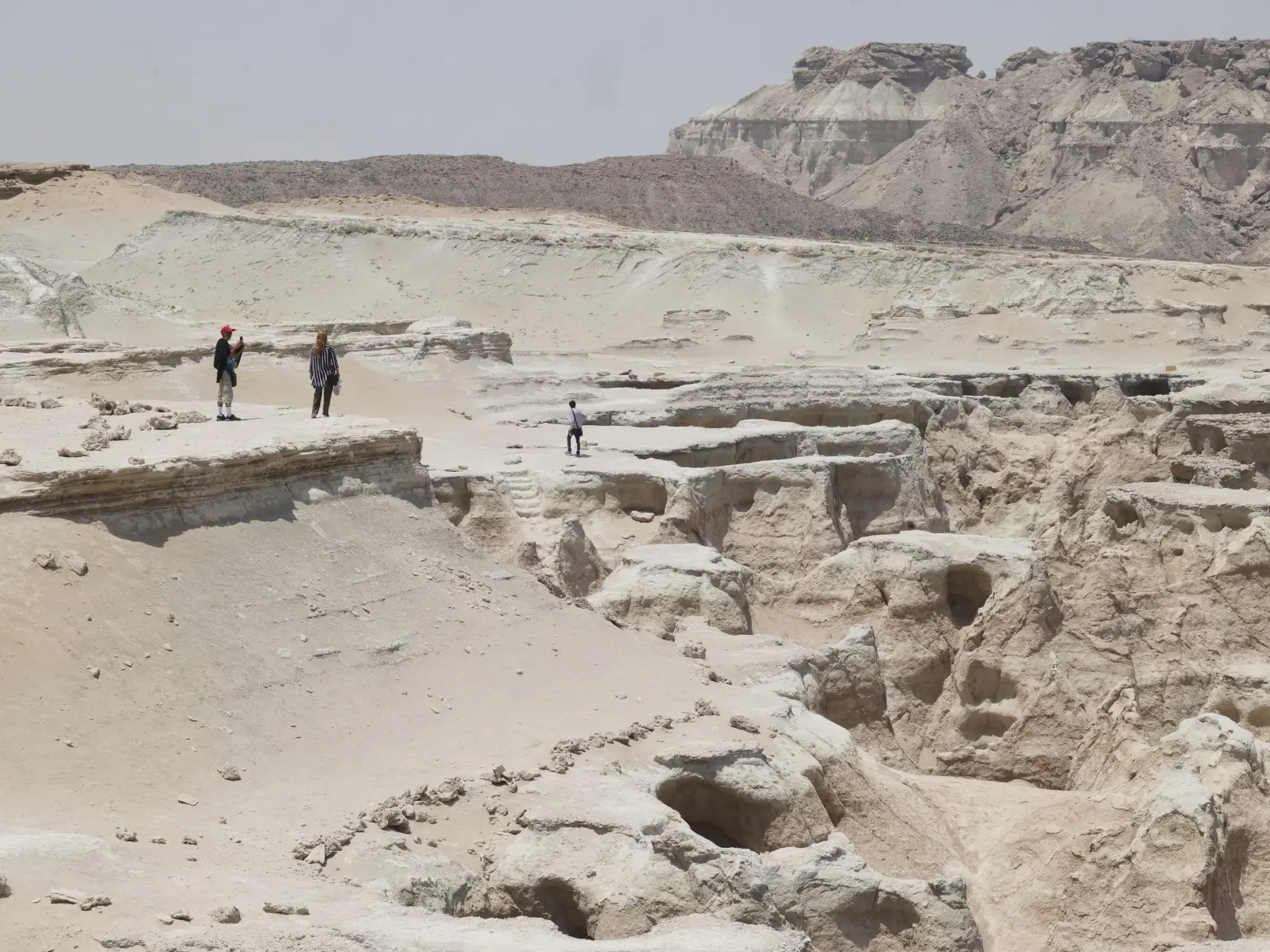
Tourists visit Star Valley, one of the sightseeing centres on Qeshm island in the Gulf off Iran's southern coast, on May 1, 2023. Photograph: (AFP)
Qeshm Island has transformed from a tourist hotspot into a strategic "underground missile city." Its location in the Strait of Hormuz allows Iran to control global oil routes amid escalating conflict.
Beneath the quiet beauty of Qeshm Island, hidden under salt caves and mangrove forests, lies a powerful military network that is now drawing global attention. Once known as a tourist hotspot for its unique rock formations and natural wonders, Qeshm is now at the centre of rising tensions in the Strait of Hormuz. The island has transformed into a key military base for Iran as the war with the US and Israel continues.
Qeshm’s location makes it extremely important. Sitting at the entrance of the Strait of Hormuz, a narrow waterway through which nearly 20 per cent of the world’s oil passes, the island acts like a gatekeeper. With its large size, about 1,445 square kilometres, it can influence or even block ships moving through this crucial route.
Today, experts describe Qeshm as Iran’s “unsinkable aircraft carrier”. Beneath its surface are what Iran calls “underground missile cities” - secret tunnels and bases believed to house missiles, fast-attack boats, and coastal defence systems. These are designed to control or shut down the strait if needed.
Can disrupt global oil supply
According to military analysts, these underground networks give Iran the ability to disrupt global oil supply. This was seen recently when shipping traffic in the strait slowed sharply after Iran warned it could target passing vessels. Only a limited number of ships are now being allowed through, as countries try to secure safe passage for their oil tankers.
Trending Stories
)
)
)
)
)
)
)
)
)
)
)
)
)
)
)
)
)
)
)
)
)
)
)
)
)
)
)
)
)
)
)
)
)
)
&im=FitAndFill=(700,400))
)
)
)
)
The situation escalated further on March 7, when US airstrikes hit a desalination plant on Qeshm, cutting off freshwater to around 30 villages. Iran strongly condemned the attack, calling it a crime against civilians. Soon after, Iran’s Islamic Revolutionary Guard Corps (IRGC) launched retaliatory strikes on US forces in Bahrain.
For the 148,000 people living on the island, daily life has become uncertain. Most residents depend on the sea for their livelihood and celebrate traditions like Nowruz Sayyadi, a fishing festival marking respect for the ocean. But now, they find themselves caught between natural beauty and military conflict.
The History
Qeshm is not just important today - it has a long and rich history. Over centuries, it has been ruled and fought over by many empires. From ancient Greek explorers to Islamic geographers, the island has had many names and identities.
In the past, it served as a vital water source for the Kingdom of Hormuz. Its wealth and strategic location attracted invaders, including Ottoman forces in the 16th century and Portuguese colonisers, who built a fort there in 1621. The island later saw battles involving Persian and British forces before finally returning fully to Iranian control in the 20th century.
Despite the rising tensions, Qeshm still holds its natural charm. Landmarks like the Valley of Stars, shaped by erosion and local legends, the Namakdan Salt Cave, one of the longest in the world, and the dramatic Chahkooh Canyon remind visitors of its geological significance.

