

&imwidth=800&imheight=600&format=webp&quality=medium "From ‘obliteration’ to talks in 72 hours - How and why Trump suddenly embraced the idea of talking with Iran")
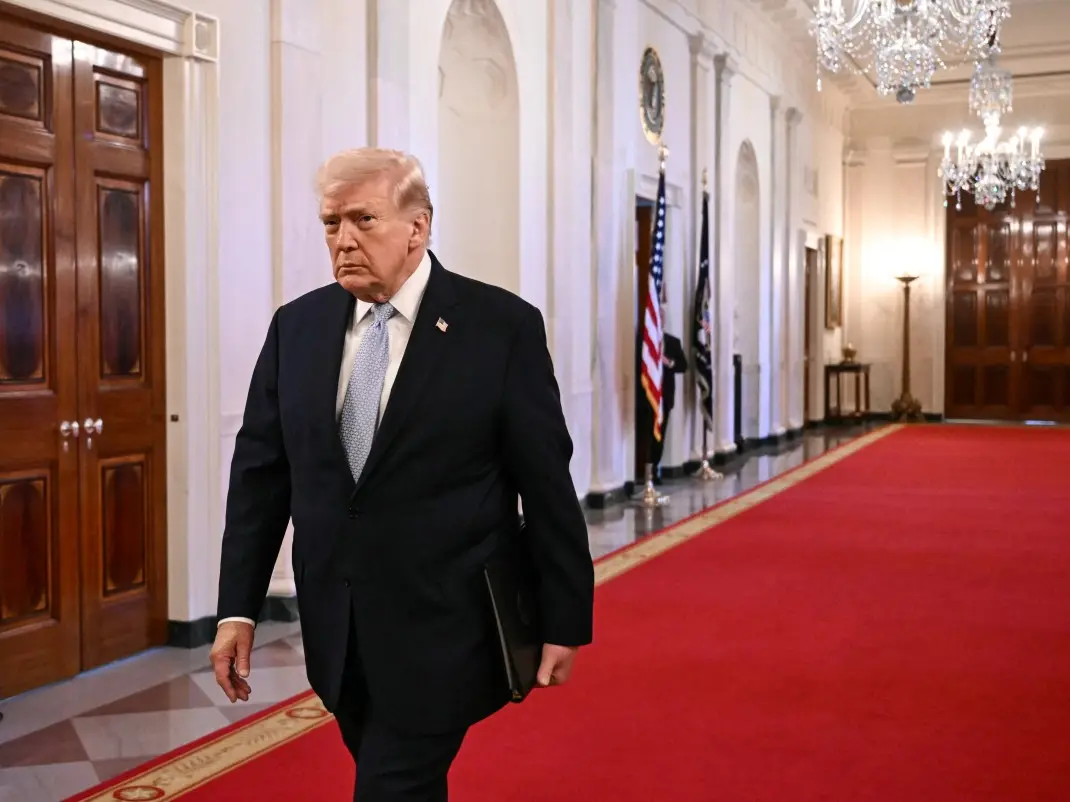
Only days ago, Donald Trump sounded like a leader with no patience for diplomacy. Standing on the White House lawn, he dismissed the very idea of a ceasefire, arguing that you don’t stop when you’re “obliterating” the other side. It was a familiar posture - hardline, combative, and rooted in pressure rather than negotiation. And yet, within 72 hours, the tone shifted dramatically.
By Monday (March 23), Trump was speaking not of escalation but of settlement. “They want to settle, and we’re going to get it done,” he said confidently. The pivot was swift, almost jarring. But it wasn’t accidental; it was the result of a mix of pressure, pragmatism, and political instinct.
The pressure from allies and reality
One of the biggest factors behind Trump’s sudden openness appears to have come from America’s regional partners. Gulf allies warned that striking Iran’s civilian power infrastructure could trigger uncontrollable escalation. In a region already on edge, that risk was not theoretical; it was immediate.
At the same time, the global economic impact of the conflict was becoming impossible to ignore. Oil markets reacted sharply, and the threat to the Strait of Hormuz, a critical artery for global energy supplies, sent shockwaves through financial systems. Rising oil prices and market instability are not just foreign policy concerns; they are domestic political risks. For a president deeply attentive to economic signals, the message was clear: continued escalation could carry serious costs at home.
Trending Stories
&imwidth=180&imheight=135&format=webp&quality=medium)
Brendan Taylor overtakes Andy Flower to become Zimbabwe’s leading ODI run-scorer
&imwidth=180&imheight=135&format=webp&quality=medium)
Pakistan to head IMF, World Bank boards after 74 years amid persistent economic crisis
&imwidth=180&imheight=135&format=webp&quality=medium)
"The scariest thing was"... flydubai Captain Smit Machchhar recalls cockpit fight and how he thought of his son and daughter
&imwidth=180&imheight=135&format=webp&quality=medium)
'We are not sitting in ivory towers, we are aware': SC issues notice to Rahul Gandhi, Akhilesh Yadav
&imwidth=180&imheight=135&format=webp&quality=medium)
Flying car race: Alef Aeronautics welcomes Tesla Roadster '11 years' later, but are the two models the same?
&imwidth=180&imheight=135&format=webp&quality=medium)
6-year-old among 2 killed as vehicle crashes into youth soccer game in US
&imwidth=180&imheight=135&format=webp&quality=medium)
WATCH | Flames engulf St Petersburg oil sites as Ukraine launches 1,000 drones at Russia
&imwidth=180&imheight=135&format=webp&quality=medium)
‘I have very severe problems’: Trump fuels health speculation during address to firefighters
&imwidth=180&imheight=135&format=webp&quality=medium)
US midterm elections 2026: Postal ballots and voter disenfranchisement — A key battle for Donald Trump
&imwidth=180&imheight=135&format=webp&quality=medium)
Lizard people? Ex-US Army sniper claims soldier killed by 'reptilian beings' in battle near Area 51
&imwidth=180&imheight=135&format=webp&quality=medium)
‘I don’t know how my family escaped': Congressman Raja Krishnamoorthi chokes while revealing he was inside US temple during foiled attack
&imwidth=180&imheight=135&format=webp&quality=medium)
Rain washes out 5th T20I as India-West Indies share honours 2-2
&imwidth=180&imheight=135&format=webp&quality=medium)
'Reason UN has lost credibility': Amid SIR protests India hits out at report alleging 'youth repression'
&imwidth=180&imheight=135&format=webp&quality=medium)
‘My president, I mean my husband’: Trump's new press secretary Katie Zacharia's first briefing goes off the rails in 14 minutes
&imwidth=180&imheight=135&format=webp&quality=medium)
China responds to Trump's Press Secretary Katie Zacharia after toilet remark: 'Visit China more often'
&imwidth=180&imheight=135&format=webp&quality=medium)
UAE agrees with Saudi Arabia to rejoin Yemen fight as Houthi strikes rattle Riyadh
&imwidth=180&imheight=135&format=webp&quality=medium)
PCB omits Atherton, Hussain from tri-series commentary panel over Imran Khan interview row
&imwidth=180&imheight=135&format=webp&quality=medium)
SA vs AUS 2nd Test: Rain delays start as Rabada returns; Boland replaces Lyon for Australia
&imwidth=180&imheight=135&format=webp&quality=medium)
At least 400 arrested as protests turn violent in France; PM blames far left
&imwidth=180&imheight=135&format=webp&quality=medium)
WATCH | iPhones, luxury perfumes floating in Hormuz? Iranian fishermen make bizarre discovery
&imwidth=180&imheight=135&format=webp&quality=medium)
Two students die, 14 injured at Dandiya event in Hyderabad: Know what happened? VIDEO
&imwidth=180&imheight=135&format=webp&quality=medium)
'keep telling him you will get your opportunities': Iyer opens up on conversations with Sooryavanshi
&imwidth=180&imheight=135&format=webp&quality=medium)
‘Be back in few weeks’: Emi Martinez shares first update after head clash in Premier League match
&imwidth=180&imheight=135&format=webp&quality=medium)
Tiger Shroff attacked by three gunmen in Mumbai, actor safe, two injured
&imwidth=180&imheight=135&format=webp&quality=medium)
Taylor Swift performs at star-studded Academy Museum Gala 2026 in stunning Dior ensemble
&imwidth=180&imheight=135&format=webp&quality=medium)
Anirudh Ravichander-Kavya Maran wedding: Telangana CM reveals Chennai reception date
&im=FitAndFill=(700,400)&imwidth=180&imheight=135&format=webp&quality=medium)
Inside Tesla's Roadster: 10 features of Elon Musk's 'flying car' that push the limits of electric vehicles | In Pics
&imwidth=180&imheight=135&format=webp&quality=medium)
Kolkata Durga Puja stampede: PM Modi announces Rs 2 lakh ex-gratia for kin of dead, Amit Shah to visit injured
&imwidth=180&imheight=135&format=webp&quality=medium)
One species, two lineages: Why Sri Lanka’s spectacled cobra differs genetically from Indian variant
&imwidth=180&imheight=135&format=webp&quality=medium)
2 injured in plane crash on busy California highway
&imwidth=180&imheight=135&format=webp&quality=medium)
'We feel like Mr India': Gujarat’s undercover SHE team guard garba nights at Navratri
&imwidth=180&imheight=135&format=webp&quality=medium)
Cattle-feed bran in biscuits, detergent in milk: FSSAI acts against 3 companies
&imwidth=180&imheight=135&format=webp&quality=medium)
'It's a joy to see the makers bring it on such a grand scale': SS Rajamouli on Ramayana
&imwidth=180&imheight=135&format=webp&quality=medium)
13 dead after truck mows down devotees, crashes into temple gate in Madhya Pradesh's Gwalior
&imwidth=180&imheight=135&format=webp&quality=medium)
IND-W vs ZIM-W, 2nd T20I: When and where to watch live streaming in India?
The politics of markets and momentum
The timing of Trump’s announcement is telling. News of potential talks came just before US markets opened, triggering a rally on Wall Street and easing oil prices. This wasn’t just diplomacy - it was also economic messaging.
Trump has long measured success through market performance. A cooling of tensions, even the perception of it, offered immediate political dividends. In that sense, embracing talks wasn’t a retreat; it was a recalibration.
The mystery of ‘talks’
But if Trump’s shift was clear, the reality of the talks remains murky. Trump claimed his administration was in contact with a “respected” Iranian official. Tehran, however, flatly denied any direct negotiations. Figures like Mohammad Bagher Ghalibaf rejected the claim outright, suggesting instead that Washington was backing down under pressure. The truth likely lies somewhere in between.
Diplomacy between the US and Iran has rarely been direct. Instead, it flows through intermediaries, and this time is no different. Countries like Pakistan, Oman, Turkey, and Egypt are actively passing messages, testing positions, and exploring possibilities. This indirect engagement allows both sides to probe without committing, and to deny, if necessary.
A familiar negotiating style
Trump’s approach also fits a broader pattern. His foreign policy has often followed a cycle: escalate tensions, apply pressure, and then pivot to negotiation from a position of perceived strength. The reported 15-point proposal, including demands on Iran’s nuclear programme, its regional proxies, and recognition of Israel, mirrors earlier US positions. There is little that is fundamentally new in substance. What has changed is the willingness to talk about it now.
This suggests that the shift is less about a change in objectives and more about timing.
Despite the rhetoric, there is no clear evidence of a breakthrough. Even those involved in mediation describe the situation as fluid, with proposals still far from agreement. Military movements in the region continue, underscoring the gap between words and reality.
Disclaimer: WION takes utmost care to accurately and responsibly report ongoing conflicts in West Asia involving Israel, Iran, US, Gulf nations and non-state actors like Hezbollah, Hamas, Houthis, Islamic State, and others. Claims and counterclaims, disinformation and misinformation are being made online and offline. Given this context, WION cannot independently verify the authenticity of all statements, social media posts, photos and videos.

