A flashback into all that Hezbollah lost in war between Israel and Hamas in 2024

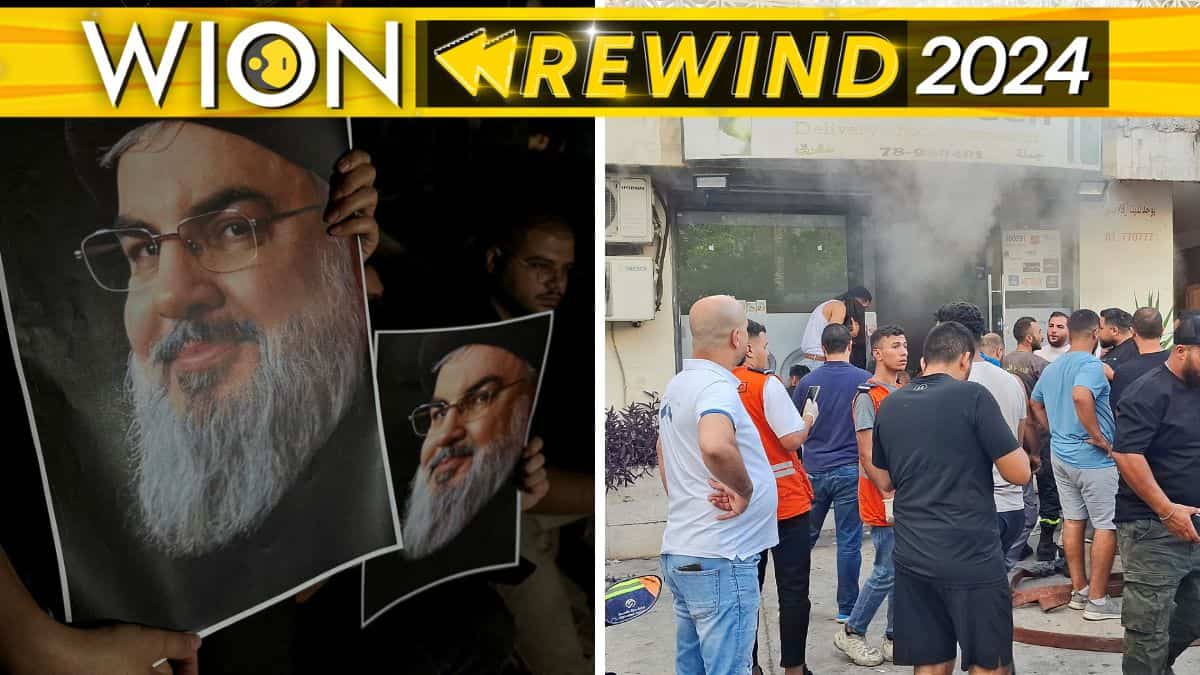
People carry poster of Hassan Nasrallah and scene from pagers attack.
Fourteen months after stepping into the Israel-Hamas war which began with the horrific October 7 attack, Hezbollah lost several fighters and saw its backbone breaking by the brunt it bore of Israel's offensive.
The number of fighters Hezbollah has lost in these 14 months is several thousand but what has shaken it to its core is the killing of its leaders and attack on its systems. Here's how 2024 looked for Hezbollah.
Strike on headquarters of Hezbollah and killing of Nasrallah
On September 27, 2024, Hezbollah secretary-general Hassan Nasrallah was killed after Israel launched an airstrike on their headquarters in Beirut.

The strike happened when Hezbollah leaders were holding a meeting in their headquarters, which was in the underground below the residential buildings in the south of Beirut.
The Israeli Air Force used F-15Ifighters and dropped more than 80 bombs, which included US-made 2,000-pound (910kg)bunker buster bombs with which the underground headquarters along with the nearby buildings were destroyed.
Also Read:‘Don’t normalise ties with Israel’: Hezbollah to Syria’s new rulers after Assad’s ouster
The IDF announced Nasrallah's death on September 28, and after two days, his body was recovered from the rubble.
Hezbollah's trembling throne
This was not the first time any Hezbollah leader was killed. Israel had neutralised Hezbollah's senior military leader, Fuad Shukr, in July.
Hezbollah's commander of Southern Front, Ali Karaki, was also killed. However, Nasrallah's death left Hezbollah without any leader as the militant outfit struggled to fill the vacuum.
They named Naim Qassem as their interim leader, however, many reports suggested that Hashem Safieddine will be the next Secretary-General.
Safieddine survived a lot of attacks, but was finally killed in an Israeli airstrike on October 3. On October 29, Hezbollah elected Qassem as the secretary-general and Nasrallah's successor.
Israel breaks Hezbollah's communication backbone
In a never-thought kind of attack, thousands of handheldpagers and walkie-talkies of Hezbollah members exploded on September 17 and 18 in what was Israel's well co-ordinated series of attacks.
In the explosions, at least 42 people were killed and 3,500 others were injured, which included many civilians.
The blast showed the world how the compromise of low-tech wireless communication devices can turn deadly.The attack was a brutal strike on the militant group's "Achilles' heel".
Watch:Israel-Hezbollah Exchange Fire Despite Truce
The wireless pagers suddenly exploded at 3:30 pm (local time) in Lebanon just after a message was delivered on the device, which appeared to have been sent by the leadership of Hezbollah.
As per the officials, the delivery of the messages activated the explosives as the device beeped for many seconds before it exploded.
The explosions underscored how vulnerable Hezbollah’s communication network is and how it was compromised, which led to the deadly blasts.
(With inputs from agencies)