
&imwidth=800&imheight=600&format=webp&quality=medium "7 longest wars in world history that lasted over 100 years")
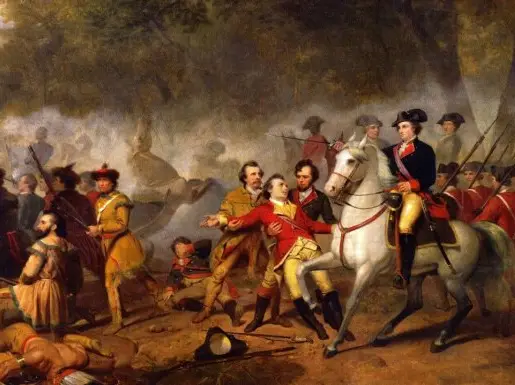
The prolonged war between England and France marks a significant place in the history of the world. It is not only known for its iconic battles and political rift, but also as a key chapter in the larger Anglo-French conflicts that stretched from 1066 to 1776.
The Hundred Years' War, which spanned from 1337 to 1453, holds a unique place in history as a prolonged conflict between two European powers—England and France. It consisted of intermittent battles sparked by competing claims to the French crown and disputes over territorial control in France.
Over the centuries, numerous other wars across the world have also significantly influenced the formation of national borders and identities. These historic conflicts, often fuelled by political goals, ideological differences, and cultural loyalties, which played a decisive role in steering the direction of human history.

1. Iberian religious war
It is marked as the longest continuous war in human history, fought between the Catholic Spanish Empire and the Moors living in what is now Morocco and Algeria. The conflict, commonly known as the Reconquista, lasted for nearly 781 years.
This is also considered the earliest religious war that took place outside the Arab world. The conflict began in 711 CE and came to an end in 1492 CE with claiming nearly 7 million lives. The war started after the Moors claimed territory in Europe, prompting the Spanish Empire to launch an attack against the Moors as viewing them as a threat.
Trending Stories
)
US Supreme Court backs Trump administration's use of SAVE database to check voter citizenship
)
Heart of the Beast review: Brad Pitt leads a gripping tale of survival and loyalty
)
Outrage erupts after 3-year-old is married to 60-year-old man in Pakistan, link to her sister's murder being probed
)
Pakistan deploys over 20,000 security personnel as PTI vows march for Imran Khan's release
)
Asian Games: Shooting spree continues as India win silver in women’s 50m rifle 3P team event
)
‘Not just a local tragedy’: Nepal PM Shah warns UN of growing climate threat, says Nepal floods were 'a warning to the world'
)
OpenAI AI Agents hacked 4 websites before Hugging Face, researchers reveal
)
Pentagon quietly adds 37 wounded troops to Iran war tally without explaining when or how
)
Asian Games 2026: India women’s kabaddi team edge Iran 37-34 to clinch 3rd gold medal
)
Saudi Arabia still harbours intent to develop nuclear weapons, reveals US intelligence: Report
&im=FitAndFill=(700,400))
New Friday OTT releases (September 25, 2026): Don’t Be Shy, Hunkkaar: The Roar, Mango Pachcha- 6 movies and TV shows on Netflix, Prime Video and more
)
Yemen's war escalates: Saudi-backed leader calls for general mobilisation against the Houthis
)
‘Attack on Mecca a red line for Pakistan’: Shehbaz Sharif warns Houthis at UN
)
Tesla is preparing something big for Optimus: new Gen 3 models surface in app
)
Bias or safety concerns? Bengaluru CEO says firm will not hire men from UP, Bihar, Rajasthan, MP. Here's why
)
Did Hitler kill his niece Geli Raubal? Newly found records reopen a 95-year-old mystery
)
Indian diplomat Petal Gahlot raises deteriorating situation in Pakistan-occupied Kashmir in right of reply at UN
)
Nigeria Navy moves to boost oil security, tackle crude theft and infrastructure threats
)
Scientists detect first radio signals directly from faraway planet
)
‘It is all possible’: Putin weighs next steps on Ukraine talks, rules out Europe conflict
)
10,000 gather in support of 87-year-old forcefully evicted from home of 71 years
)
Trump rejects Iran's 7-day ceasefire proposal as US weighs renewed bombing after midterms: Report
)
Red Sea crisis: Houthis promise not to target European ships; UNSC condemns Saudi attacks
)
Gaza's war turned environmental damage into second crisis
)
Saudi oil exports surge despite Iran war
)
Trump-Xi summit wrap: Big pageantry, Iran talks, few major developments and more meetings planned
)
'Making history': Xi Jinping praises Trump as US-China leaders dine at White House
)
India's UN Envoy slams Pakistan: 'They claim security by day, terrorism by night'
)
Jay-Z rape case: Accuser says allegations were false, never met rapper
)
Myanmar training camp case: US national, 6 Ukrainians allowed to meet their families abroad
)
'FIRST LOOK from inside Noah’s Ark': Researchers share video from inside mysterious mound in Turkey
)
Cindy Crawford’s son Presley Gerber cremated as death probe continues
)
WATCH | As Shehbaz Sharif claims Pakistan’s ‘victory’ during 2025 conflict, Indian diplomat R Srinivas laughs at UN
)
'A terrorist country is asking me that question?': Jaishankar hits back at Pakistani journalist at UN; flags attacks on commercial shipping
)
Army chief reviews operational preparedness along LoC, visits mega eye camp in Tangdhar
)
US court backs Pentagon's decision to exclude Anthropic over Claude AI restrictions
2. Persian-Roman wars
Another longest-standing rivalries unfolded between the Roman Empire and the Persian powers, first the Parthians and later the Sassanids. This prolonged conflicts revolved around control of frontier cities and territories along their shared borders.
The conflict, which ran from 92 BC to 629 AD, lasted nearly 720 years, resulting in substantial economic damage and weakening both empires, making them more susceptible to external invasions.
3. Roman-Germanic war
This war began on 113 BC and lasted till 596 CE, spanning over 708 years of long history between the Roman Empire and various Germanic tribes. The conflict was evident as the Roman-Germanic Wars played a vital role in shaping the course of European history. The confrontations were driven by a combination of territorial disputes, cultural clashes, and the expansionist ambitions of Rome.
4. Arauco war
It spanned nearly three centuries (1536–1825 CE) and was fought between Spanish colonial forces and the native Araucanian tribes, later forming Chile, primarily the Mapuche, Picunche, and Huilliche. At the time, Spain had gained control over much of South America and aimed to suppress indigenous resistance, which benefited from both terrain and resilience.
The conflict finally ended in 1825 after diplomatic negotiations between Spain and Chile that aligned with Chile's struggle for independence.
5. Byzantine–Seljuq wars
Over 300 years (1048–1348 CE), the Byzantine Empire was locked in an enduring struggle with the Seljuk Turks. These clashes focused on dominance over Asia Minor and neighbouring territories, parts of which now lie in modern-day Europe.
Though the Seljuks lost some ground during the Crusades, the repeated confrontations overextended the Byzantine military and economic resources. This sustained warfare greatly contributed to the empire's eventual weakening and decline.
6. Polish–Russian wars
From 1577 to 1794, Poland and Russia were entangled in a long series of wars that lasted 217 years, deeply shaping the political landscape of Eastern Europe. These conflicts stemmed from the intense rivalry between the Polish-Lithuanian Commonwealth and the Russian Tsardom, involving competition for control over Ukraine, Belarus, and the Baltic region. Motivated by territorial, dynastic, and religious disputes, the wars dramatically shifted the regional balance of power.
7. Ottoman–Byzantine wars
The protracted struggle between the Byzantine Empire and the rising Ottoman Turks lasted roughly 215 years from the 13th to the 15th centuries.
As the Ottomans expanded steadily, the Byzantines lost much of their territory. The defining moment came with the 1453 conquest of Constantinople by Sultan Mehmed II, marking not only the end of the Byzantine Empire but also signalling the close of the European Middle Ages.

