'Notoriously dangerous': Why airdrops in Gaza are risky last resort - Know as Israel airdrops 126 packages of aid amid mass starvation

&imwidth=600&imheight=450&format=webp&quality=medium "'Notoriously dangerous': Why airdrops in Gaza are risky last resort - Know as Israel airdrops 126 packages of aid amid mass starvation")
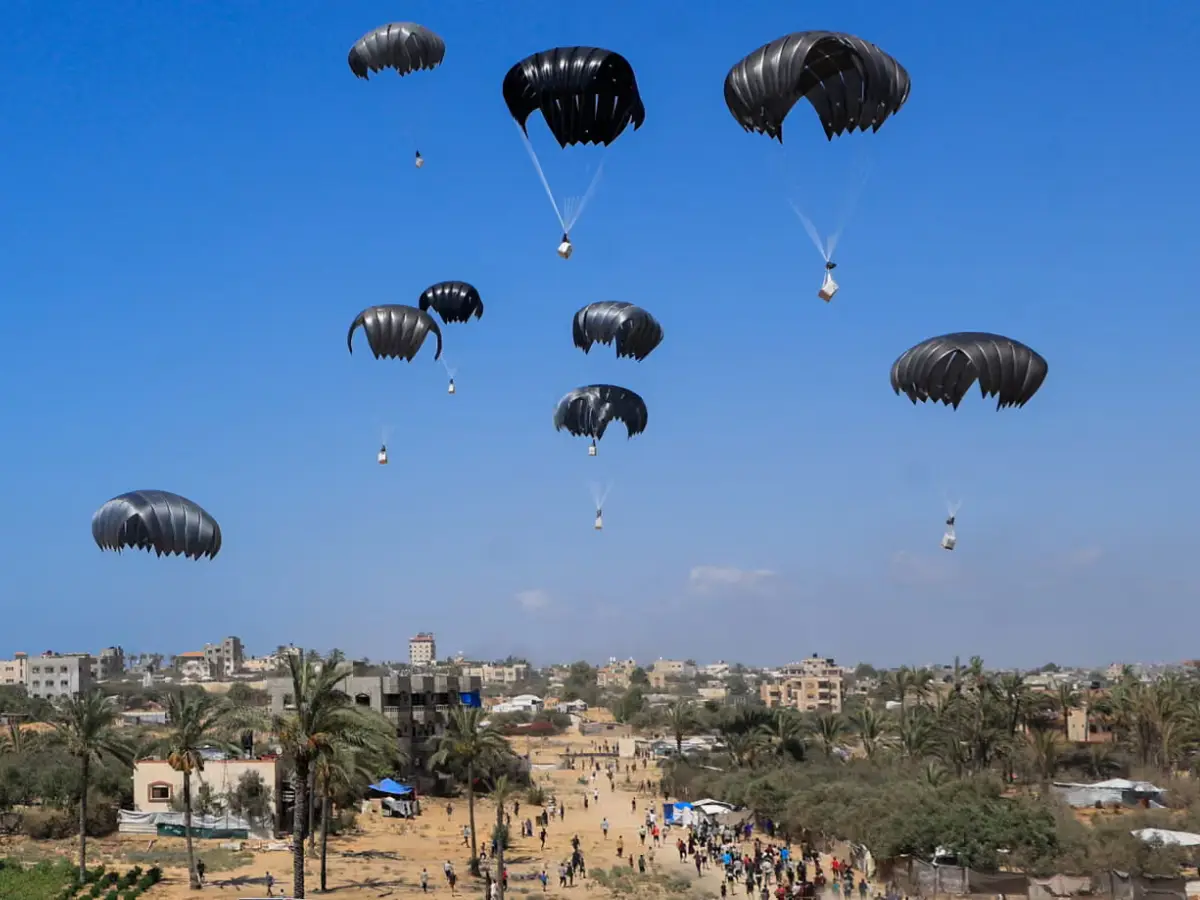
Israel air-dropped aid into the war-torn Gaza Strip in coordination with six other countries Photograph: (Reuters)
The Gaza aid agencies have stressed that parachuting crates of aid is a risky and inefficient alternative. While Doctors Without Borders called the airdrop parcels "notoriously ineffective and dangerous", which forces people to "risk their lives for food."
The Israeli Defence Forces (IDF) said that it had air-dropped aid into the war-torn Gaza Strip in coordination with six other countries, adding that around 126 packages of food were air-dropped for the Gazans in southern and northern Gaza by six countries. Notably, this is the first time a joint operation has been conducted with three European countries.
The six countries that were included with Israel were the United Arab Emirates, Jordan, Egypt, Spain, France, and Germany. Last week, Jordan and the UAE airdropped 25 tonnes of aid into Gaza, which was the first airdrop in months.
While refuting the starvation claims in Gaza, the Israeli military earlier said that it expanded air efforts to include airdrops to “improve the humanitarian response” and “refute false claims of intentional starvation in Gaza.”
However, it is important to note that the airdrops are dangerous and insufficient to manage the increasing hunger and humanitarian crisis in Gaza, as per experts.
The Gaza aid agencies have stressed that parachuting crates of aid is a risky and inefficient alternative. Juliette Touma, the chief spokesperson for the United Nations agency for Palestinian refugees, said, "Why use airdrops when you can drive hundreds of trucks through the borders?”
“It’s much easier, more effective, faster, cheaper,” she added.
Trending Stories
)
)
)
)
)
)
)
)
)
)
)
)
)
)
)
)
)
)
)
)
)
)
)
)
)
&im=FitAndFill=(700,400))
)
)
)
)
)
)
)
)
)
)
)
)
While Doctors Without Borders called the airdrop parcels "notoriously ineffective and dangerous", which forces people to "risk their lives for food."
The United Nations’ humanitarian agency issued a statement in response to Israel's decision to allow airdrops, saying, "All efforts to provide aid to the people who desperately need it are welcome.” However, adding that the group and its partners "say that airdrops are the last resort measure and carry risks for people on the ground.”
How does airdropping aid work?
The military planes carry bundles of supplies and food to airdrop the food aid in Gaza. These supplies are loaded on pallets or flat platforms and are wrapped in netting so that it doesn't fall.
These pallets are then attached to parachutes and pushed from the backs of aircraft to reach delivery areas.
Some countries were dropping aid in Gaza last year; however, it stopped after some parcels fell and killed and injured people, while also damaging property.
Meanwhile, some parcels landed in the sea or even in Israel. Reportedly, last year, at least five Palestinians were killed and many were injured in airdrop accidents, according to Gaza authorities.
