
&imwidth=800&imheight=600&format=webp&quality=medium "‘Cooling units’ or drone engines: Is China secretly fueling Russia’s drone war in Ukraine? All you need to know")
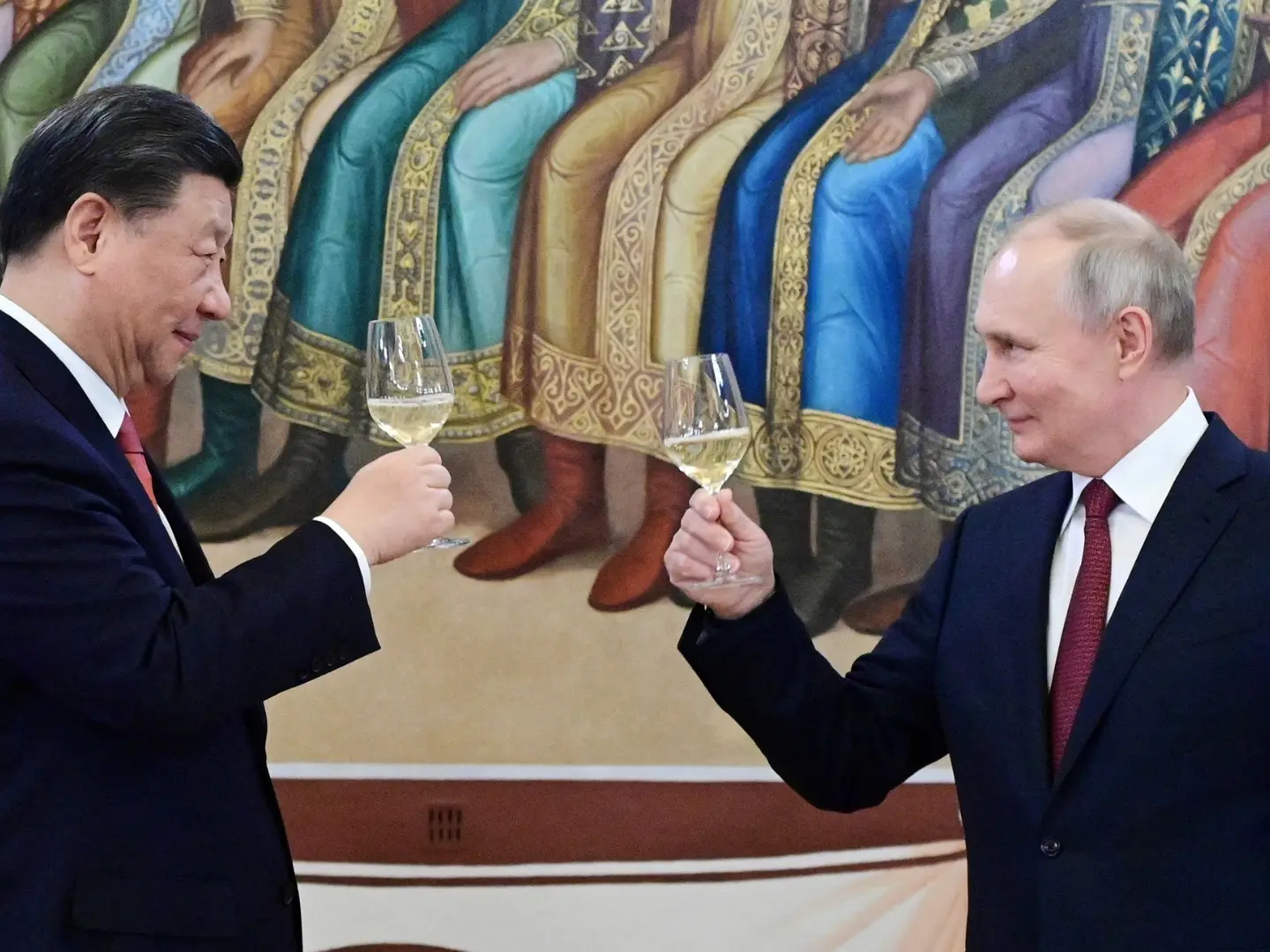
China has reportedly been helping Russia sidestep Western sanctions by sending drone engines disguised as “industrial refrigeration units,” according to European security officials and documents reviewed by Reuters. These L550E engines, made by Chinese firm Xiamen Limbach Aviation Engine Co, were allegedly sent to Russian state-owned weapons maker IEMZ Kupol. The components were later used in the mass production of Garpiya-A1 attack drones, a long-range weapon deployed frequently in Ukraine.
Massive surge in Russian drone production

A leaked Kupol document shows the company signed a deal with the Russian defence ministry to produce over 6,000 Garpiya drones in 2025, up from 2,000 the previous year. By April, more than 1,500 had already been delivered.
Ukrainian military intelligence told Reuters that Russia is now using about 500 Garpiya drones per month. The drones are reportedly based on Iranian Shahed drones but incorporate Chinese engines and guidance systems.
How the shipments were allegedly disguised
Trending Stories
)
9-year-old Chennai prodigy clears Cambridge IGCSE grade 10 exams
)
BRICS Summit 2026: Top world leaders in New Delhi; West Asia war casts shadow on BRICS Summit
)
BRICS Summit: China resumes Guangzhou-New Delhi flight, issues 'good-neighbourliness' remark ahead of Xi-Modi meet
)
Houthis vs Saudi Arabia: East-west oil pipeline shut after drone attacks from Iraq
)
Years before 9/11, CIA warned Clinton, Bush of 'explosive-packed airplane attack': What newly released files reveal
)
IND vs AFG, 1st T20I: When and where to watch live streaming in India?
)
South Africa batter Jordan Hermann hits highest individual score on ODI debut
)
BRICS Summit 2026: South Africa says it will use the summit to advance its economic priorities
)
BRICS Summit 2026: Iran's Pezeshkian praises PM Modi at BRICS
)
Satellite images show construction surge at Iran’s Pickaxe nuclear site amid US war
)
BRICS summit: India faces delicate Iran-UAE diplomatic test
)
800 million years old - Scientists discover 'fingerprints' of supercontinent Gondwana in ancient rocks
)
Did you know THIS actor narrowly escaped the 9/11 terror attacks due to a last-minute change of travel plans?
)
Baba Vanga's first prophecy for 2027 is out, and straight out of science fiction
)
Lady Gaga is a mom! Oscar-winning singer welcomes first child with fiance Michael Polansky
)
Saudi Arabia shuts East-West oil pipeline, key Hormuz bypass, after attacks
)
BRICS Summit 2026: 30+ countries seek BRICS membership
)
Karthik Subbaraj’s Dorothy gets a standing ovation at TIFF world premiere
)
Gravitas | Iran hammers US air power in West Asia after Navy badly hit
)
Satya Niketan horror: Who is responsible?
)
WION Expertspeak: Understanding India's BRICS presidency amid wars, trade tensions and global turmoil
)
Israel spent nearly $470,000 on PM's hair, makeup since 2019, data shows
)
North Korea fires missiles after US, South Korea and Japan military drills but America says 'does not pose immediate threat'
)
Vladimir Putin in New Delhi for BRICS Summit: Russia-India defence, energy and nuclear ties in focus ahead of meeting with PM Modi
&im=FitAndFill=(700,400))
New Friday OTT releases (September 11, 2026): The Revolutionaries, Vishwanath & Sons, Ghamasaan- 6 new titles coming on Netflix, Prime Video and more
)
Frustrated man demolishes his kitchen after thousands flock to see Mother Mary his wife spotted on the wall
)
BRICS Summit 2026: Rivals in West Asia, partners in BRICS, UAE, Iran, and Saudi delegations in Delhi
)
After praising Modi, Pezeshkian meets Indian religious leaders, Hurriyat's Mirwaiz Umar Farooq
)
Delhi's top luxury hotels turn into high-security fortress hubs for BRICS 2026 delegations
)
In first of its kind, Trump admin deports Afghan woman via Alien Terrorist Court
)
BRICS Summit 2026: PM Modi meets Malaysia, Ethiopia leaders; defence ties, trade in focus
)
Osama Bin Laden's son ALIVE? Al-Qaeda releases video 7 years after US declared him dead
Documents seen by Reuters show that after the U.S. and EU sanctioned Xiamen, a new supplier, Beijing Xichao International Technology and Trade, took over. The engines were then shipped to a Russian front company, SMP-138, and passed on to LIBSS, which supplied them to Kupol.
A contract between LIBSS and Kupol explicitly stated the engines would be described as “cooling units” to avoid scrutiny. The engines travelled from Beijing to Moscow and then to Izhevsk, where Kupol is based.
China denies knowing anything
China’s foreign ministry said it was unaware of the engine shipments and insisted it regulates dual-use exports in line with international rules. “China has always opposed unilateral sanctions that lack basis in international law and are not authorised by the U.N. Security Council,” the ministry said in a statement to Reuters.
EU calls on China to act
European Commission President Ursula von der Leyen urged Beijing to use its influence over Putin to support peace talks. “China has an influence on Russia, like the European Union has an influence on Ukraine,” she said after meeting Chinese President Xi Jinping. “It is our expectation that China uses this influence to make sure that Russia is coming seriously to the negotiation table.”
Peace talks make little progress
Ukraine and Russia held a third round of talks in Istanbul this week. The meeting ended quickly and failed to secure a ceasefire. Russia offered temporary truces for humanitarian reasons but rejected a broader ceasefire. Kyiv has proposed a direct meeting between Presidents Zelensky and Putin by the end of August. So far, the Kremlin has not agreed.
Trump threatens new tariffs on Russia and its partners
US President Donald Trump warned on July 14 that Russia would face “severe” secondary tariffs if it doesn’t agree to end the war within 50 days.
He added that any country continuing to buy Russian oil, such as China, could face 100% tariffs on exports to the U.S. This would raise prices for American consumers and increase pressure on Chinesebusinesses.
