

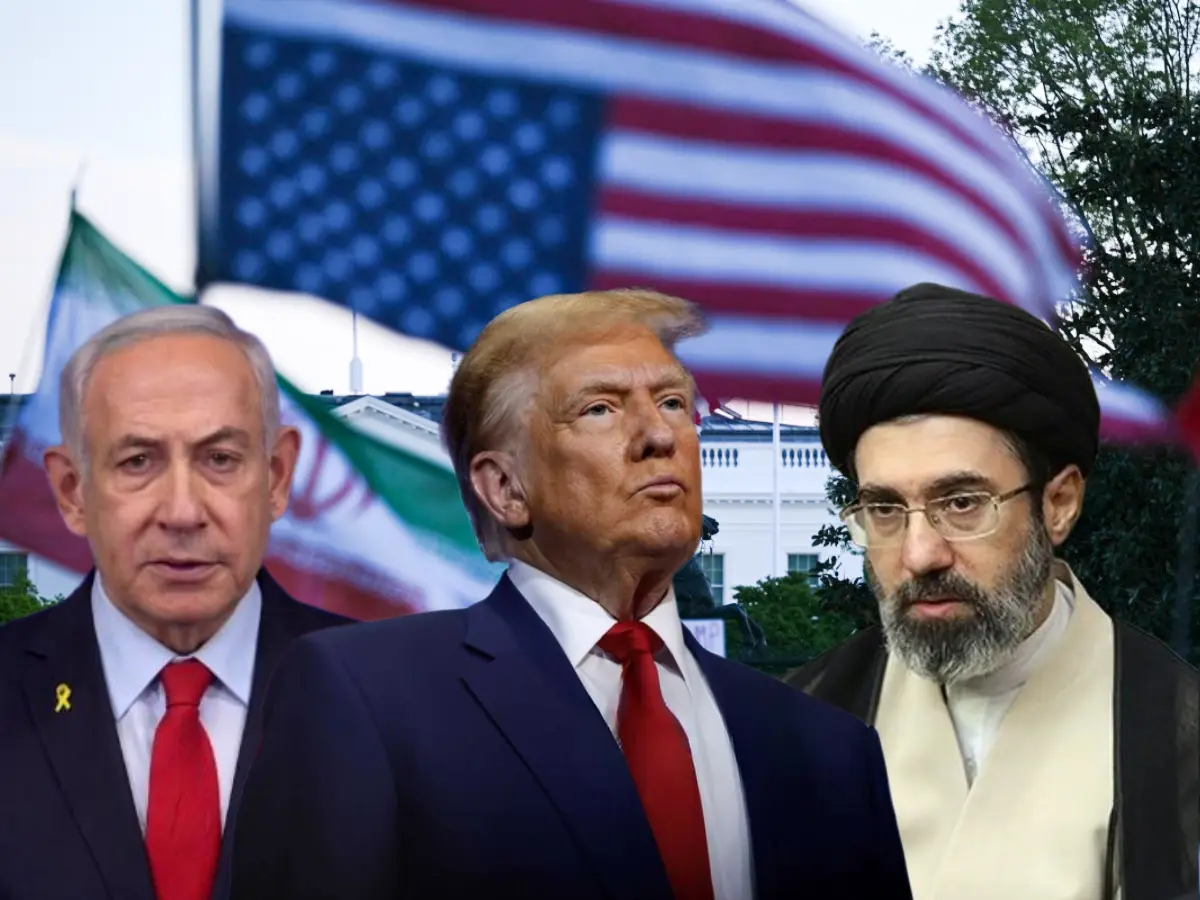
&imwidth=800&imheight=600&format=webp&quality=medium "'Bear the financial burden of reconstruction': Iran demands war reparations from Saudi, UAE, Bahrain, Jordan and Qatar after Islamabad talks fail")
Following the collapse of the Islamabad negotiations, and as the two-week ceasefire clock runs down to its April 22 deadline, Iran has formally demanded war damage compensation from five neighbouring countries. Accusing Bahrain, Saudi Arabia, Qatar, the United Arab Emirates and Jordan of enabling the US-Israel military campaign against Iran, Tehran's ambassador to the United Nations, Amir Saeid Iravani, said: "These countries have breached their international obligations toward the Islamic Republic of Iran under international law".
How did these five Iranian neighbours 'breach their international obligations'?
Iravani, according to the Iranian state news agency IRNA, accused the five neighbouring nations of enabling US-Israeli attacks against Iran by "granting access to their airspace and military facilities". He insisted that by doing so these nations "have become complicit in the destruction of our sovereign assets," and said that they must now "bear the financial burden of reconstruction".
How much does Iran need to rebuild?
The scale of that reconstruction is staggering by any measure. Iran's Central Bank issued an assessment alongside the announcement, warning that rebuilding the country's war-damaged economy, including crippled oil refineries and destroyed transport infrastructure, could take more than twelve years.
Trending Stories
&imwidth=180&imheight=135&format=webp&quality=medium)
Russia to send first tanker carrying 40,000 tonnes diesel to US after Trump-Putin deal – What we know
&imwidth=180&imheight=135&format=webp&quality=medium)
US business activity grows in June, but tariffs and inflation cloud outlook
&imwidth=180&imheight=135&format=webp&quality=medium)
Zohran Mamdani's Garba dance goes viral as he joins Indian community's Navratri celebrations | WATCH
&imwidth=180&imheight=135&format=webp&quality=medium)
Feds obtain DNA evidence that could prove Ilhan Omar married her brother: Report
&imwidth=180&imheight=135&format=webp&quality=medium)
US midterms 2026: What polls and prediction markets indicate about Congress
&imwidth=180&imheight=135&format=webp&quality=medium)
James Bond auction: Own Daniel Craig's Skyfall suit, Ana de Armas' dress and 300+ rare 007 collectibles
&imwidth=180&imheight=135&format=webp&quality=medium)
WATCH | Mysterious haze grips Ohio city as toxic chemical leak forces mass evacuation – What is happening?
&imwidth=180&imheight=135&format=webp&quality=medium)
Explosions heard in Iran’s Hormozgan province near Strait of Hormuz: State media
&imwidth=180&imheight=135&format=webp&quality=medium)
US midterms 2026: Trump's approval rating hits record low as Democrats gain ground
&imwidth=180&imheight=135&format=webp&quality=medium)
US midterms: Democrats sue Trump administration over alleged 'threats and intimidation' ahead of election, Musk issues warning to Dems
&imwidth=180&imheight=135&format=webp&quality=medium)
France protests: 'Block everything' movement escalates as public fury over austerity grows; over 200 arrested. Here's all you to need to know
&imwidth=180&imheight=135&format=webp&quality=medium)
‘Her heart and mind in good shape’: What Helen Haines’ husband said after MP loses both legs in ‘targeted’ attack
&imwidth=180&imheight=135&format=webp&quality=medium)
‘I caution the president...’: Trump’s ex-press secretary warns after Zacharia’s exit
&imwidth=180&imheight=135&format=webp&quality=medium)
Priyanka Chopra celebrates Dussehra 2026 with Nick Jonas and daughter Malti Marie | See pics
&im=FitAndFill=(700,400)&imwidth=180&imheight=135&format=webp&quality=medium)
New OTT releases this week (October 19-25, 2026): Gajab Raat to Chaar Yaar-8 titles to watch during Dussehra week on Netflix, Prime Video and more
&imwidth=180&imheight=135&format=webp&quality=medium)
US orders embassy staff, families to leave Saudi Arabia amid Houthi attacks: Report
&imwidth=180&imheight=135&format=webp&quality=medium)
IND vs NZ T20Is: Will Sooryavanshi play? Skipper Shreyas Iyer clears the air on Samson vs Vaibhav debate
&imwidth=180&imheight=135&format=webp&quality=medium)
Finance influencer dies by suicide in Chennai; father accuses tech CEO, who denies charge
&imwidth=180&imheight=135&format=webp&quality=medium)
Hunger makes alcohol more appealing, study finds
&imwidth=180&imheight=135&format=webp&quality=medium)
'I’m not saying it’s extraterrestrial' - 'Mutant' creature forces Mexicans to flee their homes
&imwidth=180&imheight=135&format=webp&quality=medium)
Kolkata airport: CISF detects ₹1.13 crore in US dollars hidden in bags of 2 Bangkok-bound passengers
&imwidth=180&imheight=135&format=webp&quality=medium)
Trump waves at 'empty space' in viral video,' critics claim 'mental decline getting worse' | WATCH
&imwidth=180&imheight=135&format=webp&quality=medium)
Shock, anger and despair in Bangladesh over the executions
&imwidth=180&imheight=135&format=webp&quality=medium)
Rafale Marine fighter begins flight trials in Goa ahead of Indian Navy induction
&imwidth=180&imheight=135&format=webp&quality=medium)
Ramayana promotion takes a funny turn after Ranbir Kapoor's verbal blunder, leaves fans in splits | Watch
&imwidth=180&imheight=135&format=webp&quality=medium)
West Bengal govt forms SIT to probe Kolkata Durga Puja stampede that killed 19
&imwidth=180&imheight=135&format=webp&quality=medium)
US Midterms 2026: Sugar Land, Plano, Irving: How Texas’s Indian-American belt could shape poll outcomes
&imwidth=180&imheight=135&format=webp&quality=medium)
Kim Jong Un death rumors explode | China accused of secretly sending troops to Pyongyang
&imwidth=180&imheight=135&format=webp&quality=medium)
US Midterms 2026 and money: From Bloomberg to Musk, corporate donors, super PACs and lobbies, it's all about the cash
&imwidth=180&imheight=135&format=webp&quality=medium)
Turkey, Qatar, Pakistan and Indonesia sign 'Badr' defence cooperation pact in Doha
&imwidth=180&imheight=135&format=webp&quality=medium)
Israel election 2026: Three possible scenarios after October 27 polls
&imwidth=180&imheight=135&format=webp&quality=medium)
Trump says end to Ukraine war is 'closer than ever'; Witkoff's Putin remarks spark criticism
&im=FitAndFill=(700,400)&imwidth=180&imheight=135&format=webp&quality=medium)
What is the real meaning behind Pete Hegseth's tattoos?
The reparations demand landed within days of the Islamabad talks breaking down without agreement. Iranian Parliament Speaker Mohammad Bagher Qalibaf and US Vice President JD Vance met over the weekend for what were the highest-level direct discussions between the two countries since 1979. They ended in deadlock, with the core disputes, nuclear assurances and control of the Strait of Hormuz, proving too wide to bridge.
Also read | 'A backstab to the resistance': Hezbollah demands Lebanon cancel 'futile' Washington talks with Israel
Compensation, a non-negotiable ask: Iran's Vice President
Iran's First Vice President Mohammad Reza Aref framed the reparations push in unambiguous terms. "The pursuit of compensation for damages caused by strikes on Iran is the non-negotiable right of our people," he said Sunday. "Those who fueled this fire cannot expect to remain shielded from its costs."
The choice of targets is telling. Rather than directing its anger solely at Washington or Tel Aviv, Tehran is now applying pressure on the Arab governments whose cooperation made the military campaign logistically possible. Regional analysts read the move as a calculated attempt to drive a wedge between those governments and the US-led naval blockade.
None of the five named countries has issued a formal collective response.
Disclaimer: WION takes utmost care to accurately and responsibly report ongoing conflicts in West Asia involving Israel, Iran, US, Gulf nations and non-state actors like Hezbollah, Hamas, Houthis, Islamic State, and others. Claims and counterclaims, disinformation and misinformation are being made online and offline. Given this context, WION cannot independently verify the authenticity of all statements, social media posts, photos and videos.

