

&imwidth=800&imheight=600&format=webp&quality=medium "Urban Heat Island effect is making your nights hotter and you sick. Here is how you can mitigate its effects")
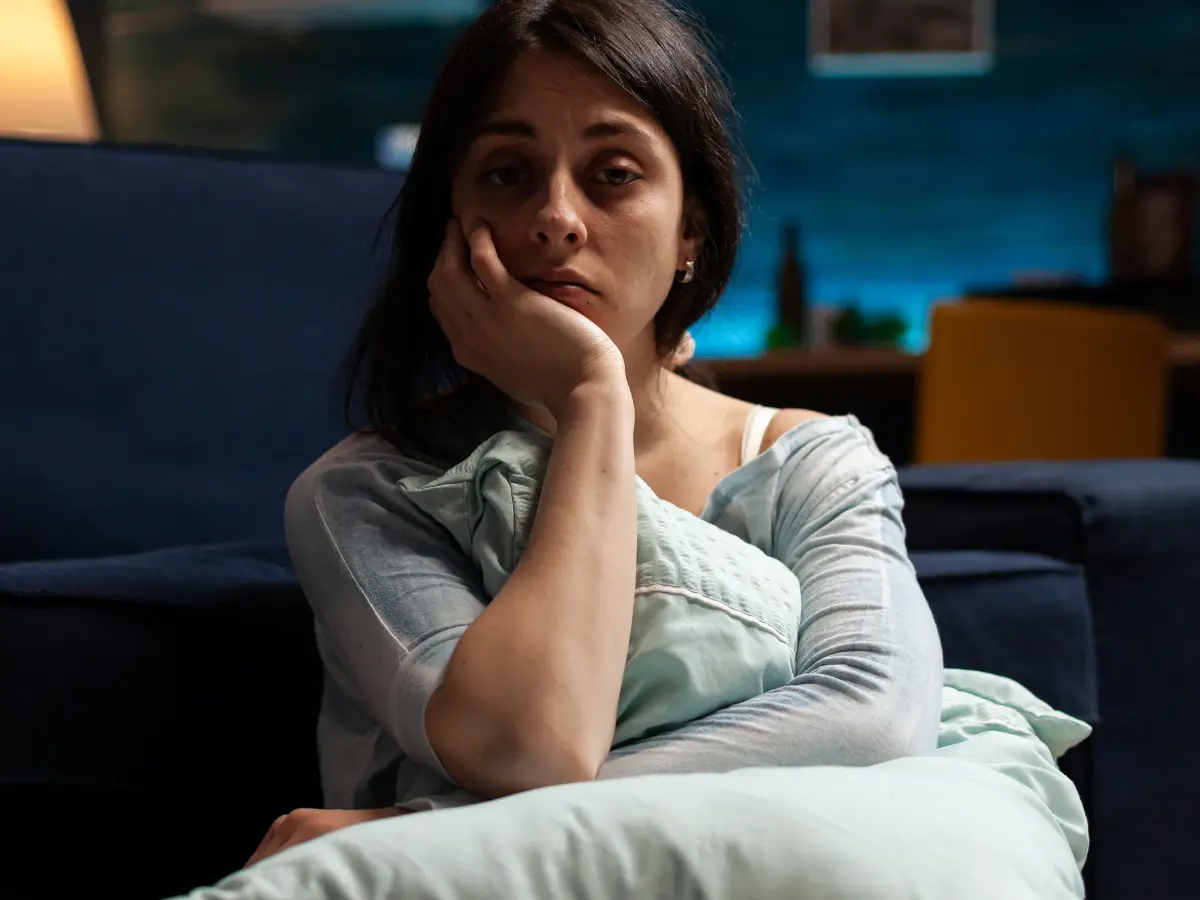
North and central India are in the grips of an intense heatwave with daytime temperatures pushing past the 44°C mark. This extreme heat is not even sparing urban air-conditioned bedrooms at night. Thousands of people are complaining of waking up exhausted, battling morning headaches, fatigue, and brain fog. Heatwaves are interfering with the body's natural sleep mechanisms, causing people to wake up several times at night, which prevents them from entering REM sleep. The body needs to cool down for a good night's sleep. However, experts say that prolonged exposure to extreme daytime heat, combined with unusually warm nights, is affecting this considerably. An extreme cool setting on the AC is making things worse. The effects are being seen most in people suffering from asthma, obstructive sleep apnea, allergic airway diseases, cardiovascular conditions, and dehydration.
What is happening inside homes at night?
Reports suggest that India’s nights are warming nearly five times faster than its days. According to the India Meteorological Department (IMD) data, overnight minimum temperatures are significantly above normal. A study by Climate Trends in May 2026 revealed that indoor nighttime temperatures in dense urban homes frequently hover between 31°C and 34°C, and do not go down even in the wee hours of the morning. This creates a "Warm Night" crisis, where our bedrooms act like structural heat traps. Sleeping in such conditions has a major effect on people's health.
Why does heat persist outside even at night?
Earth follows a natural cooling cycle where it absorbs solar energy during the day and then throws the heat back at night. But this is no longer happening effectively. The Urban Heat Island (UHI) effect is to blame for this. Reinforced cement concrete (RCC), asphalt, and glass have filled the Indian cities. Due to their high thermal mass, these materials absorb immense heat all day and slowly radiate it outward for hours after dark. This is known as the Urban Heat Island (UHI) effect. Your air-conditioner creates a vicious cycle by adding more heat to the environment. It pumps it outdoors, but with millions of more ACs running at the same time, the hot exhaust being released by the compressors increases evening temperatures by an additional 4°C to 6°C. The humidity makes things worse as the moisture in the air disrupts the body's primary cooling mechanism, sweat evaporation.
Trending Stories
&imwidth=180&imheight=135&format=webp&quality=medium)
Blasts heard in Sanaa as Saudi-led coalition warns civilians to evacuate; Houthis vow retaliation
&imwidth=180&imheight=135&format=webp&quality=medium)
Saudi Arabia strikes Yemen oil sites as Houthi missiles target Riyadh; 'limited fire' breaks out at Aramco
&im=FitAndFill=(700,400)&imwidth=180&imheight=135&format=webp&quality=medium)
Navratri 2026: 9 days, 9 forms of Goddess Durga and 9 colours- Check the complete list
&imwidth=180&imheight=135&format=webp&quality=medium)
Trump accuses Houthis of driving up oil prices before US midterms, warns of consequences
&imwidth=180&imheight=135&format=webp&quality=medium)
‘Don’t blame SIR, Congress will lose 2029 too’: Amit Shah tells Rahul Gandhi after Gujarat local poll results
&imwidth=180&imheight=135&format=webp&quality=medium)
New Delhi rejects Beijing’s claims and remarks on Ladakh location naming exercise
&imwidth=180&imheight=135&format=webp&quality=medium)
CMs Vijay-Naidu meet in Vijayawada, discuss water sharing, river-linking
&imwidth=180&imheight=135&format=webp&quality=medium)
US Midterms 2026: In Alaska, cost-of-living anxiety meets strangest ballot in high-stakes Senate race
&imwidth=180&imheight=135&format=webp&quality=medium)
OpenAI employee arrested by FBI after allegedly hiding recording device in office
&imwidth=180&imheight=135&format=webp&quality=medium)
Man dies at Six Flags Georgia: Past accidents at Six Flags amusement parks across US
&imwidth=180&imheight=135&format=webp&quality=medium)
1,500 drones illuminate Mumbai sky as Cordelia Cruises unveils second ship, Cordelia Sky
&imwidth=180&imheight=135&format=webp&quality=medium)
Pope Leo XIV diagnosed with lung cancer after surgery, Vatican says 'successful surgery and recovering'
&imwidth=180&imheight=135&format=webp&quality=medium)
Pakistan to chair UN-backed global Borrowers’ Platform as its own debt burden mounts, triggers sarcastic reactions on social media
&imwidth=180&imheight=135&format=webp&quality=medium)
Suicidal man survives jump from 11th floor in Japan, could now be tried for murder
&imwidth=180&imheight=135&format=webp&quality=medium)
Robot gropes girl, makes thrusting movements in bizarre crime in Germany
&imwidth=180&imheight=135&format=webp&quality=medium)
Trump says Republicans face equally tough fight in House and Senate midterms
&imwidth=180&imheight=135&format=webp&quality=medium)
France accuses Musk of ‘online harassment’ of European leaders, warns of poll interference
&imwidth=180&imheight=135&format=webp&quality=medium)
MI5 chief warns Russia is UK’s ‘aggressor number one’ as Iran and AI threats grow
&imwidth=180&imheight=135&format=webp&quality=medium)
'Turn approver, resign, we'll forgive you': Rahul Gandhi claims receiving messages from CEC Gyanesh Kumar
&imwidth=180&imheight=135&format=webp&quality=medium)
Inside the alleged drug-money trail behind a Mumbai couple’s properties
&imwidth=180&imheight=135&format=webp&quality=medium)
‘My president, I mean my husband’: Trump's new press secretary Katie Zacharia's first briefing goes off the rails in 14 minutes
&im=FitAndFill=(700,400)&imwidth=180&imheight=135&format=webp&quality=medium)
IMF World Economic Outlook: 10 economies to watch for growth in FY27 and FY28 - Where does India stand?
&imwidth=180&imheight=135&format=webp&quality=medium)
L Murugan resigns as Union Minister, expresses wish to return to grassroots
&imwidth=180&imheight=135&format=webp&quality=medium)
'Ouch!!! That must hurt': Kangana Ranaut hails Kamal Haasan's sharp reply to Elon Musk over Starlink row
&imwidth=180&imheight=135&format=webp&quality=medium)
Sidhu Moose Wala’s younger brother wins hearts by recreating late singer’s signature move at Toronto Hologram Show
&imwidth=180&imheight=135&format=webp&quality=medium)
Girl 'dead' for 8 hours wakes up at her own funeral, dad insists she wasn't breathing
&imwidth=180&imheight=135&format=webp&quality=medium)
UK school ditches technology, shifts from screen to pen and paper for learning
&im=FitAndFill=(700,400)&imwidth=180&imheight=135&format=webp&quality=medium)
New OTT releases this week (October 12-18, 2026): Sacrifice, Koffee with Karan S9, Roadies Rebirth- 6 titles coming on Netflix, JioHotstar and more
&imwidth=180&imheight=135&format=webp&quality=medium)
Rahul Gandhi speaks on Anti-CeC protests: Gathering over tea after Supreme Court rally
&imwidth=180&imheight=135&format=webp&quality=medium)
Anupam Kher joins Ranbir Kapoor's Ramayana as Jatayu, new poster unveiled
&imwidth=180&imheight=135&format=webp&quality=medium)
Measles kills again: 6 dead in Pennsylvania as America faces its worst outbreak in decades | Gravitas
&imwidth=180&imheight=135&format=webp&quality=medium)
Ken Paxton's Dubai night out with two US fugitives sparks political storm as Texas Senate race tightens
&imwidth=180&imheight=135&format=webp&quality=medium)
Mundhe: Fight against unsafe food goes on
&imwidth=180&imheight=135&format=webp&quality=medium)
Cornell University suspends fraternity parties over 2024 gang rape allegations
How is your body suffering from extreme heat at night
Studies have shown that your core body temperature must drop by about 1°C for deep sleep. But with indoor temperatures remaining above 30 degrees Celsius at night, your body struggles to make this happen. Your heart goes into overdrive and starts pumping faster to push blood to your skin to shed heat. This causes the person to wake up several times at night. In the absence of REM sleep, the body does not get the opportunity to recuperate from daytime heat. You wake up tired, complaining of morning headaches, and this can cause long-term cardiovascular strain.
Also Read: Delhi sizzles at 45.1°C amid yellow alert; intense heatwave grips north and central India
How to cool your room and body without drying the air
Here are some things you can try to make indoor conditions better at night
1. Do not open your doors and windows at 6 pm. Do this instead at 9 pm when the outside air temperature has dropped. Open windows on opposite sides of the room to create a functional cross-breeze.
2. Fans are simply moving hot air around. Placing a bowl of ice or a damp, cold sheet directly under the fan will lead to evaporative cooling, instantly bringing down the temperature by a few degrees. In air-conditioned rooms, place a bucket of water to add moisture to the air to prevent dehydration.
3. While a cold shower might sound like a good idea, it is not. It causes your blood vessels to constrict rapidly, trapping heat inside your core. Take a lukewarm shower before sleeping. It opens your pores and blood vessels, allowing your body to efficiently dump internal heat.
4. Consume electrolytes in the evening instead of plain water. ORS, salted buttermilk and coconut water are good options to maintain blood volume and lower your resting heart rate while you sleep.
5. Painting the ceiling with reflective cool-roof paint or white lime wash can drop indoor ceiling temperatures by a massive 2 degrees C to 4 degrees C.

