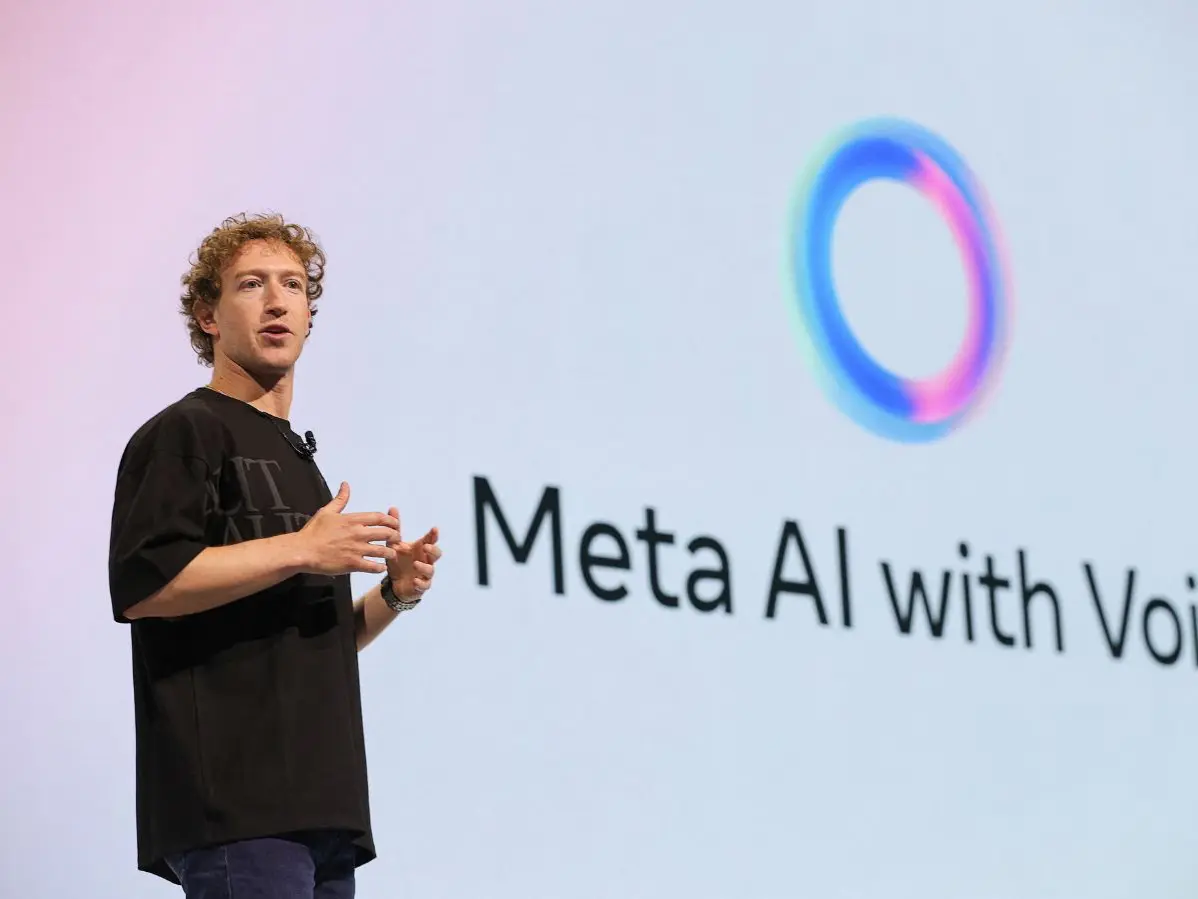
Zuckerberg built a fortune copying others! This time he is failing miserably

&imwidth=600&imheight=450&format=webp&quality=medium "Zuckerberg built a fortune copying others! This time he is failing miserably")
Zuckerberg built a fortune copying others! This time he is failing miserably Photograph: (Reuters)
Meta stock surged 8.8 percent on Wednesday — its best single day in six months — after Bloomberg reported plans for ‘Meta Compute,’ a cloud business to sell spare AI capacity. By Thursday it was down 5 percent. Wolfe Research found that a real cloud business would push Meta's 2027 capex to $200 billion. SoftBank announced a competing product the very next day. And an analyst pointed out that Meta doesn't actually have spare compute to sell. Wall Street's one-day love affair with the idea lasted exactly 24 hours.
For most of his career, Mark Zuckerberg's instinct to copy competitors has worked. He copied Snapchat's Stories format — Instagram Stories now has over 500 million daily users. He copied TikTok's short-video format with Reels — it is now one of Meta's fastest-growing revenue products. He spent $19 billion on WhatsApp and turned it into an indispensable global messaging service. The formula was reliable: find what works elsewhere, execute it at scale, win. This week, the market tested whether that formula still holds when the thing being copied is a multi-decade, multi-trillion-dollar enterprise infrastructure business. The verdict, delivered in 48 hours, was not encouraging.
Wednesday: The Best Day In Six Months
Bloomberg reported on Wednesday that Meta was developing an internal initiative called Meta Compute — a plan to rent out spare AI computing capacity to outside customers and compete directly with Amazon Web Services, Microsoft Azure, and Google Cloud. Wall Street responded enthusiastically. Meta stock jumped 8.8 percent on the day, its strongest single-session gain in six months. Investors liked the narrative: Meta has built one of the world's largest AI infrastructure footprints, spending between $125 billion and $145 billion in capital expenditure in 2026 alone. If even a fraction of that infrastructure could be monetised as a cloud service, the revenue upside was enormous. The stock closed at a fresh recent high. The cloud trade looked like a winner.
Thursday: Down 5 Percent. Here Is What Changed
Wolfe Research ran the numbers overnight. A genuine cloud computing business — one with the infrastructure, reliability, and enterprise relationships needed to compete with AWS and Azure — would not be built from Meta's existing spare capacity. It would require massive additional investment. Wolfe estimated that Meta's 2027 capital expenditure would need to rise to $200 billion, up from prior estimates of $160 billion, to support a real cloud business. More critically, that investment would come before any meaningful cloud revenue showed up on Meta's income statement. Margins would fall first. And at $200 billion in annual capex, Meta would almost certainly need to raise external capital — a prospect that changes the investment case entirely. Meta shares fell 5 percent on Thursday as the market processed what ‘building an AWS’ actually costs.
SoftBank Crashed The Party In 24 Hours
Trending Stories
&imwidth=280&imheight=210&format=webp&quality=medium)
&imwidth=280&imheight=210&format=webp&quality=medium)
&imwidth=280&imheight=210&format=webp&quality=medium)
&imwidth=280&imheight=210&format=webp&quality=medium)
&imwidth=280&imheight=210&format=webp&quality=medium)
&imwidth=280&imheight=210&format=webp&quality=medium)
&imwidth=280&imheight=210&format=webp&quality=medium)
&imwidth=280&imheight=210&format=webp&quality=medium)
&imwidth=280&imheight=210&format=webp&quality=medium)
&imwidth=280&imheight=210&format=webp&quality=medium)
&imwidth=280&imheight=210&format=webp&quality=medium)
&imwidth=280&imheight=210&format=webp&quality=medium)
&imwidth=280&imheight=210&format=webp&quality=medium)
&imwidth=280&imheight=210&format=webp&quality=medium)
&imwidth=280&imheight=210&format=webp&quality=medium)
&imwidth=280&imheight=210&format=webp&quality=medium)
&imwidth=280&imheight=210&format=webp&quality=medium)
&imwidth=280&imheight=210&format=webp&quality=medium)
&imwidth=280&imheight=210&format=webp&quality=medium)
&imwidth=280&imheight=210&format=webp&quality=medium)
&imwidth=280&imheight=210&format=webp&quality=medium)
&imwidth=280&imheight=210&format=webp&quality=medium)
&imwidth=280&imheight=210&format=webp&quality=medium)
&imwidth=280&imheight=210&format=webp&quality=medium)
&imwidth=280&imheight=210&format=webp&quality=medium)
&imwidth=280&imheight=210&format=webp&quality=medium)
&imwidth=280&imheight=210&format=webp&quality=medium)
&imwidth=280&imheight=210&format=webp&quality=medium)
&imwidth=280&imheight=210&format=webp&quality=medium)
&im=FitAndFill=(700,400)&imwidth=280&imheight=210&format=webp&quality=medium)
&imwidth=280&imheight=210&format=webp&quality=medium)
&imwidth=280&imheight=210&format=webp&quality=medium)
&imwidth=280&imheight=210&format=webp&quality=medium)
&imwidth=280&imheight=210&format=webp&quality=medium)
The second blow came from an unexpected direction. One day after Meta's cloud plans leaked, SoftBank announced SB Neo — a US venture that will rent out AI chips and data centre capacity, with a target of 10 gigawatts of capacity by 2030. OpenAI is reportedly an early customer. The compute rental trade, which had looked like a differentiated Meta strategy on Wednesday morning, had become a crowded market by Thursday afternoon. The speed at which a competitor entered the same space — not months later, not years later, but within 24 hours — illustrated exactly how replicable the underlying idea is. Renting compute is not a moat. It is infrastructure economics, and infrastructure economics favours the players who have been doing it longest.
The Core Problem: Meta Is A Compute Buyer, Not A Seller
Analyst Richard Windsor identified what may be the most fundamental flaw in the Meta Compute thesis: Meta does not have spare compute to sell. Today, Meta buys GPU and data centre capacity from companies like CoreWeave and Nebius because Meta's own AI workloads exceed its in-house infrastructure. A company that is a net buyer of compute capacity cannot simultaneously position itself as a compute vendor without building an entirely new layer of infrastructure on top of what it already needs for its own operations. The plan, as Windsor described it, conflates having large infrastructure with having surplus infrastructure — and those are very different things.
Collateral Damage: CoreWeave, Nebius, And The Chip Names
The market's reaction was not limited to Meta. CoreWeave — which currently supplies AI compute capacity to Meta — fell 14 percent on Wednesday as investors concluded that a Meta cloud business would eventually reduce Meta's dependence on outside suppliers. CoreWeave's junk-rated bonds began selling off. By Thursday, the stock had fallen further, with more than $7.5 billion in combined market capitalisation erased across the two sessions. Nebius, another compute supplier, dropped 17 percent. Chip-adjacent names including Micron were dragged into the selloff as the market recalibrated who wins and who loses if Meta becomes both a compute consumer and a compute competitor.
What $200 Billion In Capex Really Means
The number that should concern Meta shareholders most is not the stock move. It is the capex trajectory. A company already spending $125 billion to $145 billion annually on infrastructure, now potentially facing a $200 billion capital expenditure requirement, with margins under pressure before new revenue arrives, and a possible capital raise on the horizon — that is not a cloud opportunity. That is a spending spiral. At that level of capital commitment, the pressure to find offsetting savings elsewhere becomes intense. Spending pressure of that magnitude is historically how hiring freezes start, how restructuring programmes are launched, and how layoff announcements get prepared. For Meta's tens of thousands of employees, the Meta Compute announcement may have felt like good news on Wednesday. The Wolfe Research note made Thursday considerably less comfortable.
