
&imwidth=800&imheight=600&format=webp&quality=medium "What if we could live on Mars by 2100? Scientists predict the future")
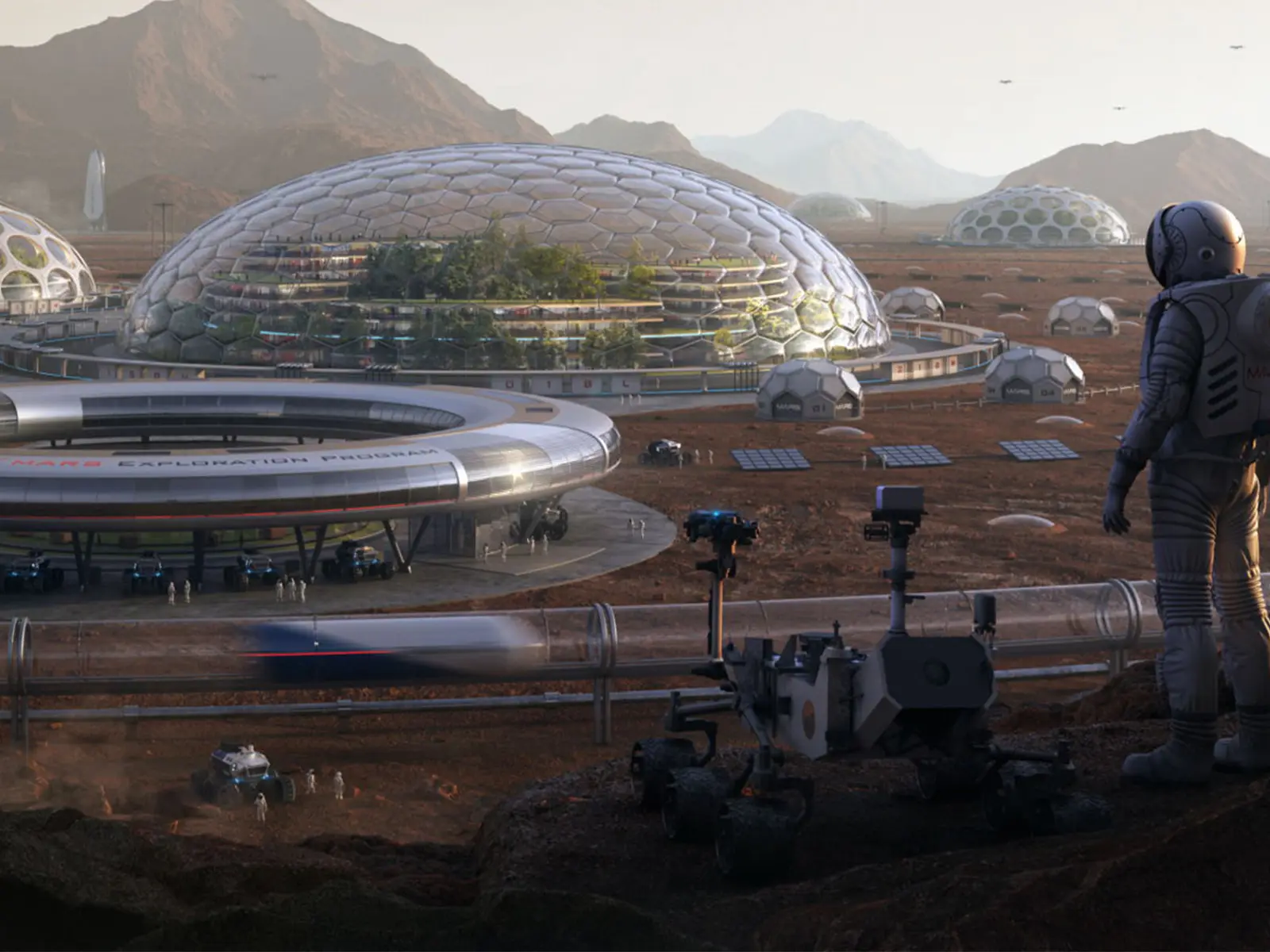
The dream of establishing human colonies on Mars has captivated scientists and space enthusiasts for decades, but what once seemed like pure science fiction is increasingly becoming scientific reality. Leading space agencies and private companies are now making bold predictions that permanent human settlements on Mars could be achieved by 2100, just 75 years from now.
From SpaceX's ambitious Starship programme to NASA's groundbreaking Mars exploration missions, the race to make Mars humanity's second home is accelerating at an unprecedented pace. But what would it actually take to transform the Red Planet into a liveable world for human beings?
Current Mars Exploration Achievements

NASA's Perseverance rover, which successfully landed on Mars in February 2021, has already made groundbreaking discoveries that bring humanity closer to understanding the planet's potential for human habitation. According to NASA's Mars Exploration Program, the rover has successfully produced oxygen from the Martian atmosphere using its MOXIE (Mars Oxygen In-Situ Resource Utilisation Experiment) device.
"The ability to convert carbon dioxide to oxygen on Mars is a crucial step for future human exploration," states NASA's Mars 2020 mission team. "This technology demonstration could help future astronauts breathe and provide oxidiser for rocket fuel."
Meanwhile, the European Space Agency (ESA) has been developing advanced life support systems through its MELiSSA (Micro-Ecological Life Support System Alternative) programme. Dr Christophe Lasseur, MELiSSA's Project Manager, explains: "We're creating closed-loop life support systems that could sustain human life on Mars by recycling air, water, and waste."
Trending Stories
)
Asian Games 2026: India face Afghanistan in quarterfinal on Sep 28; Pakistan clash with Hong Kong
)
Myanmar training camp case: US national, 6 Ukrainians allowed to meet their families abroad
)
Bigg Boss 20: Salman Khan schools Rhiti Tiwari over Qazi Touqeer clash, compares her to Dolly Bindra
)
Mushtaq Khan dies at 56: When Welcome actor opened up about his salary for iconic role Ballu
)
LPU students go on rampage, vandalise campus amid widespread protest: What's happening
)
'FIRST LOOK from inside Noah’s Ark': Researchers share video from inside mysterious mound in Turkey
)
‘Attack on Mecca a red line for Pakistan’: Shehbaz Sharif warns Houthis at UN
)
Pakistan deploys over 20,000 security personnel as PTI vows march for Imran Khan's release
)
OpenAI AI Agents hacked 4 websites before Hugging Face, researchers reveal
)
'A terrorist country is asking me that question?': Jaishankar hits back at Pakistani journalist at UN; flags attacks on commercial shipping
)
Trump-Xi summit wrap: Big pageantry, Iran talks, few major developments and more meetings planned
)
Did Hitler kill his niece Geli Raubal? Newly found records reopen a 95-year-old mystery
)
Hawaii braces for Hurricane Nolo: NOAA warns of flash flooding and mudslides
)
'What kind of confession is this?': Pakistan PM Shehbaz Sharif’s 'terrorists would be roaming New York' remark goes viral, raises alarm online. Watch
)
US-Iran war: Trump rejects Iran's Hormuz proposal, reports suggest talks expected next week
)
Bollywood x K-pop crossover! LE SSERAFIM’s Kazuha charms fans with Shah Rukh Khan’s ‘Chammak Challo’ steps
)
Gaza's war turned environmental damage into second crisis
)
‘Serial practitioner of terrorism’: Jaishankar calls out Pakistan’s ‘state-sponsored’ terror at UNGA
)
‘It is all possible’: Putin weighs next steps on Ukraine talks, rules out Europe conflict
)
Prince Harry offers rare glimpse into Archie and Lilibet’s life after UK move
)
Nigeria Navy moves to boost oil security, tackle crude theft and infrastructure threats
)
Donald Trump shares image of Xi's arrival in Washington, carries signs of AI
)
Pentagon quietly adds 37 wounded troops to Iran war tally without explaining when or how
)
US court backs Pentagon's decision to exclude Anthropic over Claude AI restrictions
)
US Supreme Court backs Trump administration's use of SAVE database to check voter citizenship
)
‘Could kill billions...’: Bill Gates backs calls to slow AI development amid fears of catastrophe
)
'Countries far from conflict are penalised': Jaishankar calls for Gulf peace, seafarer safety at UN
)
WATCH | As Shehbaz Sharif claims Pakistan’s ‘victory’ during 2025 conflict, Indian diplomat R Srinivas laughs at UN
)
Outrage erupts after 3-year-old is married to 60-year-old man in Pakistan, link to her sister's murder being probed
&im=FitAndFill=(700,400))
New Friday OTT releases (September 25, 2026): Don’t Be Shy, Hunkkaar: The Roar, Mango Pachcha- 6 movies and TV shows on Netflix, Prime Video and more
)
Global community 'absent' in Gulf crisis: Saudi at UN calls for freedom of navigation, pre war status for Hormuz
)
Farhan, who went viral for AK47 celebration vs India in Asia Cup, hopes to lead Pakistan beyond Asian Games
)
‘I rejected it’: Trump confirms turning down Iran’s proposal to reopen Hormuz, claims Tehran is losing ‘badly’
)
Russia will achieve Ukraine war aims; Europe doing everything to block peace talks: Lavrov at UN
SpaceX's Ambitious Mars Settlement Vision
Elon Musk's SpaceX has the most ambitious timeline for Mars colonisation. The company's Starship spacecraft, specifically designed for interplanetary travel, aims to transport up to 100 people to Mars in a single journey.
According to SpaceX's Mars programme documentation, the company plans to:
- Send the first crewed mission to Mars by 2029
- Establish a permanent base by 2050
- Build a self-sustaining city of one million people by 2100
"Making life multiplanetary is not just about backup plans. it's about expanding human consciousness and ensuring our species' long-term survival," Musk stated during a recent SpaceX presentation.
Technical Challenges and Breakthrough Solutions
Terraforming and Atmosphere Modification
One of the most significant challenges facing Mars colonisation is the planet's hostile environment. Mars has a thin atmosphere composed mostly of carbon dioxide, with temperatures averaging -80°C and radiation levels 100 times higher than Earth.
However, recent research published in the journal Nature Astronomy suggests promising solutions. Dr Robert Zubrin, founder of the Mars Society, proposes using greenhouse gases to thicken Mars' atmosphere: "By releasing super-greenhouse gases into the Martian atmosphere, we could potentially warm the planet by 10°C within decades."
NASA's Planetary Science Division has identified several potential terraforming approaches:
- Solar mirrors to reflect sunlight and warm the polar ice caps
- Genetically modified organisms to produce oxygen
- Magnetic field generators to protect against radiation
In-Situ Resource Utilisation (ISRU)
The key to sustainable Mars colonisation lies in using local resources rather than transporting everything from Earth. NASA's ISRU technology roadmap outlines how future Mars settlers could:
- Extract water from underground ice deposits
- Produce building materials from Martian soil
- Generate fuel for return journeys using atmospheric CO2
- Cultivate food using Martian regolith
Dr Julie Stopar from the Lunar and Planetary Institute notes: “Mars has everything humans need to survive water, carbon, nitrogen, and various minerals. The challenge is accessing and processing these resources efficiently.”
Realistic Timeline for Mars Colonisation
Near-term Goals (2025-2040)
NASA's Artemis programme serves as a stepping stone to Mars, with plans to establish and test technologies on Mars.
- Complete lunar base construction by 2030
- Conduct Mars simulation missions on the Moon
- Test life support systems in deep space environments
Mid-term Objectives (2040-2070)
According to the International Mars Research Station consortium, this period will focus on:
- Establishing the first permanent Mars research stations
- Developing sustainable food production systems
- Creating robust transportation networks between Earth and Mars
Long-term Vision (2070-2100)
By the century's end, scientists predicts:
- Multiple self-sustaining cities
- Terraformed regions with breathable atmospheres
- Industrial complexes supporting interplanetary commerce
- A population of several hundred thousand people
Dr Robert Zubrin (known to be the inventor of several unique concepts for space propulsion and exploration) believes this timeline is achievable: "With current technological progress and sufficient investment, we could see thriving Mars colonies within 75 years. The question isn't whether it's possible, but whether we have the will to make it happen."
Challenges That Must Be Overcome
Despite many optimistic projections, significant obstacles remain. The BBC Science Focus highlights several concerns:
Health Risks: Long-term exposure to low gravity and radiation could cause serious health problems for Mars settlers.
Psychological Challenges: Isolation and confinement during multi-year Mars missions pose unprecedented mental health risks.
Economic Costs: Estimates suggest Mars colonisation could cost trillions of pounds over several decades.
Technical Failures: Any critical system failure on Mars could be catastrophic, with Earth-based rescue missions taking years to arrive.
Dr Mary Voytek, NASA's Senior Scientist for Astrobiology, noted:
"While the science is promising, we must address these challenges thoroughly before committing to permanent settlement."
As we look towards 2100, the dream of living on Mars appears more realistic than ever before. With breakthrough technologies in life support, propulsion, and terraforming, combined with unprecedented international cooperation, humanity's expansion to Mars seems inevitable.
The success of current Mars missions, coupled with rapid advances in space technology, suggests that the bold predictions of scientists and space agencies may indeed come to pass. Whether through gradual terraforming or enclosed habitat systems, Mars could become humanity's second home within the next 75 years or earlier than that. One thing is certain: The Red Planet is closer to becoming humanity's next frontier.
