Waymo far ahead of Tesla in Texas robotaxi market, registration data shows

&imwidth=600&imheight=450&format=webp&quality=medium "Waymo far ahead of Tesla in Texas robotaxi market, registration data shows")
Self-driving race heats up as Waymo expands lead over Tesla
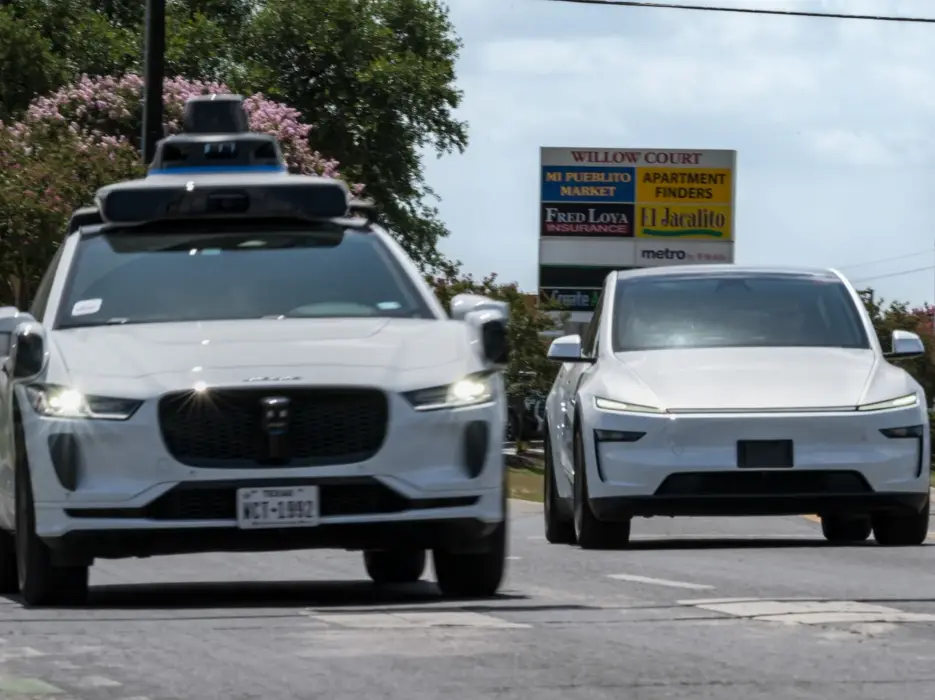
New data from Texas has offered one of the clearest pictures yet of the self-driving vehicle industry in the United States. The figures show that Waymo currently has a much larger fleet of registered autonomous vehicles than its competitors, including Tesla.
New data from Texas has offered one of the clearest pictures yet of the self-driving vehicle industry in the United States. The figures show that Waymo, Alphabet's autonomous driving company, currently has a much larger fleet of registered autonomous vehicles than its competitors, including Tesla.
According to data published through a new tracking platform created by the Texas Department of Motor Vehicles (DMV), Waymo has registered 577 autonomous vehicles in the state. That is significantly higher than other companies operating in the sector and highlights the company's growing presence in the commercial robotaxi market.
The data became available after a new Texas law came into effect on May 28, requiring autonomous vehicle companies to register their fleets and provide safety-related information to regulators.
What does the new Texas data reveal?
The Texas DMV's autonomous vehicle tracker provides the public with a detailed look at how many self-driving vehicles companies have registered in the state. According to the latest figures, Waymo leads the industry with 577 registered autonomous vehicles. It is followed by Avride with 317 vehicles and Nuro with 47. Tesla, which has been expanding its robotaxi operations in Texas, has registered 42 autonomous vehicles. Other operators include Volkswagen-owned MOIA, which has registered 12 autonomous electric microbuses. The new database is important because it offers one of the first transparent and publicly accessible views of the self-driving vehicle market in Texas, one of the most active regions for autonomous vehicle testing and deployment in the United States.
Waymo ahead of competitors?
Trending Stories
&imwidth=280&imheight=210&format=webp&quality=medium)
&im=FitAndFill=(700,400)&imwidth=280&imheight=210&format=webp&quality=medium)
&imwidth=280&imheight=210&format=webp&quality=medium)
&imwidth=280&imheight=210&format=webp&quality=medium)
&imwidth=280&imheight=210&format=webp&quality=medium)
&imwidth=280&imheight=210&format=webp&quality=medium)
&imwidth=280&imheight=210&format=webp&quality=medium)
&imwidth=280&imheight=210&format=webp&quality=medium)
&imwidth=280&imheight=210&format=webp&quality=medium)
&imwidth=280&imheight=210&format=webp&quality=medium)
&imwidth=280&imheight=210&format=webp&quality=medium)
&imwidth=280&imheight=210&format=webp&quality=medium)
&imwidth=280&imheight=210&format=webp&quality=medium)
&imwidth=280&imheight=210&format=webp&quality=medium)
&imwidth=280&imheight=210&format=webp&quality=medium)
&imwidth=280&imheight=210&format=webp&quality=medium)
&imwidth=280&imheight=210&format=webp&quality=medium)
&imwidth=280&imheight=210&format=webp&quality=medium)
&imwidth=280&imheight=210&format=webp&quality=medium)
&imwidth=280&imheight=210&format=webp&quality=medium)
&imwidth=280&imheight=210&format=webp&quality=medium)
&imwidth=280&imheight=210&format=webp&quality=medium)
&imwidth=280&imheight=210&format=webp&quality=medium)
&imwidth=280&imheight=210&format=webp&quality=medium)
&imwidth=280&imheight=210&format=webp&quality=medium)
&imwidth=280&imheight=210&format=webp&quality=medium)
&im=FitAndFill=(700,400)&imwidth=280&imheight=210&format=webp&quality=medium)
&imwidth=280&imheight=210&format=webp&quality=medium)
&imwidth=280&imheight=210&format=webp&quality=medium)
&imwidth=280&imheight=210&format=webp&quality=medium)
&imwidth=280&imheight=210&format=webp&quality=medium)
&imwidth=280&imheight=210&format=webp&quality=medium)
&imwidth=280&imheight=210&format=webp&quality=medium)
&imwidth=280&imheight=210&format=webp&quality=medium)
Waymo's lead reflects years of investment in autonomous driving technology and commercial deployment. The company launched its commercial robotaxi service in Austin in March 2025 and has since expanded operations into Dallas, Houston and San Antonio. Unlike some competitors that remain focused on testing, Waymo already operates commercial ride-hailing services in multiple cities.
Industry analysts note that fleet size alone does not tell the full story. Some registered vehicles may not be operating daily, while certain companies are still testing technology rather than serving paying customers. However, the numbers clearly show that Waymo currently has one of the largest autonomous vehicle deployments in Texas.
Where does Tesla stand in the robotaxi race?
Tesla remains one of the most closely watched companies in autonomous driving due to CEO Elon Musk's long-term vision for self-driving transportation. The company launched its robotaxi service in Austin and later expanded into Dallas and Houston. However, the latest registration data shows Tesla's fleet remains much smaller than Waymo's in Texas. With 42 registered autonomous vehicles, Tesla trails both Waymo and Avride. Analysts say Tesla's approach differs from many competitors because it relies heavily on camera-based systems and artificial intelligence rather than the combination of cameras, radar and lidar sensors commonly used by companies such as Waymo. Investors and industry observers continue to monitor whether Tesla can rapidly scale its autonomous operations in the coming years.
Self-driving trucks are also expanding
The Texas database also highlights growing activity in autonomous trucking. According to the registration data, Aurora has 91 self-driving trucks operating in Texas, making it one of the largest autonomous trucking fleets in the state. Other companies include Gatik AI with 64 vehicles, Kodiak AI with 33 trucks and Waabi with 13 autonomous trucks. The trucking sector is increasingly viewed as one of the most promising commercial applications of autonomous technology because it operates on predictable routes and can help address driver shortages in the logistics industry.
Why Texas has become a key autonomous vehicle market
Texas has emerged as one of the leading locations for autonomous vehicle development in the United States. The state offers a combination of supportive regulations, large urban areas, extensive road networks and favourable weather conditions for testing and deployment. Many technology companies see Texas as an ideal environment for launching commercial autonomous services before expanding to other regions. The introduction of mandatory registration requirements is also expected to improve transparency and provide regulators and the public with better information about the industry's growth. The latest figures show that Waymo currently holds a significant lead in Texas' autonomous vehicle market. While competitors such as Tesla, Avride and Nuro continue to expand their operations, Waymo's larger fleet gives it a strong position in the commercial robotaxi sector. At the same time, autonomous trucking companies are also increasing their presence, signalling that self-driving technology is moving beyond passenger transport into freight and logistics. As more companies deploy autonomous vehicles across Texas and other US states, the new registration data is likely to become an important measure of growth, competition and adoption across the industry.
