&imwidth=800&imheight=600&format=webp&quality=medium "The rise of biohacking: How DIY biology could transform healthcare")
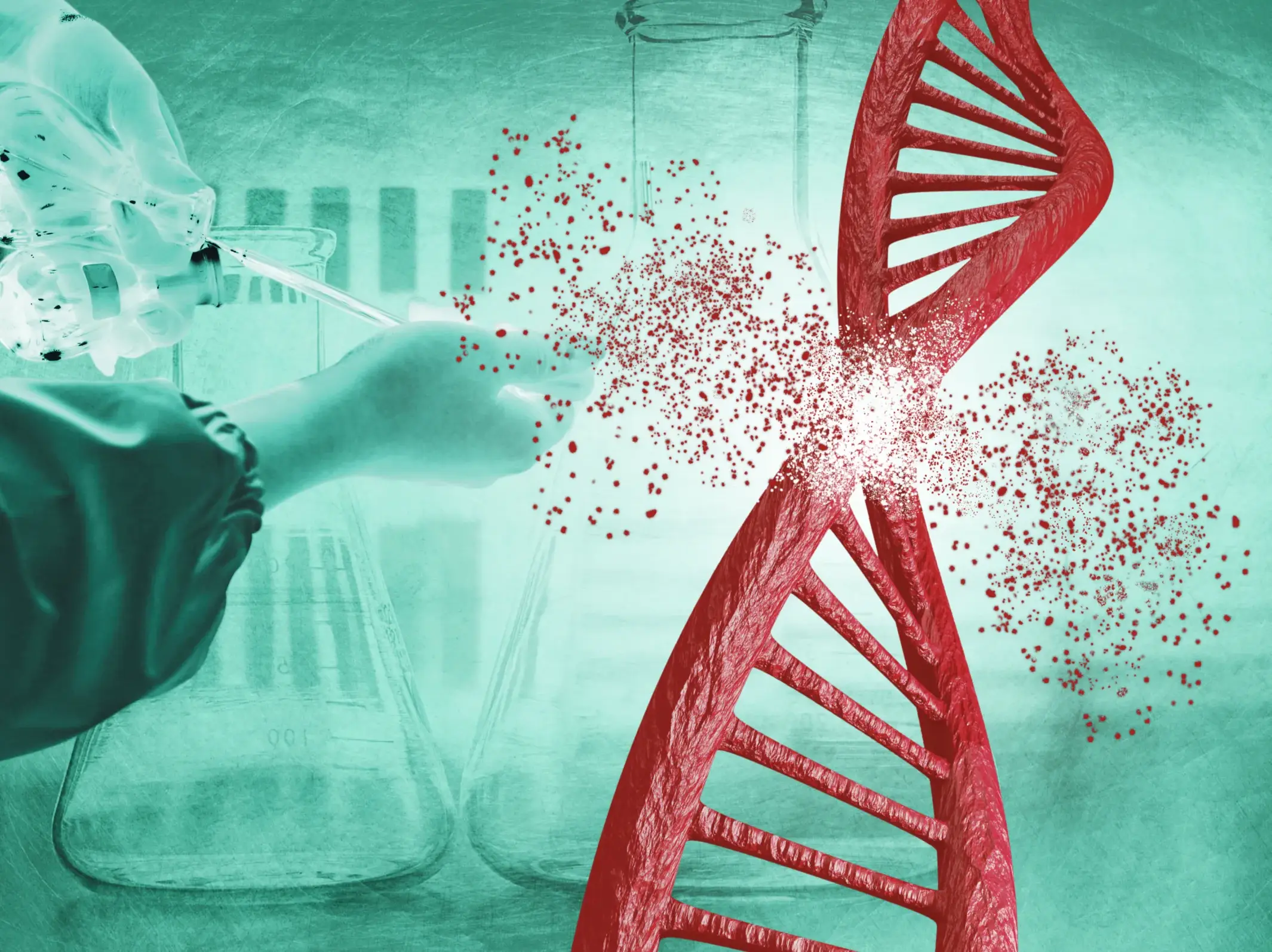
The biohacking revolution is transforming how we understand and optimise health. From experimenting with CRISPR gene editing to everyday consumers monitoring their biomarkers through wearable devices, do-it-yourself (DIY) biology represents a democratisation of biological research
This emerging movement encompasses everything from simple dietary modifications and sleep optimisation to complex genetic engineering techniques. According to market research by Grand View Research, the global biohacking market was valued at £15.4 billion in 2023 and is projected to expand at a compound annual growth rate of 19.42 per cent from 2024 to 2030.
But as biohackers push the boundaries of what's possible with human enhancement, regulatory bodies worldwide are grappling with how to balance innovation with safety, which is most important. The implications extend far beyond individual health choices, raising fundamental questions about human enhancement, genetic equity, and the future of healthcare itself.

Popular Biohacking Trends
The biohacking landscape encompasses a diverse range of practices, from relatively simple lifestyle modifications to sophisticated biotechnological interventions. That leads to the charge are nootropics cognitive enhancement supplements that have garnered widespread attention among Silicon Valley executives and students alike.
"Smart drugs" such as modafinil and racetams promise improved focus, memory, and mental clarity. Research published in the Journal of Cognitive Enhancement suggests that certain nootropics can indeed enhance cognitive performance, though long-term safety data remains limited. The global nootropics market is expected to reach £7.8 billion by 2025, according to Transparency Market Research.
Trending Stories
)
'Lot of things to learn from experienced players': Jayasuriya backs Rohit, Virat for 2027 ODI World Cup
&im=FitAndFill=(700,400))
Kareena Kapoor birthday special: Inside her net worth, best movies, luxurious lifestyle and love story with Saif Ali Khan
)
Trump says he'll build an 'AI Force' and appoint a czar, for 'high IQ' people only
)
Punjab man consumes poison outside DC office; Congress, BJP target AAP government
)
SNL UK takes aim at Ed Sheeran with AI Princess Diana sketch
)
Iran sets 7 conditions to end war with US: What are Tehran’s demands?
)
AI actress Tilly Norwood glitches mid-interview, switches from English to Chinese | Watch
)
Mahabharat actor Saurav Gurjar arrested in Hyderabad, sent to 14-day judicial custody in sexual exploitation case
)
Chancellor Friedrich Merz vows to stay on as exit polls signal major poll setback
)
J&K Assembly Session begins amid chaos: BJP, ruling alliance clash as statehood demand dominates
)
Taylor Swift has a 'proud wife' moment as Travis Kelce scores first touchdown of season: 'That’s my husband!'
)
'Were you here to sell chickpeas?': Wasim Akram criticises Babar Azam's captaincy
&im=FitAndFill=(700,400))
New OTT releases this week (September 21-27, 2026): Shaque: Trust No One, Hunkkaar, Don’t Be Shy- 5 new titles coming to Netflix, Prime Video and more
)
Noel Tata challenges Chandrasekaran’s reappointment as Tata Sons chairman. What happened at the board meeting
)
Italy moves to ban face veils in schools as Meloni pushes new integration measures
)
TIFF 2026: Theja Rio’s Angh wins Platform Prize, puts Nagaland story on global stage
)
Delhi: Flagged voters remain on the draft roll but face hearings
)
Saudi Arabia exits China-led mBridge digital currency platform amid Saudi-Houthi conflict
)
40-foot waves crash into cruise ship in dangerous stretch near Antarctica. Watch
)
Jailer 2: Vidya Balan joins Rajinikanth's upcoming film as Kantha | Watch
)
‘0% chance’: Nvidia CEO Jensen Huang dismisses AI extinction fears by 2030
)
Samsung raises Galaxy S26 prices by Rs 20,000: Here’s what each model now costs
)
Bessent meets China’s He Lifeng to prepare for Trump-Xi summit
)
CDU suffers historic defeat in eastern Germany as AfD surges, Merz vows to stay on
)
China now makes advanced memory chips without the machines it was banned from buying
)
Arvind Kejriwal, family members, Delhi CM Rekha Gupta get SIR notices
)
Trump-Xi summit: US Treasury Secretary holds meeting with Chinese Vice Premier
)
Fleming's aspirations as England Test coach include WTC, top ranking and Ashes
)
Saudi vs Houthis: Houthis claim missiles & drones used in attack on key Saudi sites
)
Delhi Air pollution: Strict crackdown on waste burning
)
Apple reportedly building AI server with M8 Ultra chips, may use Nvidia technology
&im=FitAndFill=(700,400))
What TSMC's 2nm technology means for Apple
)
Glitch in the matrix caught on camera: Woman vanishes after talking to reporter
)
Several petrol pumps, other businesses to refuse UPI payments above Rs 2,000 from Oct 16: Is it legal?
)
AI kill switch explained: Why shutting down a dangerous AI may not be as simple as pressing a button
)
Microsoft executive called AI training the ‘largest theft of labour in human history’
)
Pilot recreates Mona Lisa in sky over Oklahoma and Arkansas in four-hour flight: VIDEO
)
US ships in Indian Ocean ‘will be attacked’ if war resumes, warns Iran
)
Samay Raina-Mukesh Chhabra controversy explained: What happened over girlfriend joke on India's Got Latent?
)
Putin's United Russia party wins 355 seats in Duma election; 4 other parties cross threshold to enter parliament
)
S Jaishankar, former Army chief among high-profile names issued Delhi SIR notices
Wearable technology represents another major trend, with devices monitoring everything from heart rate variability to continuous glucose levels. Companies like Oura, Whoop, and Eight Sleep provide detailed biometric feedback, enabling users to optimise their sleep, exercise, and recovery patterns. The World Health Organisation acknowledges that such devices can promote health awareness, though they caution against over-reliance on unvalidated metrics.
More controversial are the DIY genetic testing and modification efforts. Biohacker Josiah Zayner gained international attention for live-streaming himself injecting CRISPR DNA into his arm, attempting to enhance muscle growth. Whilst such extreme examples remain rare, home genetic testing kits have made basic genetic analysis accessible to millions of consumers.
Cryotherapy, intermittent fasting, and red light therapy round out popular biohacking interventions. Each promises optimised health outcomes through precise biological manipulation, supported by varying degrees of scientific evidence.
Ethics and Legal Dilemmas
The democratisation of biological enhancement raises profound ethical questions that regulatory frameworks are struggling to address. The distinction between therapeutic intervention and human enhancement sits at the heart of these debates.
Germline editing - modifications that can be passed to future generations - represents perhaps the most contentious frontier. Whilst somatic cell editing affects only the individual, germline modifications could fundamentally alter human evolution. The infamous case of Chinese scientist He Jiankui, who created the world's first gene-edited babies in 2018, highlighted the urgent need for international oversight.
The European Medicines Agency and the US Food and Drug Administration have taken increasingly strict positions on DIY genetic modification. The FDA issued warning letters to companies selling DIY CRISPR kits, citing safety concerns and lack of regulatory approval.
Privacy concerns also loom large. Genetic testing companies have faced scrutiny over data sharing with law enforcement and insurance companies. The National Center for Biotechnology Information warns that genetic discrimination could become a significant issue as biohacking becomes more mainstream.
"The line between treatment and enhancement is becoming increasingly blurred," notes Dr Sarah Chen, a bioethicist at King's College London. "We need robust ethical frameworks that can keep pace with technological advancement whilst protecting individual autonomy."
Cultural and religious perspectives further complicate the landscape. Some view human enhancement as playing God, whilst others see it as fulfilling humanity's potential. These diverse viewpoints must be considered in developing comprehensive regulatory approaches.
Health and Regulatory Risks
While biohacking offers promising avenues for health optimisation, it also presents significant risks that regulatory bodies are working to address. The lack of clinical oversight in many biohacking practices creates potential for harm, particularly when individuals attempt complex interventions without medical supervision.
The FDA has documented numerous cases of adverse effects from unregulated nootropics and enhancement supplements. Heavy metal contamination, undisclosed pharmaceutical ingredients, and dangerous drug interactions have all been reported. The agency's 2024 consumer advisory highlighted 47 supplement-related hospitalisations linked to unregulated cognitive enhancers.
DIY genetic modification poses even greater risks. Without proper sterile technique, quality control, or medical oversight, attempts at genetic enhancement can result in infection, immune reactions, or unintended genetic changes. The National Institutes of Health have called for increased education about these risks amongst the biohacking community.
Regulatory responses vary significantly across jurisdictions. The European Union's Medical Device Regulation requires rigorous testing for health-monitoring devices, whilst the US takes a more permissive approach to wellness technologies. The World Health Organisation is developing international guidelines for human genetic enhancement, though enforcement remains challenging.
The UK's Human Fertilisation and Embryology Authority has taken a cautious but research-friendly stance, allowing limited research into genetic modification whilst maintaining strict therapeutic boundaries. In contrast, countries like Germany and France have banned most forms of genetic enhancement research.
Industry self-regulation is emerging as a complementary approach. The Biohacker Safety Coalition, formed in 2023, promotes safety standards and ethical practices within the community. However, critics argue that voluntary guidelines are insufficient given the potential risks involved.
Future regulation will likely focus on risk-based approaches, distinguishing between low-risk interventions like dietary supplements and high-risk practices like genetic modification. The challenge lies in creating frameworks that protect public safety without stifling beneficial innovation.
As biohacking continues to evolve, the balance between innovation and regulation remains delicate. Success will require ongoing collaboration between researchers, regulators, and the biohacking community to ensure that the promise of enhanced human health can be realised safely and equitably.