

&imwidth=800&imheight=600&format=webp&quality=medium "The big data centre debate: Are they optional?")
On a random morning, a farmer in Rajasthan receives a government subsidy directly into his Jan Dhan account. A nurse in Patna verifies her identity at a hospital counter with a face scan. A student in Lucknow opens ChatGPT to prepare for a competitive exam. None of them thinks about what makes it possible. That is what infrastructure does: it disappears into the background of daily life until something forces it back into view.
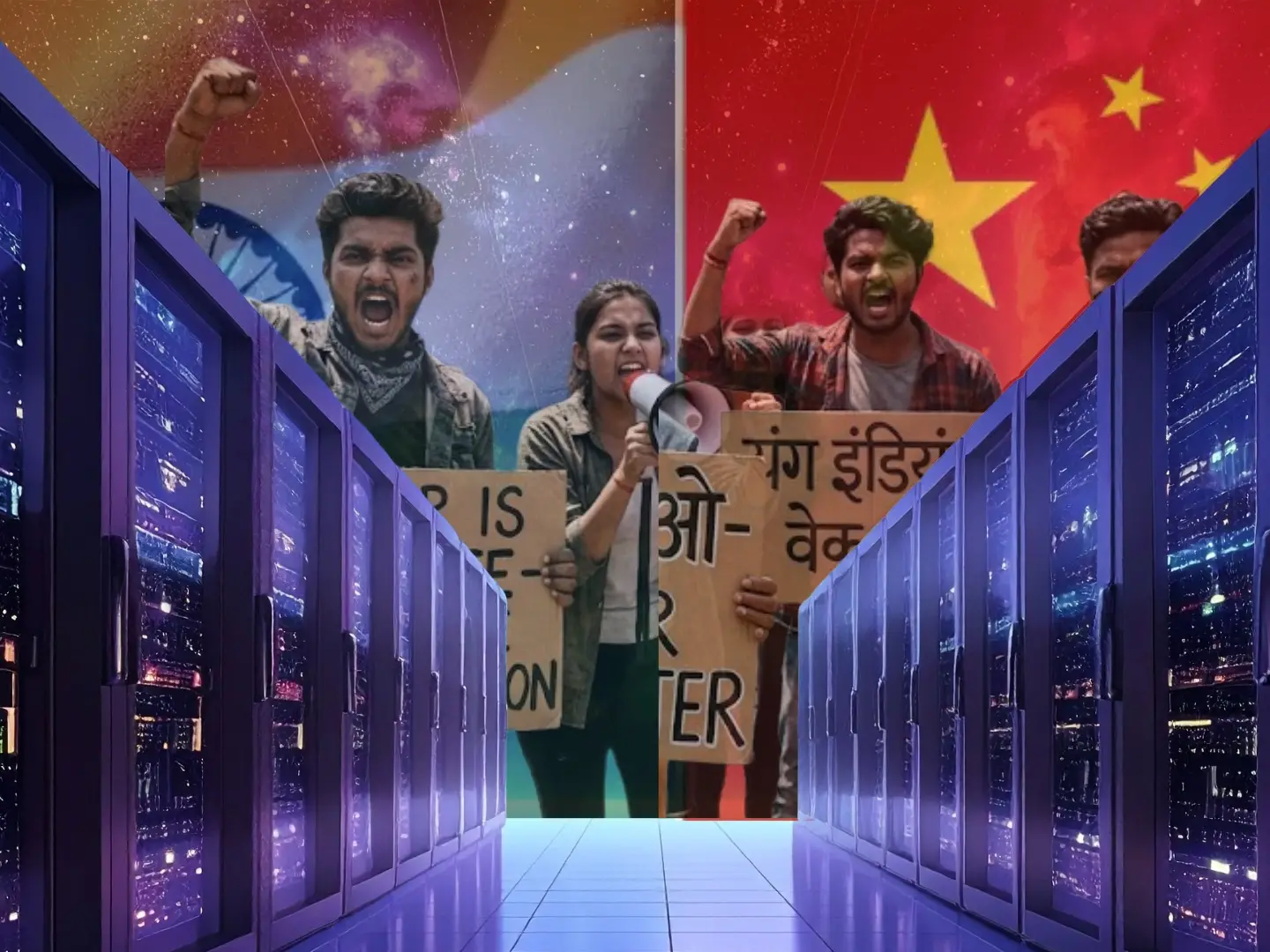
Data centres are being forced back into view. Around the world, the facilities that store data, run applications, and power artificial intelligence are under fire for the resources they consume – water, electricity, and land – in quantities that strain the cities built around them. In India, that conversation is arriving alongside one of the largest waves of digital infrastructure investment the country has ever seen. Before joining it, India needs to honestly answer one question that most of that debate skips: can it actually stop building these facilities?
The answer, examined carefully, seems no. But the reason is more specific, and more important, than most people realise.
The invisible engine
According to the Press Information Bureau, UPI processed 18.39 billion transactions in June 2025 alone, worth over Rs 24.03 lakh crore, serving 491 million individuals, 65 million merchants, and 675 banks on a single platform. The National Payments Corporation of India reports that UPI accounts for 85 per cent of all digital transactions in India and nearly 50 per cent of all real-time digital payments globally.
But here is what the debate rarely surfaces: UPI is not simply running on conventional server infrastructure. Artificial intelligence is already inside it. Earlier, NPCI's Chief Risk Officer Viswanath Krishnamurthy disclosed that the organisation is deploying AI-based analytical models to assign real-time risk scores to UPI transactions, a response to fraud on the platform climbing 85 per cent in FY 2023-24, with losses reaching Rs 1,087 crore. Speaking at Mumbai Tech Week 2026, NPCI Managing Director and CEO Dilip Asbe earlier highlighted that AI will be central to taking UPI from 750 million toward one billion daily transactions, through fraud detection, credit access, and multilingual voice onboarding for the next wave of users, as reported by Technology website TechCrunch.
Trending Stories
&imwidth=180&imheight=135&format=webp&quality=medium)
Blasts heard in Sanaa as Saudi-led coalition warns civilians to evacuate; Houthis vow retaliation
&imwidth=180&imheight=135&format=webp&quality=medium)
China's counter-surveillance industry booms amid heightened espionage fears | Gravitas
&imwidth=180&imheight=135&format=webp&quality=medium)
Saudi Arabia strikes Yemen oil sites as Houthi missiles target Riyadh; 'limited fire' breaks out at Aramco
&im=FitAndFill=(700,400)&imwidth=180&imheight=135&format=webp&quality=medium)
Navratri 2026: 9 days, 9 forms of Goddess Durga and 9 colours- Check the complete list
&imwidth=180&imheight=135&format=webp&quality=medium)
Trump accuses Houthis of driving up oil prices before US midterms, warns of consequences
&imwidth=180&imheight=135&format=webp&quality=medium)
New Delhi rejects Beijing’s claims and remarks on Ladakh location naming exercise
&imwidth=180&imheight=135&format=webp&quality=medium)
CMs Vijay-Naidu meet in Vijayawada, discuss water sharing, river-linking
&imwidth=180&imheight=135&format=webp&quality=medium)
US Midterms 2026: In Alaska, cost-of-living anxiety meets strangest ballot in high-stakes Senate race
&imwidth=180&imheight=135&format=webp&quality=medium)
OpenAI employee arrested by FBI after allegedly hiding recording device in office
&imwidth=180&imheight=135&format=webp&quality=medium)
Man dies at Six Flags Georgia: Past accidents at Six Flags amusement parks across US
&imwidth=180&imheight=135&format=webp&quality=medium)
1,500 drones illuminate Mumbai sky as Cordelia Cruises unveils second ship, Cordelia Sky
&imwidth=180&imheight=135&format=webp&quality=medium)
Pope Leo XIV diagnosed with lung cancer after surgery, Vatican says 'successful surgery and recovering'
&imwidth=180&imheight=135&format=webp&quality=medium)
Pakistan to chair UN-backed global Borrowers’ Platform as its own debt burden mounts, triggers sarcastic reactions on social media
&imwidth=180&imheight=135&format=webp&quality=medium)
Suicidal man survives jump from 11th floor in Japan, could now be tried for murder
&imwidth=180&imheight=135&format=webp&quality=medium)
Robot gropes girl, makes thrusting movements in bizarre crime in Germany
&imwidth=180&imheight=135&format=webp&quality=medium)
Trump says Republicans face equally tough fight in House and Senate midterms
&imwidth=180&imheight=135&format=webp&quality=medium)
France accuses Musk of ‘online harassment’ of European leaders, warns of poll interference
&imwidth=180&imheight=135&format=webp&quality=medium)
MI5 chief warns Russia is UK’s ‘aggressor number one’ as Iran and AI threats grow
&imwidth=180&imheight=135&format=webp&quality=medium)
'Turn approver, resign, we'll forgive you': Rahul Gandhi claims receiving messages from CEC Gyanesh Kumar
&imwidth=180&imheight=135&format=webp&quality=medium)
Inside the alleged drug-money trail behind a Mumbai couple’s properties
&imwidth=180&imheight=135&format=webp&quality=medium)
‘My president, I mean my husband’: Trump's new press secretary Katie Zacharia's first briefing goes off the rails in 14 minutes
&im=FitAndFill=(700,400)&imwidth=180&imheight=135&format=webp&quality=medium)
IMF World Economic Outlook: 10 economies to watch for growth in FY27 and FY28 - Where does India stand?
&imwidth=180&imheight=135&format=webp&quality=medium)
Marco Rubio to visit India next week, focus on energy cooperation and strategic ties
&imwidth=180&imheight=135&format=webp&quality=medium)
L Murugan resigns as Union Minister, expresses wish to return to grassroots
&imwidth=180&imheight=135&format=webp&quality=medium)
'Ouch!!! That must hurt': Kangana Ranaut hails Kamal Haasan's sharp reply to Elon Musk over Starlink row
&imwidth=180&imheight=135&format=webp&quality=medium)
Sidhu Moose Wala’s younger brother wins hearts by recreating late singer’s signature move at Toronto Hologram Show
&imwidth=180&imheight=135&format=webp&quality=medium)
Girl 'dead' for 8 hours wakes up at her own funeral, dad insists she wasn't breathing
&imwidth=180&imheight=135&format=webp&quality=medium)
UK school ditches technology, shifts from screen to pen and paper for learning
&im=FitAndFill=(700,400)&imwidth=180&imheight=135&format=webp&quality=medium)
New OTT releases this week (October 12-18, 2026): Sacrifice, Koffee with Karan S9, Roadies Rebirth- 6 titles coming on Netflix, JioHotstar and more
&imwidth=180&imheight=135&format=webp&quality=medium)
Rahul Gandhi speaks on Anti-CeC protests: Gathering over tea after Supreme Court rally
&imwidth=180&imheight=135&format=webp&quality=medium)
Anupam Kher joins Ranbir Kapoor's Ramayana as Jatayu, new poster unveiled
&imwidth=180&imheight=135&format=webp&quality=medium)
Measles kills again: 6 dead in Pennsylvania as America faces its worst outbreak in decades | Gravitas
&imwidth=180&imheight=135&format=webp&quality=medium)
Ken Paxton's Dubai night out with two US fugitives sparks political storm as Texas Senate race tightens
&imwidth=180&imheight=135&format=webp&quality=medium)
Mundhe: Fight against unsafe food goes on
&imwidth=180&imheight=135&format=webp&quality=medium)
Cornell University suspends fraternity parties over 2024 gang rape allegations
Aadhaar carries the same story. The AI and machine learning-based face authentication system developed entirely in-house by UIDAI has recorded over 130.5 crore cumulative transactions since its introduction in October 2022, with close to 102 crore of those occurring in FY 2024-25 alone, a growth rate that MeitY described as a 21.6 percent month-on-month jump in March 2025. The system runs welfare delivery across PM-JAY, PM Kisan, PM Awas, PM Ujjwala, and PM Internship, flagship government schemes reaching hundreds of millions of Indians. Every face scan on every one of those transactions runs an AI model on a server inside a data centre.
The boundary between conventional digital infrastructure and AI infrastructure does not exist in India's public systems. AI is already built into them.
Also read | OpenAI discussed giving US government a 5% stake: What it could mean for the future of AI
The 100 million question
In February 2026, OpenAI CEO Sam Altman disclosed in an article published in the Times of India, ahead of the India AI Impact Summit in New Delhi, that India has 100 million weekly active ChatGPT users, making it the platform's second-largest market globally after the United States, a position it has held for several months. India also has the largest student population using ChatGPT of any country on earth. Google's Gemini, meanwhile, is being offered free for 18 months to over 500 million Jio subscribers, with India ranking highest globally in Gemini usage for learning, according to Google.
This is the dimension of the data centre debate that goes largely unacknowledged. The same people raising concerns about AI infrastructure expansion are, in enormous numbers, among the heaviest users of the AI products those facilities exist to power. Every ChatGPT query, every Gemini response, every AI-assisted search runs through a data centre drawing power from the grid and water from the city around it. The infrastructure being questioned outside city limits is being quietly used, at scale, every day, on the phones in people's pockets.
This is not an argument against scrutiny. It is an argument for honesty about what, exactly, is being scrutinised.
Not infrastructure, but sovereignty
The case for domestic data centre capacity is not only an operational one. It is a sovereignty argument, and India has been building the legal architecture to support it for years.
The Digital Personal Data Protection Act, enacted on August 11, 2023, and operationalised through DPDP Rules notified by MeitY on November 13, 2025, creates a rights-based, consent-driven framework governing how companies collect, store, and process the personal data of Indian citizens. The Reserve Bank of India has separately mandated that all payment system data be stored exclusively on Indian soil. Both frameworks only carry force if the physical infrastructure to underpin them exists within Indian jurisdiction.
According to JLL's India Data Centre Market Report for the first half of 2025, India generates approximately 20 percent of global data while hosting only around three percent of global data centre capacity. That gap is a strategic exposure that no legislation can close without the infrastructure to match it. DPDPA is of limited consequence if Indian citizen data resides on servers in Singapore or Frankfurt, beyond the reach of Indian courts and regulators.
"When you are building a payments platform or a banking application in India, data localisation shapes architectural decisions from day one, where data is stored, how it moves between services, and how you handle latency-sensitive transactions in real time," Rama Krishna Sreepada, Co-Founder and Chief Architect at [x]Cube Labs, told WION. "The gap between the volume of data India generates and the infrastructure available to process it locally is where the real risk lives. When infrastructure is stretched, response times degrade, redundancy shrinks, and recovery windows get longer. For an end user, that is a failed transaction at a payment terminal or a banking app unavailable when it matters most."
Also read | Beyond AI models: Anthropic is exploring a custom AI chip with Samsung. Here's why it matters
Why the world is betting on India
The scale of committed investment makes the direction of travel unmistakable. Microsoft has pledged $17.5 billion toward data centre infrastructure in India, announced in December 2025. Google committed $6 billion to a facility in Andhra Pradesh in July 2025. The Adani Group announced $100 billion in AI-ready capacity by 2035, in partnership with both companies. According to Colliers, India's live data centre capacity will triple from 1,263 MW in 2024 to 4,500 MW by 2030. Deloitte projects total investment in the sector reaching up to $200 billion by 2030. The four largest global hyperscalers collectively planned up to $725 billion in capital expenditure for 2026, with approximately 75 percent directed toward AI infrastructure, according to company earnings disclosures and IEEE Communications Society analysis.
This capital is not arriving out of goodwill. It is arriving because India's billion-scale digital population, its accelerating AI adoption, its data localisation requirements, and its improving infrastructure make it one of the most strategically consequential data centre markets in the world for the next decade.
"Rack power densities are increasing from around 15 kW to as much as 140 kW, while most new developments are being planned as Tier III and Tier IV facilities requiring greater power redundancy," said Gautam Saraf, Executive Managing Director, Mumbai and New Business at Cushman & Wakefield, which advises hyperscalers, operators, and investors on data centre strategy across India. "Speed to power is now a critical determinant of project viability, with grid connection timelines increasingly shaping investment decisions."
Watch | AI job shock? California study tracks rising layoffs since ChatGPT launch
The answer
So the question of whether India can stop building data centres is not really about data centres at all. It is a question about whether India can afford to switch off the AI system authenticating 130 crore Aadhaar face scans annually. Whether it can remove the fraud detection layer from hundreds of millions of daily UPI transactions. Whether it can tell 100 million weekly ChatGPT users, the largest student AI user base on the planet, that the infrastructure powering their tools will not be built here.
None of those are realistic options. "Every banking app, every UPI transaction, every digital lending decision runs on physical infrastructure somewhere, and the stability of those services is directly tied to the health of that infrastructure," Sreepada told WION. "Closing the data centre capacity gap is the next critical step in making that progress genuinely resilient at scale” he added.
India must build this infrastructure. The only question that remains, and it is the more consequential one, is on whose terms, at what cost to its water systems and power grid, and with what accountability framework in place.
That is exactly where Part 2 of this series begins.
The infrastructure is non-negotiable. What happens inside it, around it, and because of it, that is where the real debate begins.
