Tesla builds first Cybertruck with its own refined lithium: Elon Musk's $1 billion Texas bet pays off

&imwidth=600&imheight=450&format=webp&quality=medium "Tesla builds first Cybertruck with its own refined lithium: Elon Musk's $1 billion Texas bet pays off")
Elon Musk's $1 billion lithium bet reaches Cybertruck production line
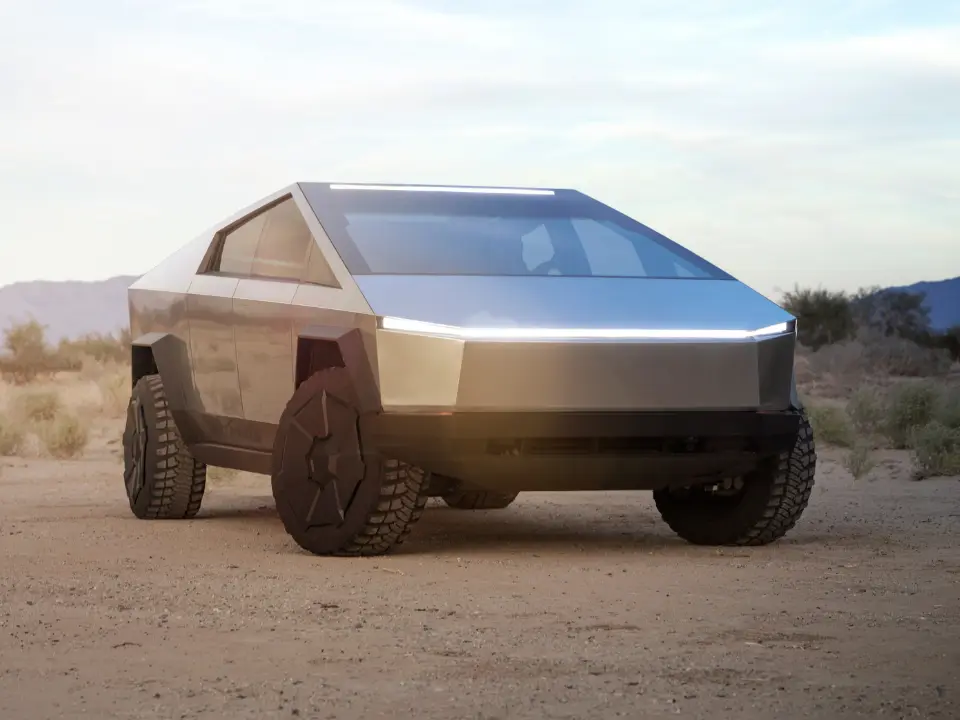
Tesla has built its first Cybertruck using 4680 battery cells containing lithium refined at its Texas refinery. The milestone follows 100,000 cumulative Cybertruck units and comes as new orders face estimated deliveries in April 2027.
Tesla has taken a major step towards controlling its electric vehicle battery supply chain, building its first Cybertruck with 4680 battery cells containing lithium refined entirely at its own Texas facility.
The vehicle rolled off the production line at Gigafactory Texas on September 22, 2026, according to Tesla's official Cybertruck account. The development links the company's lithium refining operations on the Texas Gulf Coast directly to its vehicle manufacturing, reducing reliance on externally refined battery materials. The milestone comes as Tesla's Cybertruck production passes 100,000 units and the company works to increase output amid continued customer demand.
Tesla's first Cybertruck uses lithium refined in Texas
Tesla confirmed the milestone in a post describing the vehicle as the "First Cybertruck built with 4680 cells containing lithium from our Gulf Coast lithium refinery."
The refinery, located on a site spanning more than 1,200 acres in Robstown, near Corpus Christi, represents an investment of more than $1 billion. Operations began in January 2026, with the facility reaching full capacity in July. It processes lithium into battery-grade lithium hydroxide, which can then be supplied to Tesla's battery cell manufacturing operations at Gigafactory Texas. The significance is that Tesla is bringing another stage of battery production under its own control, from refining lithium to manufacturing cells and assembling vehicles.
Tesla claims new lithium process cuts emissions by 30%
Trending Stories
)
)
)
)
)
)
)
)
)
)
)
&im=FitAndFill=(700,400))
)
)
)
)
)
)
)
)
)
)
)
)
)
)
)
)
)
)
)
)
)
)
)
)
)
)
The Texas refinery uses what Tesla describes as an acid-free alkaline leaching process, replacing the sulfuric acid commonly used in conventional lithium refining.
According to the company, the method reduces carbon emissions by approximately 30% and reagent costs by 60%. Tesla also says the process produces a non-hazardous mineral byproduct containing sand, limestone and anhydrite, which can be used in construction rather than treated as industrial waste. The company plans to expand the facility's feedstocks in future, potentially including recycled batteries and manufacturing scrap. These environmental and cost figures are company-reported claims and have not been independently established in the supplied information.
Cybertruck production crosses 100,000 as deliveries stretch into 2027
The lithium milestone arrives during a busy period for Tesla's Austin factory. Cybertruck production surpassed 100,000 cumulative units in August 2026, while the plant's stated annual capacity stands at more than 125,000 vehicles. Tesla has also begun contacting some reservation holders whose orders date back to February 2026, with certain customers receiving earlier delivery communications. However, new buyers still face a long wait. As of September 16, Tesla's online configurator estimated April 2027 delivery for the $59,999 dual-motor all-wheel-drive Cybertruck. That suggests finished-vehicle logistics and delivery scheduling remain significant challenges, even as manufacturing and battery supply operations expand.
What Tesla's lithium strategy means for electric vehicles
Lithium prices have historically experienced sharp swings, creating uncertainty for battery manufacturers. By refining lithium in-house, Tesla aims to reduce its exposure to commodity price changes and international supply disruptions. The company is also building local workforce partnerships with Robstown Independent School District, Del Mar Community College and Texas A&M University-Corpus Christi. The first Cybertruck using its own refined lithium does not mean Tesla has eliminated all external battery supply dependencies. It does, however, demonstrate that the company has begun integrating another important stage of battery production into its Texas operations. The next question is whether the approach can deliver consistent cost savings and support higher production volumes as Tesla expands its electric vehicle and battery ambitions.
