OpenAI partners with Amazon AWS to expand its AI services

&imwidth=600&imheight=450&format=webp&quality=medium "OpenAI partners with Amazon AWS to expand its AI services")
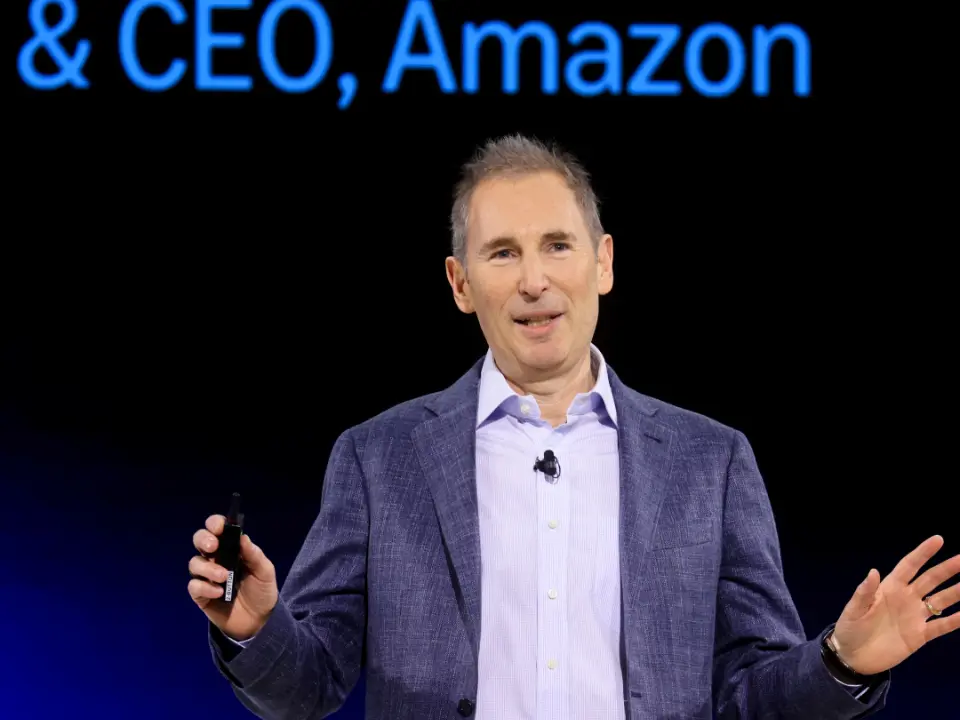
OpenAI models are now accessible on AWS for the first time Photograph: (X)
OpenAI has partnered with Amazon Web Services (AWS) to offer its new open-weight AI models on the cloud. This move expands OpenAI’s reach beyond Microsoft Azure and fuels competition in cloud AI services.
OpenAI has partnered with Amazon Web Services (AWS) to offer its latest open-weight AI models on the cloud platform. This is the first time AWS will provide OpenAI models, a move that signals growing competition in the cloud-based AI services market.
The two new models, named gpt-oss-120b and gpt-oss-20b, are open-weight reasoning models released by OpenAI under the Apache 2.0 licence. They are also available to download freely via Hugging Face, an open-source AI model hub.
But with AWS now offering them through Amazon Bedrock and SageMaker AI, OpenAI is expanding its presence beyond Microsoft Azure its long-time partner.
AWS joins OpenAI
According to TechCrunch, OpenAI product lead Dmitry Pimenov confirmed that the partnership with AWS was made with OpenAI’s full knowledge and approval. AWS customers can now access these models alongside other popular options like Claude, Meta’s Llama, and Mistral.
Until now, AWS was best known for hosting Anthropic’s Claude, one of OpenAI’s main competitors. AWS provides AI services through platforms like:
Trending Stories
&im=FitAndFill=(700,400))
)
)
)
)
&im=FitAndFill=(700,400))
)
)
)
)
)
)
)
)
)
)
)
&im=FitAndFill=(700,400))
)
)
)
)
)
&im=FitAndFill=(700,400))
)
)
)
)
)
&im=FitAndFill=(700,400))
)
)
)
Amazon Bedrock, which lets businesses use and build AI apps easily. SageMaker, which allows developers to train or fine-tune models for their own tools and services.
With this new partnership, Amazon finally joins the ranks of companies hosting OpenAI models, something previously exclusive to Microsoft Azure.
Microsoft, Oracle and the cloud rivalry
OpenAI's new move also appears to be a strategic response to its strained relationship with Microsoft. Though Azure remains OpenAI’s main cloud partner. Meanwhile, Microsoft has already integrated these new models into Windows devices, strengthening its own ecosystem. At the same time, Oracle recently signed a massive $30 billion agreement with OpenAI to provide data centre services. This deal is now said to be larger than what Oracle earns from all other cloud customers combined, according to reports from Bloomberg and TechCrunch.
This leaves Amazon playing catch-up, especially after recent investor concerns. During Amazon’s latest earnings call, analysts questioned CEO Andy Jassy about falling behind Microsoft and Google in the generative AI space.
In response, Jassy defended AWS, saying that it still leads in cloud size. “I think the second player is about 65 per cent of the size of the AWS,” he said, without directly naming Microsoft.
Why this partnership matters
This new partnership could benefit OpenAI by widening access to its models for AWS enterprise customers. For Amazon, it offers a way to keep pace with rivals and attract users who want to build generative AI apps using OpenAI’s open-weight models. It also gives OpenAI the chance to position itself against Meta, whose CEO Mark Zuckerberg, recently admitted the company may not continue open-sourcing all its future AI models. In contrast, OpenAI is open-sourcing powerful models and working with more cloud platforms, reinforcing its image as a developer-first AI firm.
As competition between cloud giants grows, this new alliance between AWS and OpenAI could reshape how businesses access and build with AI, marking a shift away from exclusivity towards a broader, more flexible future.
