

&imwidth=800&imheight=600&format=webp&quality=medium "Nvidia CEO says AI boom is just starting, predicts multi-trillion dollar growth")
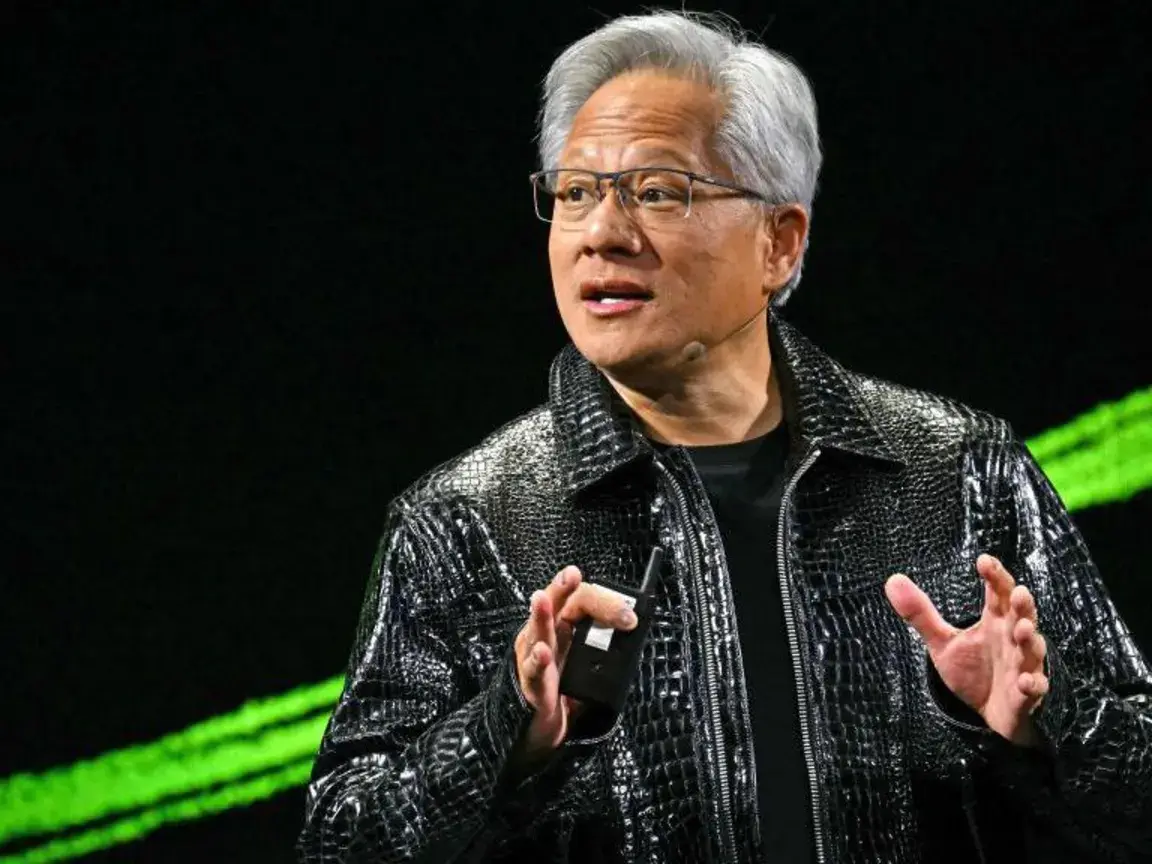
Nvidia CEO Jensen Huang has pushed back against fears that the artificial intelligence (AI) chip boom is losing momentum. Speaking after the company’s second-quarter results, Huang said AI spending will expand into a multi-trillion-dollar market within the next five years.
Despite this upbeat message, Nvidia shares slipped 1.56 per cent in premarket trading on Thursday as the company’s third-quarter forecast fell short of some investor expectations. The cautious outlook excluded any potential revenue from China, highlighting the ongoing uncertainty caused by trade restrictions between Washington and Beijing.
‘A new industrial revolution has started’
He told investors that AI is creating opportunities on a historic scale. “A new industrial revolution has started. The AI race is on,” he said, projecting $3 trillion to $4 trillion in AI infrastructure spending by the end of the decade.
He explained that data centres alone are expected to spend around $600 billion in 2025, with major buyers including Microsoft and Amazon. For a single $60 billion data centre project, Huang said Nvidia could supply as much as $35 billion worth of chips and systems.
“The buzz is: everything sold out,” Huang said, pointing to strong demand for its high-end Blackwell chips and even older Hopper processors, which remain in high demand.
Trending Stories
&imwidth=180&imheight=135&format=webp&quality=medium)
Portugal Federation confirms Cristiano Ronaldo’s return to national team despite suspension
&imwidth=180&imheight=135&format=webp&quality=medium)
'Just coincidence': Police mistakes protester as AISA chief Neha Bora, arrests her from site
&imwidth=180&imheight=135&format=webp&quality=medium)
Houthis claim Riyadh airport attacks, Aramco strikes; issue fresh warning to airlines, travellers and workers
&imwidth=180&imheight=135&format=webp&quality=medium)
Delhi protests: 'Court should not be dragged into political activity', says CJI Surya Kant
&imwidth=180&imheight=135&format=webp&quality=medium)
IND vs WI, 3rd T20I: Abhishek Sharma smashes 18-ball fifty, sets record for fastest to 2,000 T20I runs
&imwidth=180&imheight=135&format=webp&quality=medium)
Meta's Muse AI could be a security nightmare for India's billion-plus users
&im=FitAndFill=(700,400)&imwidth=180&imheight=135&format=webp&quality=medium)
New OTT releases this week (October 12-18, 2026): Sacrifice, Koffee with Karan S9, Roadies Rebirth- 6 titles coming on Netflix, JioHotstar and more
&imwidth=180&imheight=135&format=webp&quality=medium)
'Turn approver, resign, we'll forgive you': Rahul Gandhi claims receiving messages from CEC Gyanesh Kumar
&imwidth=180&imheight=135&format=webp&quality=medium)
1,500 drones illuminate Mumbai sky as Cordelia Cruises unveils second ship, Cordelia Sky
&imwidth=180&imheight=135&format=webp&quality=medium)
Nana Patekar's cause of death confirmed; here's what his postmortem report says
&imwidth=180&imheight=135&format=webp&quality=medium)
Wasim Jaffer blames Ajit Agarkar-led selection panel for Virat Kohli’s Test retirement
&imwidth=180&imheight=135&format=webp&quality=medium)
Iran: US accepted some conditions, Clarity needed on others
&imwidth=180&imheight=135&format=webp&quality=medium)
A watchdog rated 'ChatGPT for Teens' an unacceptable risk and says keep under-18s off it
&imwidth=180&imheight=135&format=webp&quality=medium)
Anthropic's AI invented a murder witness and sent the fake tip to Philadelphia police
&imwidth=180&imheight=135&format=webp&quality=medium)
'Say no to Muse': Meta has no control over its own moderation AI while it forces a security nightmare on everyone
&im=FitAndFill=(700,400)&imwidth=180&imheight=135&format=webp&quality=medium)
Is sending robots to Mars easier than sending humans?
&imwidth=180&imheight=135&format=webp&quality=medium)
Top AI models flunked a test of inventing new AI research, so much for self-improving AI
&imwidth=180&imheight=135&format=webp&quality=medium)
McSweeney reveals how studying Virat Kohli’s YouTube clips helped Australia A conquer India
&imwidth=180&imheight=135&format=webp&quality=medium)
Maharashtra appoints FDA commissioner Tukaram Mundhe as secretary of committee for MPSC overhaul amid stir
&imwidth=180&imheight=135&format=webp&quality=medium)
Delhi wakes up to heavy rain, thunderstorms; yellow alert in place; temperature drops
&imwidth=180&imheight=135&format=webp&quality=medium)
UK school ditches technology, shifts from screen to pen and paper for learning
&imwidth=180&imheight=135&format=webp&quality=medium)
China imposes first-ever sanctions on ministers from Taiwan allies: What this means
&imwidth=180&imheight=135&format=webp&quality=medium)
Delhi protest: CJI Surya Kant declines to meet India Bloc leaders
&imwidth=180&imheight=135&format=webp&quality=medium)
Other Mommy leads North American box Office as Verity, Resident Evil round out top four
&imwidth=180&imheight=135&format=webp&quality=medium)
One Indian killed in Riyadh airport attack; 11 others injured : MEA
&imwidth=180&imheight=135&format=webp&quality=medium)
Microsoft's Nadella says treat every AI model as already hacked, and build an 'emergency brake'
&imwidth=180&imheight=135&format=webp&quality=medium)
iPhone Duo price index: Tracking Apple’s latest pricing trends
&im=FitAndFill=(700,400)&imwidth=180&imheight=135&format=webp&quality=medium)
Navratri 2026: 9 days, 9 forms of Goddess Durga and 9 colours- Check the complete list
&imwidth=180&imheight=135&format=webp&quality=medium)
Sidhu Moose Wala’s younger brother wins hearts by recreating late singer’s signature move at Toronto Hologram Show
&imwidth=180&imheight=135&format=webp&quality=medium)
Saif Ali Khan is finally on Instagram! Here's what he shared in his first post
&imwidth=180&imheight=135&format=webp&quality=medium)
Telangana man allegedly recruited into Russian military dies near Ukraine border
&imwidth=180&imheight=135&format=webp&quality=medium)
Telangana ATM heist: Thieves in nighties arrive in ambulance, break into SBI ATM in Kamareddy - VIDEO
&imwidth=180&imheight=135&format=webp&quality=medium)
'Ouch!!! That must hurt': Kangana Ranaut hails Kamal Haasan's sharp reply to Elon Musk over Starlink row
&imwidth=180&imheight=135&format=webp&quality=medium)
CJI Surya Kant declines INDIA bloc leaders’ request for meeting ahead of march to SC, asks them to file petition
Balancing investor caution and AI optimism
While Huang’s forecast highlights Nvidia’s confidence, some investors remain wary. AI-related stocks have shown signs of slowing momentum, with OpenAI CEO Sam Altman recently warning that investors may be “overexcited” about AI.
Matt Orton, head of advisory solutions at Raymond James, said Nvidia still has durability in its growth story: “The mega caps are the ones propelling a lot of the capital spending that Nvidia is benefiting from. You’re not seeing any slowdown in Nvidia’s results.”
Portfolio manager Thomas Martin at Globalt Investments echoed this, noting that Nvidia’s order books for 2026 Blackwell chips are already full, showing how early the AI expansion still is.
China's question remains unanswered
Nvidia has not shipped its H20 reduced-capability chips to China in the latest quarter, even though a non-Chinese customer purchased $650 million worth of the same product. The lack of clarity over U.S.-China export rules continues to cast uncertainty on Nvidia’s growth potential in one of the world’s largest tech markets.
The company’s cautious Q3 revenue forecast has therefore raised some concerns, though analysts note that Nvidia’s dominance in AI chips gives it significant room to expand outside China.Nvidia has outperformed much of the broader market this year, even surpassing Apple in quarterly net income. With AI infrastructure spending accelerating, Huang believes the company is still in the “early stages” of a long-term cycle.
