How AI agents will shop and pay online: Google launches Universal Commerce Protocol to simplify AI-driven shopping

&imwidth=600&imheight=450&format=webp&quality=medium "How AI agents will shop and pay online: Google launches Universal Commerce Protocol to simplify AI-driven shopping")
Google introduces Universal Commerce Protocol to simplify AI-driven shopping Photograph: (AI)
Google has unveiled Universal Commerce Protocol (UCP), a new open standard for AI-powered shopping, developed with Walmart, Shopify, Etsy and others. UCP lets AI agents handle the full buying journey from product discovery to payment and support across platforms.
Google has announced a new open standard called the Universal Commerce Protocol (UCP) to support AI agent-based shopping. The announcement was made on Sunday at the National Retail Federation (NRF) conference. This new protocol is designed to make online shopping easier by allowing AI agents to work across the entire buying journey, from product discovery to payment and post-purchase support.
The protocol has been developed in partnership with major retailers and platforms such as Shopify, Etsy, Wayfair, Target and Walmart. Google said UCP aims to reduce complexity by using a single standard, instead of requiring separate integrations for different shopping agents and services.
Designed to do what?
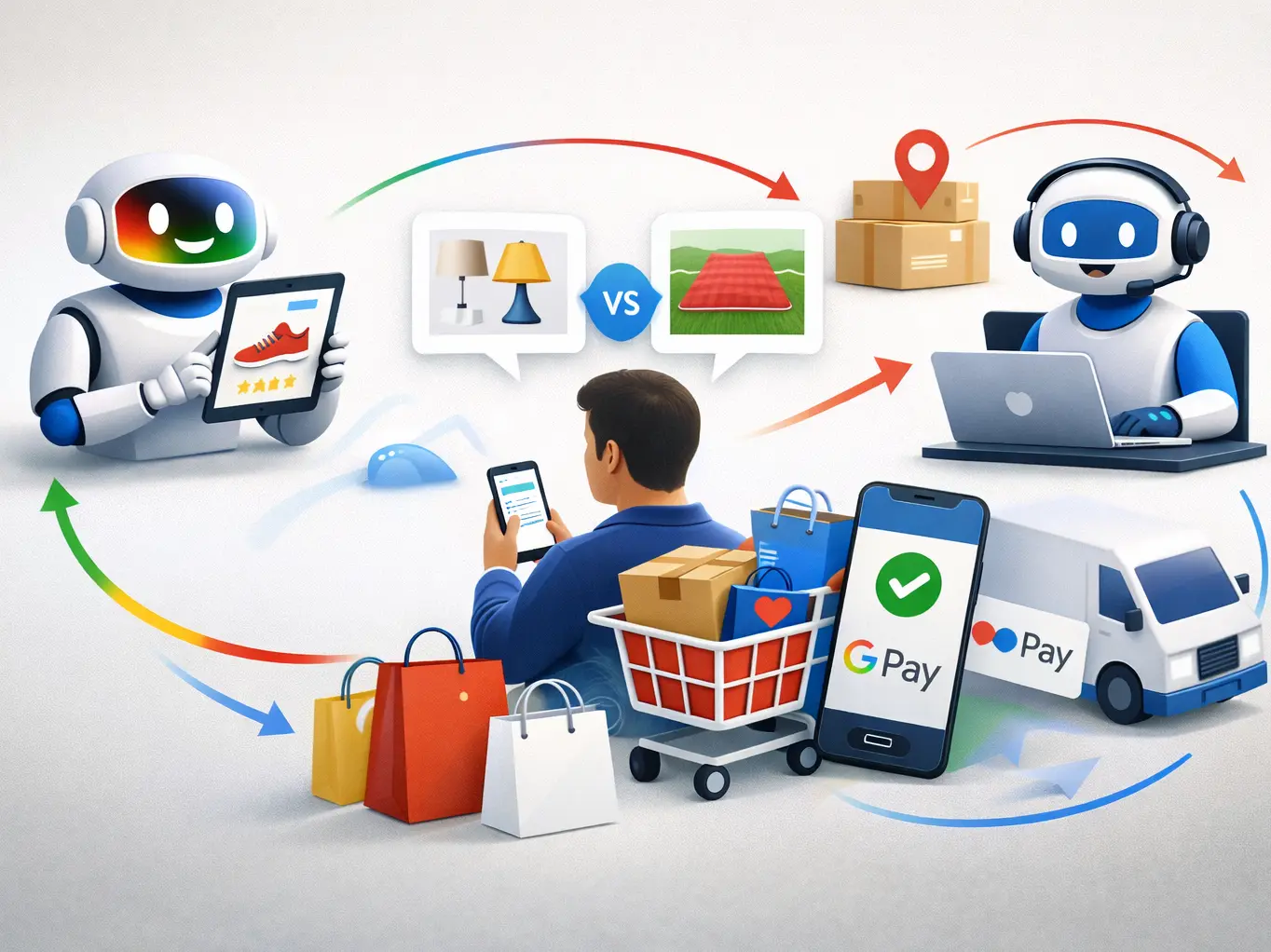
According to Google, UCP allows AI agents to interact smoothly with retailers during different stages of shopping. This includes helping users find products, compare options, complete checkout and receive support after a purchase. This is to make AI-powered shopping work more like a single, connected system.
Google said the protocol can work alongside other agent-based standards, including Agent Payments Protocol (AP2), Agent2Agent (A2A) and Model Context Protocol (MCP). Businesses and developers can choose only the parts of the protocol that suit their needs, rather than adopting everything at once.
UCP will soon be used for eligible product listings in AI mode on Google Search and the Gemini apps in the United States. This will allow users to complete purchases directly while researching products. Payments can be made using Google Pay, with shipping details taken from Google Wallet. Support for PayPal is expected to be added soon.
Trending Stories
)
)
)
)
)
)
)
)
)
)
)
)
)
)
)
)
)
)
)
)
)
&im=FitAndFill=(700,400))
)
)
)
)
)
)
)
)
)
)
)
)
)
)
)
)
)
Benefits for shoppers and brands
As per Google, the new system could help brands reach customers at the right moment. It will now allow sellers to offer real-time discounts when users are searching for product recommendations using AI mode. For example, if a user searches for a durable rug for a busy dining room, brands can offer a discount while the recommendation is being shown.
They are also adding new data options in Google Merchant Center, allowing sellers to present their products more clearly within AI-powered search results. Google said this could improve visibility for merchants as AI chatbots become a key way people discover products.
Shopify CEO Tobi Lütke said AI agents are especially useful at connecting people with products they may not have searched for directly. According to him, AI can create moments where users discover items that match their needs without actively looking for them.
Customer support and payment through AI agents
Google also announced that merchants can now add a branded AI-powered Business Agent to Google Search. This agent can answer customer questions directly. According to Google, brands such asLowe’s, Michaels, Poshmark and Reebok are already using the tool.
In addition, Google launched Gemini Enterprise for Customer Experience (CX), a suite designed to help retailers and restaurants manage shopping queries and customer service using AI.
Other companies are moving in a similar direction. Shopify announced an AI shopping integration with Microsoft Copilot, while firms like Amazon, Walmart, Meta and OpenAI are also building AI-based tools for commerce.
Why AI shopping standards are gaining importance
As per the industry reports, AI-driven shopping traffic is growing quickly. Earlier this month, Adobe said traffic sent to retail websites by generative AI increased by 693.4 per cent during the holiday season, although it did not confirm how much of that traffic resulted in actual sales.
Google said standards like UCP are needed because AI agents struggle with the complexity of real-world commerce. By creating a shared framework, companies hope to make AI shopping more reliable for both consumers and businesses.
Customer support and payment through AI agents
Google also announced that merchants can now add a branded AI-powered Business Agent to Google Search. This agent can answer customer questions directly. According to Google, brands such as Lowe’s, Michaels, Poshmark and Reebok are already using the tool.
In addition, Google launched Gemini Enterprise for Customer Experience (CX), a suite designed to help retailers and restaurants manage shopping queries and customer service using AI.
Other companies are moving in a similar direction. Shopify announced an AI shopping integration with Microsoft Copilot, while firms like Amazon, Walmart, Meta and OpenAI are also building AI-based tools for commerce.
Why AI shopping standards are gaining importance
As per the industry reports, AI-driven shopping traffic is growing quickly. Earlier this month, Adobe said traffic sent to retail websites by generative AI increased by 693.4 per cent during the holiday season, although it did not confirm how much of that traffic resulted in actual sales.
Google said standards like UCP are needed because AI agents struggle with the complexity of real-world commerce. By creating a shared framework, companies hope to make AI shopping more reliable for both consumers and businesses.
