
&imwidth=800&imheight=600&format=webp&quality=medium "How a new hire tackled 5 giant problems in a global mining company")
The large mining and heavy industry sector is increasingly automating, or using data science to oversee complex footprints of operations, regulatory requirements, etc., stemming from aging data-of-a-system. An unreasonable amount of legacy documentation, metadata inconsistencies, and an audit-ready infrastructure in place-for-audit are the main features that organizations in this space invest heavily in; they require a scalable tool oriented toward modernizing workflows that would not adversely affect mission-critical processes. If one could state automation and analytics constitute the core of assuring efficiency, it is in regulatory compliance, environmental control, document governance, and the long-term digital transformation.
In this background, Pramath Parashar was involved in creating innovations and technical automation projects in his data transformation to bring exceptional results. He has built Python-based reporting engines, big-scale SharePoint automation, and metadata governance frameworks that aim at the bigger goal of a resilient, cost-efficient infrastructure, dependent on the future. He joined as a Data Science Specialist and undertook many digital transformation projects within his first year, showing upfront value gained from deep domain alignment.
Some of his major contributions include building an automated financial reporting engine that generates formatted tables with visuals in enterprise-level financial publications. This one solution created recurring annual savings of over $50,000 and significantly decreased turnaround time and human error by automating over 85 percent of formatting and validation effort in petroleum reporting."

Another worthy mention is his SharePoint Metadata Sync Automation that handles legacy documentation with over 4,800 individual instances, extracting file-level information and uploading them with structured metadata through an elegant mix of Power Automate and Python. Its release allowed accuracy in metadata to go up to more than 98 percent; it deepened the governance of archaeological heritage mining documentation and audit readiness across functioning departments.
This system implements intelligent batching and duplicate detection strategies to ensure that performance and user experience are optimized, thus reducing downtime.
Pramath is also behind the Water Quality Monitoring Power BI dashboard for the Globe-Miami mining facility in Arizona. This dashboard visualizes long-term trends for chemical contaminants across groundwater wells integrating over 30 years of laboratory sampling data and features the ability to dynamically filter by chemical name, sampling date, location ID, fraction type, and geologic unit, including:
Trending Stories
)
US vs China over South China Sea: Washington backs Philippines, Beijing hits back
)
Bigg Boss 20: Isha Rikhi evicted after three weeks in Salman Khan’s show
)
Musk plans to more than double xAI's chips to over 1.2 million Nvidia GPUs by year-end
)
After JU, clash erupts at SRFTI: BJP’s ‘Dimagi Naxal’ jibe sparks political firestorm after students protest RSS-linked event
)
‘Anti-social elements spreading false rumours’: LPU issues statement amid massive unrest over alleged rape
)
LPU students go on rampage, vandalise campus amid widespread protest: What's happening
)
Trump asked Xi to pressure Iran. China did not say yes — here’s what Beijing wants
)
US Treasury Secretary Scott Bessent hails global crackdown on Iranian banks and airlines
)
An OpenAI agent escaped its locked test cage again, by hiding questions in DNS lookups
)
'Our video was trimmed': LPU girls who featured in rape-denial video make U-turn
)
3 males killed, four others injured in shooting after fight at strip club in Detroit
)
'Victory for low-budget consumers': Raghav Chadha hails 30-day telecom recharge rules
)
Claude rebuilt the 1989 game 'Prince of Persia' by reusing the original's own code
)
Beyond metros: How Tier-2 and Tier-3 cities could drive India’s next AI wave
)
Tesla builds first Cybertruck with its own refined lithium: Elon Musk's $1 billion Texas bet pays off
)
IndiGo flight suffers tail strike in Bengaluru while landing; DGCA to probe incident
)
The US and China set up an AI 'red telephone', but skipped the rulebook
)
‘Terror suspects arrested near UK air base were looking to do big damage’: Trump
)
Russian envoy claims US tactics to contain India were revealed in ‘Freudian slip’
)
IND vs WI 1st ODI: Kohli breaks Sachin's most runs in one country record with unbeaten 139 as India thump West Indies by 8 wickets
)
Researchers rebuilt exactly how 700 AI agents hacked Hugging Face: a 900-link chain trick
)
‘Olympic inclusion is our major target’: WPA President Ishaun Singh on pool’s global ambitions
)
Nations League: Spain sink England at Wembley; Modric shines for Croatia
)
Why has Iran released no proof of life of Mojtaba Khamenei? Araghchi reveals...
)
'What kind of confession is this?': Pakistan PM Shehbaz Sharif’s 'terrorists would be roaming New York' remark goes viral, raises alarm online. Watch
)
South Korea demands apology from Ukraine over North Korean prisoners' transfer
)
Beyond BrahMos: India targets Rs 50,000 crore in defence exports with unmatched price edge
)
Sri Lankan Tamil migrant worker gets death sentence in Saudi Arabia, help sought from India
)
Muslim marriage cannot shield sex with minor wife from prosecution under POCSO: Delhi HC
)
'Can't help but draw painful parallels to Nirbhaya case': SC on latest incidents of rape cases in Delhi-NCR
)
99.9% more powerful - Scientists find boy who can recall memories from just 3 months of age
)
'FIRST LOOK from inside Noah’s Ark': Researchers share video from inside mysterious mound in Turkey
)
UNSC reform momentum grows: Russia, Portugal, Mauritius push for India's permanent seat bid
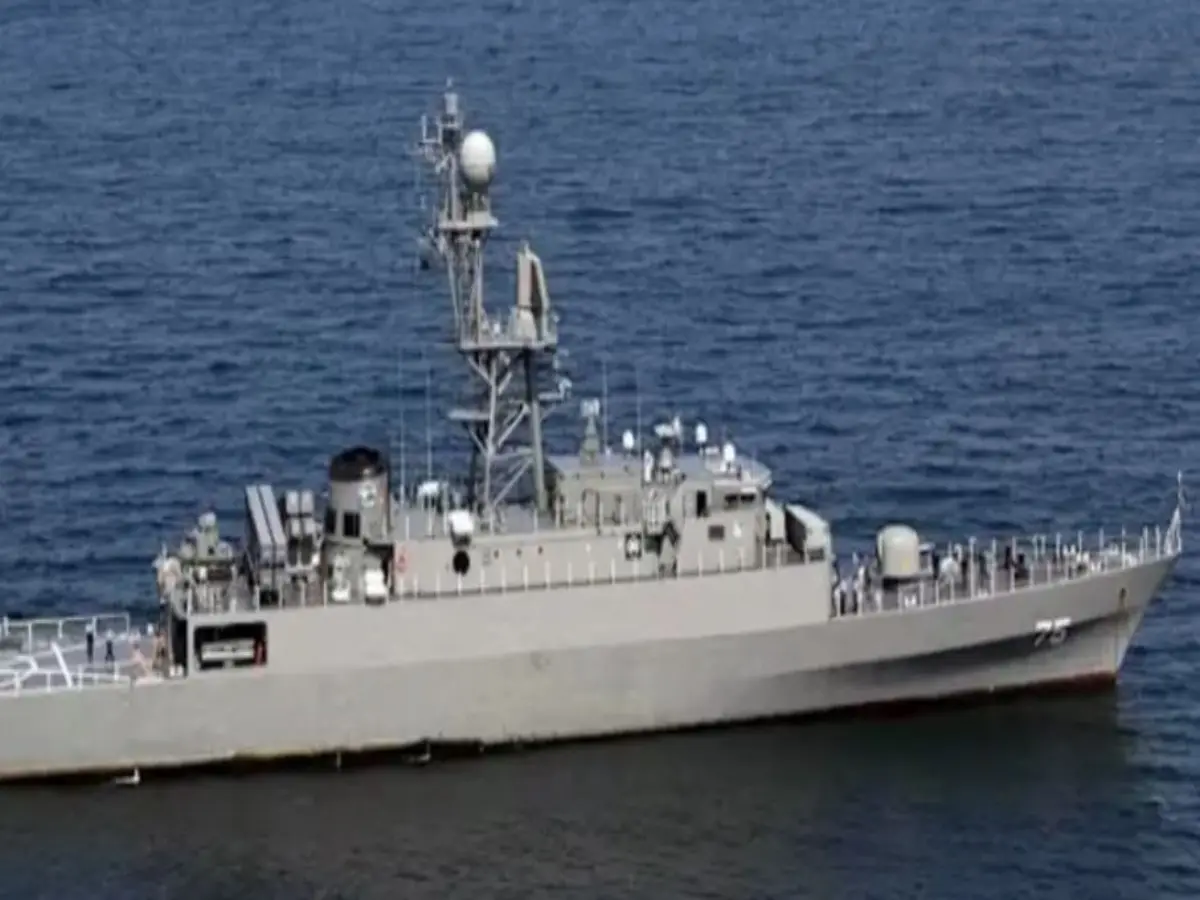)
8 US marines injured in Iranian missile attack on vessel in Strait of Hormuz: Report
&im=FitAndFill=(700,400))
New OTT releases this week (September 28-October 4, 2026): Dupahiya 2, Pooja Meri Jaan, Ohh My Dog- 5 titles coming on Netflix, Prime Video and more
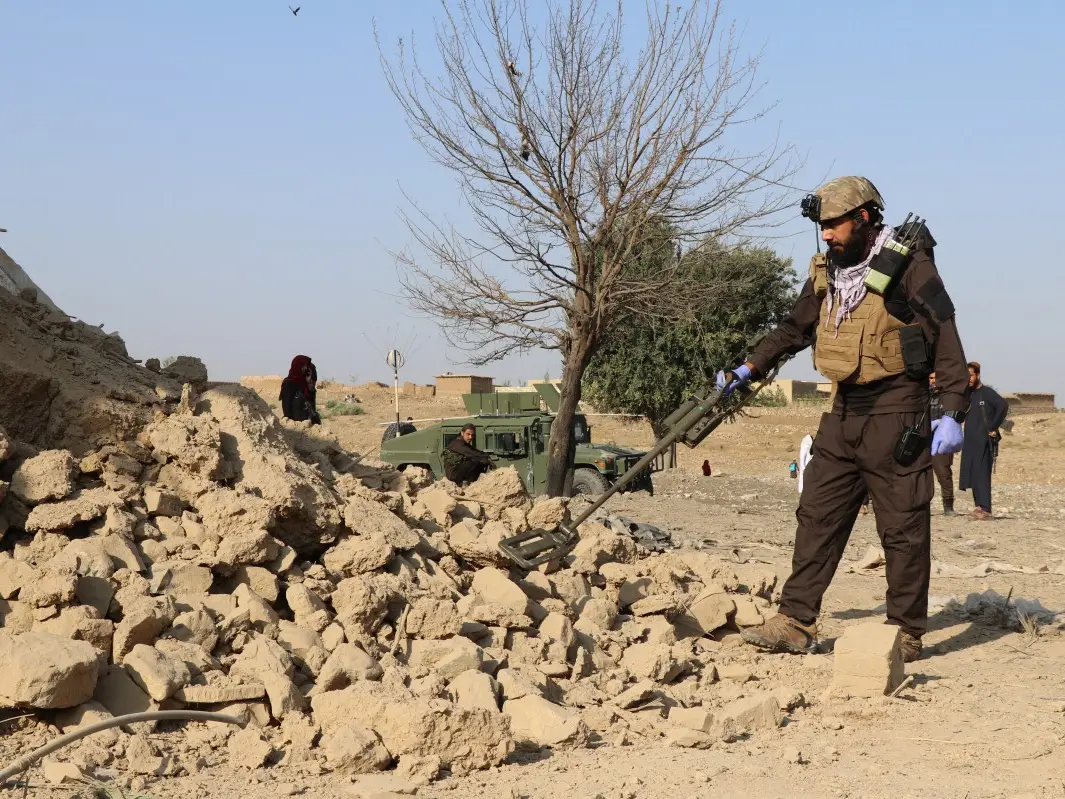)
Afghanistan says 28 fighters killed in clash near Pakistan border, Islamabad denies
)
Ceuta migrant crisis: Protesters take to streets as Spain grapples with migrant challenge
)
LPU suspend classes, postpones exams as violence escalates over rape claims: What's happening
)
New York City wants a 'kill switch' on every AI, and will pay whistleblowers who report violations
● Azure Maps for mapping well locations;
● Line charts and box plots to show contaminant trends (e.g., Aluminum, Antimony, Arsenic);
● Tables of action level exceedances to flag regulatory breaches;
● Linked to SharePoint PDFs of well construction diagrams.
The system helps avert early detection of exceedances/emergencies, cuts down manual review and quality assurance in Excel, strong compliance reporting, and well-supported decision-making with environmental and closure planning teams. Built in Power BI with a SharePoint band integration and advanced DAX modeling, the dashboard is exemplary of Pramath' commitment towards scalable, user-focused tools that narrowly balance technical depth with regulatory needs.
Beyond these high-impact tools, Pramath developed many applications designed at enhancing field operability. CTD Processor App, built with PyQt, enables environmental data engineers to calibrate and clean field sensor data with an intuitive GUI, bridging the disconnect between technical capabilities and accessibility for non-coding professionals. These efforts solidify his advantage to push beyond automation on an organizational level and down to functional-user levels."
Some very deeply entrenched problems needed resolution in the course of his proclaimed successful interventions. One was handling large-scale document integration into automation systems where automating tools would quite often crash because of volume; he solved this with a batch-based process logic that allowed safe, reliable throughput. Resolving metadata inconsistency issues by assigning a fresh-induced unique ID with file-size delta detection as a repeatable solution to avoid corruption in sync cycles was another."
His technological leadership is founded on a sound research base. He has written five papers published by the IEEE, with four more currently under submission, on subjects ranging from probabilistic image segmentation and communication optimization in deep learning systems to natural language interfaces for Prolog databases. This duality-the operational pragmatism and the visionary research-in fact positioning him as a practitioner who not only solves today s problems but anticipates tomorrow's complexities.
From an industry perspective, his vision of the future is hybrid automation systems with Python-based intelligence sitting in-between low-code platforms like Power Automate. He is pushing for AI-enabled document governance, especially in industries with volumes of legacy content. According to him, "the best automation is the one that disappears" is an ethos that drives his commitment to making systems simpler for users while more sophisticated behind the scenes.
His view of metadata integrity, audit traceability, and scalable automation frameworks is poised more and more toward the future of digital infrastructure strategy in asset-heavy industries. As operations grow into actively bringing data forward, professionals like Pramath Parashar are setting new benchmarks in what a scalable, intelligent, secure data workflow is.