Gaganyaan: Indian astronauts to experience '4g' acceleration during ascent, '12g' if aborted

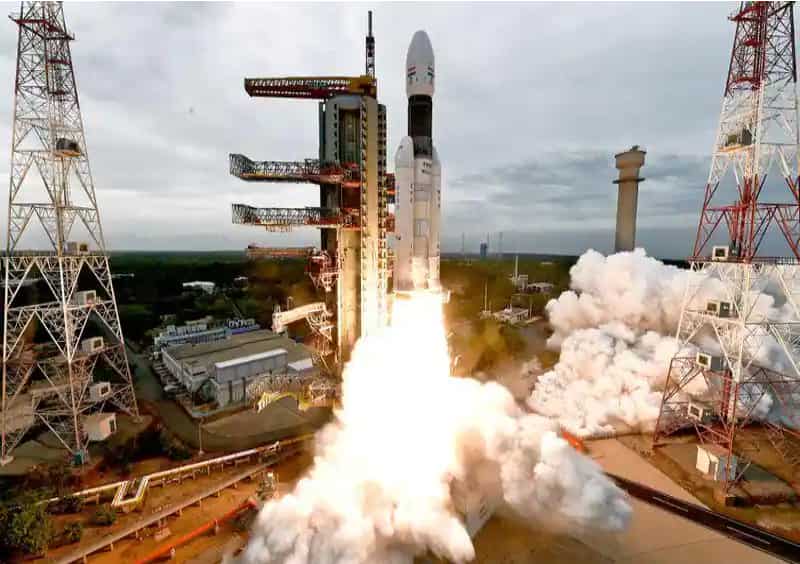
ISRO's manned mission Gaganyaan
When India’s heaviest rocket LMV3 carrying Indian astronauts ascends towards space as part of the Gaganyaan manned mission, each crew member will feel a sustained load of almost four times of his/her body weight or '4g'.
All of us on Earth feel '1g', which is the ordinary pull of gravity. Whereas during rapid acceleration or deceleration of an aerospace vehicle, this force is manifold (denoted by the number preceding the 'g'). Simply put, the phenomenon is referred to as 'g force' or the acceleration due to gravity.
Gaganyaan's Project Director, RHutton, explained that Indian astronauts, who are originally test pilots of the Indian Air Force, would undergo a sustained acceleration of '4g' during the rocket flight, and during in an untoward eventof an abort, they would face up to '12g' for a few seconds.

During an abort, the mini rockets fitted atop the rocket's nose would fire and carry the crew module (which houses the astronauts) to a safe altitude at least 3km away from the rocket. This is done in order to save the crew in case there is a mid-flight anomaly detected in the rocket that is carrying them. For context, fighter pilots ejecting from aircraft can experience '12-14g'.
Speaking at the Space Tech Summit at IIT Madras' Shaastra fest, Hutton outlined that the Gaganyaan crew's journey from launchpad to 400km orbit would take 16 minutes, whereas their return to Earth (de-boost to splashdown) would take 50 minutes. The crew module carrying the astronauts is being designed for a 48-hour mission, he added.
To a query from WION about the flight suits and how long they would be worn, Hutton replied that during the ascent, re-entry, and descent phase, the astronauts would be wearing Russian-origin flight suits. Once in orbit, all crew module conditions such as temperature, and pressure are found to be ideal and there is adequate confidence. The astronauts would be able to exit their flight suits and wear comfortable garments, he said.
Regarding the rescue and recovery of astronauts and crew module after the water landing, he said that the Indian Navy was the lead agency for the task and that the Maritime Force would task their ships and helicopters to the splashdown spot within an hour or two. Even if the landing were to take place away from the Indian waters, he said that the navy would be able to get the job done.
Considering that it would take a maximum of six hours for the ship to recover, the crew module is accordingly designed to retain power for the same duration to cater to lighting, life support, climate control, valve operation, displays, sensors, communication, etc.
During the orbital flight, the crew module power would not be used and it would be drawing power from the service module. Prior to re-entry (at an altitude of 170km), the service module would be jettisoned.
WATCH WION LIVE HERE:
